Tuesday, 17 July 2012

HUDSONIAN GODWIT is atypical BLACK-TAILED GODWIT


Chris Batty obtained these very educational shots of Frodsham's odd godwit, clearly showing the presence of a gleaming white underwing. BLACK-TAILED GODWIT it is but what an odd plumage variant, almost showing hybrid features.

Sunday, 15 July 2012

HUDSONIAN GODWIT in Cheshire

Paul Crawley photographed what appears to be a breeding-plumaged HUDSONIAN GODWIT today, roosting amongst several hundred Icelandic Black-tailed Godwits on No 6 marsh at Frodsham New Workings in Cheshire. To access the site, drive west through Frodsham and then turn right into Marsh Lane and continue over the M56 north to the marshes.


The bird was looked for this evening but not seen

Friday, 13 July 2012

Midsummer doldrums

Little going on it seems, although the weather remains unsettled with continuous localised flash flooding....


In Greater London, a gorgeous adult male RED-BACKED SHRIKE continues for a fourth day north of Heathrow Airport at Lake Farm Country Park just south of Hayes. It is frequenting a small patch of bushes 100 yards NE of the car park in Dawley Road.

Returning rare waders include an adult WHITE-RUMPED SANDPIPER at Frampton Marsh RSPB (North Lincs) and an adult PECTORAL SANDPIPER at the north end of Cresswell Pond (Northumberland)

In North Norfolk, a GREATER SHORT-TOED LARK remains on Blakeney Point, frequenting the base of the Yankee Ridge area, a 50 minute walk west from Cley Coastguards, whilst in Suffolk, the female EUROPEAN SERIN continues to tease vsitors at Landgaurd Nature Reserve (but generally disappears after 0700 hours).

A great local bird, a male MONTAGU'S HARRIER, is still being regularly seen in Lancashire, where it remains ESE of Slaidburn at Champion Moor.

Minsmere RSPB has a GLOSSY IBIS still present on the South Levels

BALEARIC SHEARWATERS are currently a daily event at Portland Bill (Dorset), whilst at least 3 WILSON'S STORM PETRELS were seen from a Scilly pelagic yesterday evening.

In Ireland, the only recent reports are of at least 1 GLOSSY IBIS still at Tacumshin (County Wexford) and another at Timoleague (County Cork) and a BLACK STORK that flew over Ballyvaughan towards Black Head (County Clare)

BADGER CULLING: disgrace at the High Court

Proposals by this failed coalition government to cull BADGERS has been given the green light by the High Court despite scientific evidence being provided by the Badger Trust legal team indicating that such actions will only spread bovine TB further into the countryside. This decision is disgraceful and further solidifies my intolerance of Fera


The RSPB and other organisations have fenced off sensitive areas of reserves where it is known that Badgers visit in search of ground-nesting birds (eg, Lapwings and other declining waders) so maybe it is about time that farmers fence off fields inhabiting livestock. Farmers are currently crying out for sympathy because the supermarket cartel want to buy in milk, 2p a litre less than it costs dairy herders to produce it. Well, if they continue to demand the destruction of our Badgers, I for one will not be lending any support for their campaign

As I have said many times before, JUST LEAVE BADGERS ALONE. Life's not all about personal greed

Regards
Lee Evans

Saturday, 7 July 2012

Serious flooding across Europe and UK

Police and environmental bodies are advising people to keep away from South Devon, especially those river valleys between Plymouth and Paignton because of very, very serious flooding


Likewise, this year's Silverstone event in Northamptonshire is having serious problems with its car parks and camping ground, having to turn away over 10,000 people today because of sodden ground and deep water

In southern Russia, torrential rains have also caused unprecedented flooding throughout the region, with 99 people killed overnight and some towns being completely washed away

Waders are clearly suffering from the effects of the weather, with large numbers of presumably failed breeding birds appearing here in the UK, including WOOD SANDPIPERS and RUFFS

Norfolk listing stalwart dies suddenly in his sleep

Robin Able, just 59 years of age, died suddenly in his sleep this week. Robin was very well known in Norfolk circles being keen as mustard on county-yearlisting and surveying, achieving in 2010 an annual county tally of 281 species (UK400 Club Guidelines) - the highest number of species recorded in any single county in one calendar year. He was out in all weathers, virtually on a daily basis and would mark out regions of the county to check, especially in spring and autumn when migrants were coming through. He always seemed to be a tower of strength and remained to this day of internet birding news, a major cog in my birding information chain. Although very much a birding loner, he was always keen to chat at a rare and leaves behind a lot of friends he had become attached to during his long and illustrious career within Norfolk. Another huge loss to birding - rest in peace, Robin


Lee Evans

Friday, 6 July 2012

Torrential rain again affecting the UK and no sign of an end to it this summer

Hours and hours of torrential rain has hit central parts of England and Wales today resulting in over 138 flood warnings and the closure of major routes including the M50. Large parts of the Midlands are currently under several inches of water and many thousands of houses/properties have been flooded. An even worse stream of weather is about to be unleashed on the Southwest of Britain, from Cardiff and Basingstoke west to Penzance, perhaps culminating in three month's rain in one 15-hour period. The Environment Agency is warning of very serious repurcussions and is advising people to contact them for advice

Spaces on short trips to Egypt and Morocco

I currently have spaces on short trips to Morocco and Egypt in the next month or so - please email me if interested - LGREUK400@aol.com

CASPIAN TERN at Minsmere

A CASPIAN TERN visited Minsmere South Scrape (Suffolk) ffor 25 minutes this afternoon before flying off south along the beach towards Sizewell...


Also, good numbers of early returning waders on the move (probably due to failed breeding), with no less than 7 WOOD SANDPIPERS at Rainham Marsh RSPB this afternoon

Wednesday, 4 July 2012

Waders starting to return

A spell of further unseasonal weather has resulted in the appearance of a first-summer SABINE'S GULL far from the sea at Startop's End Reservoir, Marsworth, about a mile from Tring town centre (Hertfordshire). The bird has been showing exceptionally well, often down to a few feet at times, since its initial discovery on Sunday and represents the first record for the reservoirs since the 'Great Storm' of October 1987. The bird is a real photographer's dream and as a consequence may result in it being the most photographed rarity of the year ! See my various local blogs for an array of images.


Other than the Sabine's Gull, the other main attraction is the heavily moulting ALPINE SWIFT that has now been present for at least five days at Buckton and Bempton Cliffs in East Yorkshire, ranging back and forth over the various vantage points over a couple of mile section of cliff coastline.


We are also seeing the first wave of returning waders with WOOD SANDPIPERS now appearing at a number of sites, as well as numerous Green Sandpipers and Icelandic Black-tailed Godwits. A lot of Spoonbills are around, including 6 on Minsmere South Levels (Suffolk) and 8 at Cley NWT Reserve (North Norfolk).


Three SACRED IBIS of unknown provenance are also on the wander with 2 in Northumberland and another at Walsey Hills Marsh, Cley (Norfolk). Although these could well be the 3 that escaped from Cheshire in 2011, there is no direct link at present and there is a possibility that they have arrived from France.


At Blackdog/Murcar Golf Links (Aberdeenshire), the summering seaduck flock offshore continues to harbour up to 5 different SURF SCOTERS, a first-summer drake AMERICAN BLACK SCOTER and the regular drake KING EIDER.


Last week's LITTLE SWIFT is now but a distant memory but from 22-24 June, this bird treated observers to a stunning display, flying back and forth along the New Brighton Promenade (Wirral) in poor weather conditions. One of the birds of the summer, without doubt.


WILSON'S PETRELS are starting to show up in the Western Approaches with 2 seen from a St Mary's Pelagic on 2nd, whilst the first GREAT SHEARWATERS of the autumn were noted with one from the same boat and further singles off Start Point (South Devon) and off Cape Clear Island (County Cork) on 1st. The latter site also recorded a very unseasonal 40 POMARINE SKUAS past on 3rd, following 13 on 2nd - presumably failed breeders from the Arctic.


The female RED-NECKED PHALAROPE remains at Coombe Hill Meadows (Gloucs), with a migrant male at Minsmere Scrape (Suffolk) on 2nd and female at Backworth Flash (Northumberland) on 1st-2nd.


In the Northern Isles, both the RIVER WARBLER and PADDYFIELD WARBLER remained on Fair Isle until at least 2nd July, whilst the first WESTERN BONELLI'S WARBLER of the year remained on North Ronaldsay (Orkney) from 1st-2nd.


Belated news concerned a first-summer female BLACK-EARED WHEATEAR at Frampton Marsh RSPB (Lincs) on 12 June whilst other late June sightings included a GULL-BILLED TERN in SW Wales in the Llanelli area (Carmarthenshire) on 26th-26th then at Lodmoor CP (Dorset) on 29th, a superb summer-plumaged adult PACIFIC GOLDEN PLOVER at Cley North Scrape (Norfolk) until 27th, a male WOODCHAT SHRIKE near Whitby (North Yorks) on 26th-28th, an ARCTIC WARBLER on Whalsay at Skaw (Shetland) on 27th, an adult WHITE-WINGED BLACK TERN that moved from Staines Reservoirs (Surrey) on 25th to Cotswold Water Park Pit 74 (Wilts) on 27th and Shapwick Heath NNR (Somerset) on 28th, an adult PURPLE HERON at Stodmarsh NNR (Kent) on 29th-30th, a PECTORAL SANDPIPER on Fetlar (Shetland) on 29th, a SQUACCO HERON at Welney WWT (Norfolk) on 30th and another ALPINE SWIFT in North Norfolk on 30th and past Spurn Point (East Yorks) on 1st July.


An interesting phyllosc on Bardsey Island (Gwynedd) on 30th was either a BRIGHT GREEN WARBLER or a GREENISH WARBLER.


In IRELAND, most welcome was a reeling SAVI'S WARBLER at Lingstown Reedbed, West Tacumshin (County Wexford), with this phenomenal reserve and wetland also yielding 2 different GLOSSY IBISES, a BLUE-WINGED TEAL and the continuing MONTAGU'S HARRIER. A GULL-BILLED TERN was seen on 29 June at Ballyneety near Dungarvan (Co. Waterford) and a BUFF-BREASTED SANDPIPER in Mayo on The Mullet on 2 July.

First-summer SABINE'S GULL on my local patch for 4th day


A truly astounding set of images taken of the Startop's Sabine's by Roger Wyatt


The gorgeous first-summer SABINE'S GULL is still wowing the crowds at Startop's End Reservoir and showing down to 20 yards at times. We really are blessed to have so many good photographers amongst you and I have spread over three of my local blogs (Birding Tring Reservoirs, Hertfordshire Birding and Buckinghamshire Birding) some of the impressive shots that have been amassed - from the likes of Dave Hutchinson, Roger Wyatt, Francis Buckle, Martin Parr, Alan Reynolds, John Foster, Chris Holt and others - they are sheer brilliance. But please keep them coming - very pleased to showcase the work of our local photographers.


Startop's End Reservoir is best accessed at the car park by the Angler's Retreat pub by the Grand Union Canal bridge in Marsworth at SP 919 141 - just off the B489 two miles SW of Ivinghoe. For those travelling from further afield, leave the A41 at Tring and follow the B486 to the reservoirs
An awesome bird and not to be missed. Hugely memorable as Sabine's Gulls always are. Also in an unusual plumage - first-summer - not witnessed very often

Thursday, 28 June 2012

Some great birds shared with some great friends......


What an amazing experience - up close and personal with a whole family of WESTERN BROWN FISH OWLS in Turkey - and watching them with some of my closest birding friends. Me with Keith Vinicombe and Garry Bagnell in the top picture, me with Ozcan and Chris Heard in the middle and with the entire team in the bottom shot including some of ISRAEL'S finest - of course Yoav Perlman amongst them.

Wednesday, 27 June 2012

LGRE back in Britain at moment and available to answer emails....

Apologies for not being able to get back to individual enquiries but very busy with scheduled trips at moment in WP including a very successful tour of Eastern Turkey comprising of 170 species and mega views of both nesting BROWN FISH OWLS and STRIATED SCOPS OWLS and a bumper increase in breeding numbers of IRAQ BABBLERS....
Anyway, I am in a position to take in emails now and will answer as many as possible in the next few days
As for my Round Britain tours of 2013, it is looking as though I will have to add in a third trip due to the demand for places - with trips in January (third Week), April (last week) and in May (third week). Maximum places for each trip is TEN. The 2013 tour price will be in the region of £529 per person plus accommodation and food depending on the price of fuel per litre with £150 deposit before 31 December 2012 required for booking. All specific species requirements can be catered for except for Lady Amherst's Pheasant which is now strictly out-of-bounds and off-schedule - please enquire at time of booking

I shall be putting together my 2013 Tour Schedule together in December but will be planning on visits to Spain (2 different), Israel, Egypt, Western Sahara & Morocco, Scandinavia, Poland, Georgia & Turkey combined, Eastern Turkey, Cape Verde Islands, the Azores, Madeira, Canary Islands, Sri Lanka, Thailand and another big trip to China mainly for 13 species of Pheasant.

Additional trips will be added in and advertised at a later stage but if you have an interest in any of the localities mentioned, please do not hesitate to ask for further information. But remember, these trips are all designed for maximum numbers of birds and are subject to dawn until dusk birding in often quite strenuous conditions - luxury birding it is not in many cases
Kind Regards

Lee Evans

LGREUK400@aol.com


Monday, 18 June 2012

Lee's Round Britain trips in 2013 - reserve your place now

John Foster has very kindly put together some of the highlights of our Round Britain tour in May 2012 where we recorded no less than 189 species. They can be viewed here at
http://yakkafoz.smugmug.com/Nature/Birding-Holidays/Round-Britain-Tour-May-2012

and are best viewed in 'slideshow mode'

I plan to run similar tours in 2013 - one in January and another at the end of April. I can take a maximum of 10 participants and have a few places left on both trips. Please email me to reserve a place. You do get some sleep.

Interestingly, 192 species were recorded on the January trip
Good Birding Always
Lee

LITTLE BITTERN supports Team GB


Stocker's Lakes' LITTLE BITTERN clearly supports Team GB in this year's Olympics, preferring each day to keep close to the football ! Francis Buckle obtained these great shots on Saturday, this bird having now delighted over 500 observers since its arrival.

It is performing well on frequent occasions and has now been present on site for a week. Leave the M25 at Junction 17 and drive towards Maple Cross. Turn left at the roundabout and take first right (Springwell Lane). Drive down as far as the flats and find somewhere to park safely in the vicinity or in Springwell Lane car park itself on the right. At the car repair workshops, walk down the river to the first bridge - cross it then follow the Colne river north along the footpath for 250 yards.

Friday, 15 June 2012

Still my favourite bird of the year - the CREAM-COLOURED COURSER


A most memorable twitch of 2012. My good friend Mike Lawrence took these magnificent pictures. Bird of the Year so far in 2012

Thursday, 14 June 2012

HEDGEHOGS in stark decline

Due to the incessant use of slug pellets in suburban gardens and elsewhere, Hedgehog populations are in serious decline. Hedgehogs actually consume vast numbers of garden slugs so if left to prosper would naturally cure the problem. However, eating poisonous slugs means that Hedgehogs endure a slow, painful death. Please think seriously before lacing your garden with these highly toxic pellets


Lee Evans

Monday, 11 June 2012

Wettest June since records began forecast

Rain, rain, rain.....and more rain - and gale force winds too - and all set to make June 2012 the wettest since records began. All proving disastrous for breeding birds too - both resident and migrant. Despite all of this doom and gloom, birders have still managed to find a combined total of 377 species in Britain and Ireland this year, no less than five species added in the past week.....


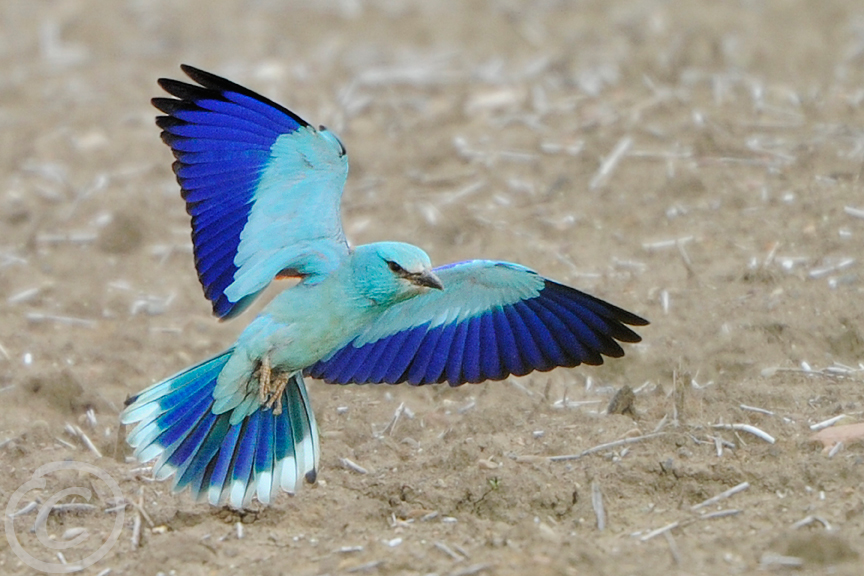
The Yorkshire EUROPEAN ROLLER of course remains top-billing, performing admirably for over 2,000 visitors now and favouring the large tilled field east of the B1242 about half a mile north of Aldbrough village (East Yorks). Check out Rebecca Nason's fantastic flight shots of this bird on my UK400 Club blog......Although, not to be outshone, the gorgeous adult male SNOWY OWL continues its summer sojourn at Grenitote on North Uist (Outer Hebrides). The Outer Hebrides' also hosted a female GREATER SANDPLOVER at Stinky Bay on Benbecula from 8th-10th, showing well with Ringed Plovers on the sandy beach


Also today, male IBERIAN CHIFFCHAFFS continue to sing in Somerset (Porlock) and in West Cornwall (at the top end of Kenidjack Valley) although doubts are now being raised over the identification of the Somerset male, whilst a marked arrival of ROSE-COLOURED STARLINGS seems to have taken place with singles at Severn Beach (Avon), in an Edwinstowe garden (Notts) and at Langney Point, Eastbourne (East Sussex) and the impressive spring for 'twitchable' MARSH WARBLERS continues with one still at Hadston Carrs (Northumberland) and another at Big Waters NR (Northumberland).


As usual, the Northern Isles at the end of June continue to attract scarcities, with Fair Isle hosting Common Crane, Grey-headed Wagtail, Icterine Warbler, Marsh Warbler and Golden Oriole in recent days, as well as the first RIVER WARBLER of the year, North Ronaldsay (Orkney) a female Red-backed Shrike, two Marsh Warblers and a PADDYFIELD WARBLER and further singing male Marsh Warblers at Sumburgh Head (Shetland) and by the doctor's surgery at St Margaret's Hope, South Ronaldsay (Orkney).


A single GLOSSY IBIS remains at Marloes Mere (Pembs) whilst the two adults that were with it all winter and year moved south in the storms to Somerset, where they appeared at Steart on the weekend and flew north over Combwich today. Two more remain at Minsmere RSPB (Suffolk), frequenting the flooded levels to the south of the reserve, with that roaming the South Coast currently favouring Farlington Marsh (Hants).


Whilst at least two pairs build scrapes, a single female BLACK-WINGED STILT visited Cley Marshes NWT (Norfolk) from 6th to 9th


Two new WOODCHAT SHRIKES appeared yesterday, with a first-summer male on the edge of Walberswick Common (Suffolk) and a first-summer female on the limestone pavement at Great Orme (Conwy), whilst the long-staying first-summer female remained at the north end of Winterton North Dunes (Norfolk). A male RED-BACKED SHRIKE remained for a second day at Landguard NR (Suffolk) whilst an ICTERINE WARBLER was discovered in marrams at Long Hills, Blakeney Point (Norfolk).


A first-summer male RED-FOOTED FALCON survives at Tealham Moor (Somerset) today but sadly the young male at Willington GP (Derbyshire) succumbed to the appalling weather conditions and died overnight.


A LONG-TAILED DUCK remains on Neatholme Scrape, Idle Valley NR (Notts)


---------------------------------------------------------------------------------------------------------------------------------------------------------


HIGHLIGHTS 1-10 JUNE 2012


An incredibly deep and wet low pressure system hit the West Coast on 7th resulting in a NORTH ATLANTIC LITTLE SHEARWATER being seen off Berry Head, Brixham (South Devon) and unusual numbers of STORM PETRELS along the South Coast. Up to 20 Pomarine Skuas were 'plucked' out of the Atlantic and displaced (including 16 in Chesil Bay, Dorset) and an adult SABINE'S GULL at Severn Beach (Avon) on 9th.


A 2nd-summer BLACK-CROWNED NIGHT HERON was at Lower Pennington (Hants) from 2nd-7th, with a first-summer PURPLE HERON moving from the Severalls Reedbed, Church Norton (West Sussex) on 4th to Denge Marsh Reedbeds, Dungeness RSPB (Kent) from 5th-10th. Meanwhile, the surviving party of 4 WHITE STORKS continue to travel widely, from flying west over Redmires Reservoir (Yorks) on 2nd, over Titchwell RSPB (North Norfolk) on 4th before settling down during the inclement weather near Dingestow (Gwent) on 7th-8th. Then, on 10 June, they toured the North Welsh coastline again, last being reported flying north over Colwyn Bay.


A female RED-FOOTED FALCON was near Aberfeldy (Perth & Kinross) until 2nd

A calling male CORNCRAKE was noteworthy at Scarf Dike, Tophill Low Reservoir (East Yorks) from 1-9 June whilst the male BAILLON'S CRAKE at Malltraeth Marsh RSPB (Anglesey) remained calling until at least 3rd.


An AMERICAN GOLDEN PLOVER was on North Ronaldsay (Orkney) on 3rd, with the first BUFF-BREASTED SANDPIPER of the year in Tyninghame Bay, Dunbar (East Lothian) on 5th and a GREAT SNIPE discovered by a survey worker at West Sedgemoor RSPB (Somerset) on 25 May.. A PECTORAL SANDPIPER was at Dawlish Warren NNR (South Devon) on 1st, with two together at Beacon Ponds, Kilnsea (East Yorks) on 2nd and another at Snab Point, Walney NR (Cumbria) on 5th whilst a summering female RED-NECKED PHALAROPE in the Midlands was seen at Slimbridge WWT (Gloucs) on 1st & 5th-7th and at Coombe Hill Meadows (Gloucs) on 2nd-3rd. A migrant male of the latter species dropped in at Brockholes Quarry (Lancs) on 9thA LONG-BILLED DOWITCHER reappeared at Saltholme Pools RSPB (Cleveland) until 3rd


A HOOPOE visited a Tincleton (Devon) garden on 2nd, whilst a single EUROPEAN BEE-EATER toured the East Coast, visiting Winterton Dunes (Norfolk) on 6th, St Osyth (Essex) on 9th and Walberswick NNR (Suffolk) on 10th with 2 over Filsham Reedbeds (East Sussex) on 9th. A THRUSH NIGHTINGALE remained on the Isle of May (Fife) until 1st, with a RED-SPOTTED BLUETHROAT there too, with 2 GREATER SHORT-TOED LARKS on Lundy Island (Devon) on 2nd-5th.


GREAT REED WARBLERS bellowed out from respective reedbeds at Weston Sewage Works (Avon) until 7th, Gunwalloe Fishing Cove, The Lizard (Cornwall) from 3rd-6th and at Cley Marsh (Norfolk) whilst a real bonanza of MARSH WARBLERS have been discovered this June with singing males at Rainham Marsh RSPB (London) from 1-8, Cleethorpes (North Lincs) until 3rd, Blacktoft Sands RSPB (East Yorks) until 7th, Harbridge Water Meadows (Hants) from 5th-9th, on Fair Isle on 5th, at Collieston (Aberdeenshire) on 9th, and at Balmedie Country Park (Aberdeenshire) on 9th. SUBALPINE WARBLERS including a female at Quendale Burn (Shetland) and up to 2 on Lundy (Devon) until 3rd, whilst an elusive singing male BLYTH'S REED WARBLER was at Warham Greens (Norfolk) on 9th June.


Singing male ICTERINE WARBLERS included a new male by the Old Fall Steps, Flamborough Head (East Yorks) on 1st and up to 3 on the Isle of May (Fife) from 5th, whilst MELODIOUS WARBLERS included singles on Bardsey Island (Caernarvon) on 3rd-4th and on the Isle of May (Fife) on 7th. A minor influx of GREENISH WARBLERS included singles on Walney Island (Cumbria) on 4th, on Bardsey Island on 4th-5th and up to 2 on the Isle of May (Fife) on 6th-8th.


An excellent scattering of RED-BACKED SHRIKES occurred with two males at Horsey Gap (Norfolk) on 1 June, a male at Sennen (West Cornwall) on 1st, a singing male by the lighthouse at Flamborough Head (East Yorks) from 3rd-6th, a female at Westleton Heath (Suffolk) on 5th, a male on Out Skerries (Shetland) on 7-8, a male at Woodhall Dene (Northumberland) on 8th, on Fetlar (Shetland) on 9th and a female at East Holm (Orkney) on 9th whilst WOODCHAT SHRIKES arrived on Bardsey Island on 3rd


A cracking male RUSTIC BUNTING was on Inner Farne (Northumberland) on 1 June, the same day a male BLACK-HEADED BUNTING remained on Yell (Shetland) at Gloup.


----------------------------------------------------------------------------------------------------------------------------------------------------------

IRELAND


A SABINE'S GULL flew past Cape Clear Island (Co. Cork) yesterday, following at least two records from Britain during the gale force westerly winds and an adult off Galley Head (Co. Cork) on 9th. Tacumshin Pools (Co. Wexford) continue to host the adult summer FORSTER'S TERN and a MONTAGU'S HARRIER

SNOWY OWL trip


Ron Marshall was able to get these stunning images of North Uist's adult male SNOWY OWL last week at Sollas. This is one of my favourite birds and I am planning another trip up there in the next week (3 dayer), also taking in the Greater Sand Plover if it is still there, Red-necked Phalaropes and eagles. I can take a maximum of 5 others - please email me if you are interested (LGREUK400@aol.com) or phone 07881 906629

ROLLER still wowing the crowds


He's still present ! This glorious male EUROPEAN ROLLER is still frequenting the tilled field east of the B1242 just north of Aldbrough village in East Yorkshire and what a stunning bird he is. Now seen by over 2,000 admirers, Rebecca Nason obtained these absolutely brilliant flight shots, the lower as it came into land. Those below were taken by local birder Tony Dixon


Wednesday, 6 June 2012

Yorkshire ROLLER continues top billing

In East Yorkshire, the adult EUROPEAN ROLLER continues to delight large numbers of admirers in its favoured tilled field east of the coastal B1242 about half a mile north of Aldbrough village. It is a spectacular bird and repeatedly perches on a white post about 65 yards in from the road. The views can be outstanding and of all of the hundreds of shots which have been taken, few are as evocative and challenging as those taken by Rebecca Nason. Special parking arrangements have been offered nearby at Bewick Hall.
A second individual first seen on Sunday was also seen today in Hornsea (East Yorks), on roadside wires about six miles further north than Aldbrough.

Not that far away at Flamborough Head (East Yorks), a singing male RED-BACKED SHRIKE remains on gorse clumps in fields south of the lighthouse.
Another popular bird is always a vagrant RED-FOOTED FALCON with today's first-summer male at Willington GP (Derbyshire) performing well SW of the pits by the River Trent. From Wellington village, take Wellington Road south, cross the bridge and then follow the footpath SW for at least 20 minutes about 200 yards beyond the small wood (1.5 miles walk).
Although some BLACK-WINGED STILTS have now settled to breed, odd first-years such as today's female at Cley NWT Reserve (North Norfolk) are still on the wander. Typically mobile, at teatime the bird was viewable from hides overlooking North Scrape whilst earlier on, it frequented Cricket Marsh and Pat's Pool. A first-summer female WOODCHAT SHRIKE also continues in East Norfolk today, favouring bushes and scrub close to the fence about half a mile north of the beach car park.

It has been an excellent year for singing MARSH WARBLERS and today is no exception with birds still singing and occasionally showing at Harbridge Water Meadows, north of Ringwood (Hants) (at SU 149 897; in the hedgerow and weeds bordering the roadside literally yards NW of the bridge), at Rainham Marshes RSPB (London) in weeds below the 'Serin Mound' 1.2 miles west of the information centre along the seawall, in the Old Fall Hedgerow at Flamborough Head (East Yorks) and another 1.5 miles NE of Hadston (Northumberland) in reeds close to the road at Togston Links

After numerous false starts earlier this spring, we are now seeing some 'genuine' IBERIAN CHIFFCHAFFS occur with a male for its 7th day at Kenidjack Valley (Cornwall) and a newly located male at Porlock (Somerset) at the bottom end of Porlock toll road by the logpile on the left opposite the bench close to the first bend

GREAT WHITE EGRETS have bred for the first time in Britain at Shapwick Heath NNR (Somerset), whilst a first-summer PURPLE HERON has moved from Church Norton's Severalls (West Sussex) to Denge Marsh Reedbeds, Dungeness RSPB (Kent), where it is performing this afternoon from Springfield Bridge at TR 055 182. A GREAT WHITE EGRET is also on the Isle of Wight for a second day at Brading Marshes RSPB viewable from Mill Farm along the footpath to Bembridge Windmill, whilst the GLOSSY IBIS touring Hampshire and West Sussex is currently favouring Farlington Marsh Main Lagoon.

Continuing its good run of recent records, the Isle of May (Fife) today attracted a GREENISH WARBLER, whilst Fair Isle has both ICTERINE WARBLER and COMMON ROSEFINCH. Bardsey island (Gwynedd) has also had an excellent recent run of overshooting vagrants with a GOLDEN ORIOLE new in there today as well as a COMMON ROSEFINCH. A EUROPEAN BEE-EATER flew north over Winterton North Dunes (Norfolk) at 1503

On North Uist (Outer Hebrides), the stunningly beautiful male SNOWY OWL continues its summer sojourn at Sollas and Grenitote, sheltering from the wind and rain besides the fencing. Please respect this bird and do not approach to within 100 yards. If not approached too closely, this bird will stay for a protracted period.

In IRELAND today, a GLOSSY IBIS is at Timoleague (County Cork), whilst Tacumshin Pools (Wexford) continue to harbour the adult FORSTER'S TERN, 2 PECTORAL SANDPIPERS, a WOOD SANDPIPER and a first-year MONTAGU'S HARRIER. A male WOODCHAT SHRIKE remains on Sherkin Island (County Cork) in scrub and bushes on the west side of Horseshoe Bay.

Monday, 4 June 2012

Another Scilly regular passes away - the REVEREND ROBERT KEMPSTER

Many of you will remember Robert Kempster, a Newton Abbot birder who was a Scilly regular throughout the 1970's, 1980's and 1990's. Robert died recently and his funeral will be held on Wednesday 20th June at St Mary's Church in Abbotsbury, Newton Abbot, at 2.00pm (TQ12 2ND)


Robert spent many Octobers at the Wingletang Guest House in Hugh Town and was a very good friend of mine during his more active years, frequently providing me with updates from his region and especially rarities he had espied or found whilst birding with his long-time friends John & Jean Woodland. We first met in West Cornwall in April 1977, after all four of us met up on an enjoyable Hoopoe twitch, whilst during the vintage years on Scilly post 1999, we spent many memorable times together enjoying the likes of Black-and-white Warbler, Bobolink, Northern Parula, Philadelphia Vireo and Hermit Thrush.

It is getting quite depressing of late having to report such sad circumstances but I guess this is the consequence of so many of us getting that much older

For more information relating to Robert's funeral, please contact Robert's sister's daughter Claire Fry at design@clairefry.co.uk
Best wishes
Lee

Thursday, 31 May 2012

WESTERN ORPHEAN WARBLER in Cleveland - 31 years since the last !


A fabulous European Roller at Spurn (Martin Garner http://www.birdingfrontiers.co.uk/


White-collared Flycatcher at Tory Island (Peter Phillips)

Tuesday 29 May saw Hartlepool Headland (Cleveland) one year on from last year's show-stopping White-throated Robin produce the goods yet again when a first-summer male WESTERN ORPHEAN WARBLER was extracted from a mistnet close to the infamous bowling green. Being 31 years since the last at Higher Moors, St Mary's (Scilly) in October 1981, it was no surprise that birders from all over the country were soon on their way.


Remarkably, the bird kept pretty faithful to the spartan decorative shrubby edges to the seaward bowling green and for long periods sat motionless. It did make occasional afternoon forays further afield but soon returned allowing no less than 900 observers to finally connect, including no less than 3 observers ranking amongst the Top 10 !
All six of the acceptable British records seem to be Western Orpheans, much in line with the pattern emerging elsewhere in NW Europe.

Another bird involved in Tuesday's excitement was a EUROPEAN ROLLER discovered during a 'Martin Garner Workshop' at Spurn Point (East Yorkshire). Although quickly disappearing early afternoon to the north, tonight it reappeared in Aldbrough, showing well once more on wires adjacent to the B1242 just north of the village. Martin obtained some outstanding images of the bird (see above).

Yorkshire has fared well this week with the year's first GULL-BILLED TERN at Thorne Moors yesterday afternoon (species 368 of the year), a singing ICTERINE WARBLER at Old Fall Plantation, Flamborough, a COMMON ROSEFINCH and 2 GOLDEN ORIOLES at Spurn and singing SAVI'S WARBLER and MARSH WARBLER at Blacktoft Sands RSPB (the latter visible from by Singleton Hide and the former audible from First Hide). A BLACK-WINGED STILT at Fairburn Ings was also very welcome locally, frequenting the New Flash (park only in Lin Dyke car park and NOT along the busy roadside).

A cracking male RUSTIC BUNTING appeared on Inner Farne (Northumberland) mid-morning, showing well to boat-tripping visitors this evening whilst continuing an excellent week for singing MARSH WARBLERS, one was today still in reeds north of the green footbridge behind the Discovery Centre at Cleethorpes (Lincolnshire). Another ICTERINE WARBLER was on Holy Island (Northumberland) near the Snook.

Further down the East Coast, North Norfolk held a singing male GREAT REED WARBLER briefly at Cley Marsh NWT East Bank reedbeds yesterday, with the long-staying female SERIN still at Landguard (Suffolk) and RED-FOOTED FALCONS at Rockland Broad (Norfolk) (a female on wires near the riverbank at the Beauchamp Arms) and at Minsmere RSPB (a female hunting the reedbeds and commuting to the North Marsh and Westleton Heath).

On the South Coast, Durlston Country Park (Dorset) held a single EUROPEAN BEE-EATER early morning, whilst in West Cornwall, a male IBERIAN CHIFFCHAFF is singing from the copse by the engine shed at the landward end of Kenidjack Valley. The long-staying singing male GREAT REED WARBLER is still deafening visitors at the Weston Super Mare Sewage Works (Avon), accessed from Wayacre Drove and the Anchor Inn on the A370 Bridgewater Road (ST 315 575).

A male WOODCHAT SHRIKE near Lydiate (Lancs) yesterday was an excellent local record, whilst the only RED-BACKED SHRIKE reported today - a female - was near Evie on Orkney Mainland. On the Isle of May (Fife), THRUSH NIGHTINGALE, ICTERINE and MARSH WARBLER were present today..

A pair of GREAT WHITE EGRETS has followed Little Egret, Purple Heron, Cattle Egret and Little Bittern in breeding in this country with at least one young fledged from a nest on the Somerset Levels at Shapwick Heath NNR. GLOSSY IBISES may well soon follow suit, with 3 birds still in the Marloes Mere area (Pembs), two still at Minsmere RSPB South Levels (Suffolk) and singles at Exminster Marshes RSPB (South Devon) and Pagham Harbour North Wall (West Sussex). A SQUACCO HERON visited Dungeness RSPB reserve (Kent) yesterday.

In IRELAND, a male WOODCHAT SHRIKE remains for a second day just west of Horseshoe Harbour on Sherkin Island (County Cork), whilst 3 GARGANEYS continue at Knockaderry Lake (County Waterford). However, Tuesday's 'Red Alert' was of a first-summer female WHITE-COLLARED FLYCATCHER on Tory Island (County Donegal) - the first record for the country.

LGRE is back

Finally back from my recent trips including the hugely successful Round Britain tour.....


This May trip recorded 189 species, surprisingly 3 short of my winter trip, but did include a heap of Scottish specialities, including over 70 Black Grouse, 5 Ptarmigan, 5 Capercaillie, numerous Crested Tits, Scottish Common, Scottish Parrot & Common Crossbills, Ospreys, Pied Flycatchers, Wood Warblers, Common Redstarts & Tree Pipits, Whinchats, Raven, White-tailed & Golden Eagles, amazing views of Corncrake, a lovely trip of DOTTEREL, Puffins, Black Guillemots and Manx Shearwaters, Hooded Crows, Twite and Scottish vagrants including BLUE-WINGED TEAL, KING EIDER and the long-staying GREATER YELLOWLEGS.

On the English leg, in addition to the regulars like Goshawk, Montagu's Harrier, Common Crane, Honey Buzzard and Golden Oriole, we scored with a host of mouth-watering vagrants, including the CREAM-COLOURED COURSER, GREAT REED WARBLER, BLACK-WINGED STILT, WOODCHAT, WHITE-RUMPED SANDPIPER, RED-FOOTED FALCON and much, much more


I plan to do the same two trips next year (January and May) so if you wish to join me, make sure to reserve your place

The Fish Owl trip filled quickly as expected but I still have spaces on a short trip to Sicily for Sicilian Rock Partridge, a summer trip to Egypt and seabird/seawatching trips to the Canaries and Cornwall. I am also taking reservations for trips in early 2013 - the usual Spanish Lynx tour in late February, Israel in March, Cape Verde Islands in late April and Georgia/Turkey combined in early May. For enquiries, email LGREUK400@aol.com


Lee

WESTERN ORPHEAN WARBLER trapped and ringed in CLEVELAND

Click here for video - http://www.youtube.com/watch?feature=player_embedded&v=9zFqsOrevdc

The first ORPHEAN WARBLER to be recorded in Britain in 31 years !

Trapped and ringed by Chris Brown at Hartlepool Headland early on 29 May, this drab first-summer remained for the rest of the day in the vicinity of the bowling greens and was eventually seen by just under 900 observers. It seems most likely that all of the 6 UK records relate to the Western species.

Wednesday, 16 May 2012

Join me in TURKEY from 20-26 June 2012

I am visiting Turkey from 20-26 June this summer, mainly with the purpose of seeing the BROWN FISH OWLS near Side, but also visiting Akseki, Demirkazik and Nemrut Dagi during the period. Please email me asap if you would like a space or further details - LGREUK400@aol.com

Tuesday, 15 May 2012

Cold and wet spring proving disastrous for our resident and migrant breeding birds


This family of COMMON TREECREEPERS were huddled up this weekend at Minsmere Reserve (Suffolk) in the hope of keeping warm (Sally Douglas). Hopefully they made it through the night. It has been disastrous for breeding birds thus far in 2012, with severe flooding wiping out Mute Swans, grebes, Moorhens, Coots and other waterbirds, strong winds causing chasos for high-nesting Rooks and Grey Herons and the cold weather catching out many of our commoner species, so much so that Mistle Thrushes and Long-tailed Tits are yielding on average just one young

Wednesday, 9 May 2012

Total reaches 350 species....

As of today, the total number of species recorded in Britain and Ireland in 2012 has risen to 350......


With the majority of summer migrants now having appeared in one form or another, including European Nightjar, Storm Petrel and Honey Buzzard, it is just some of the more later arrivals such as Marsh Warbler that are still to make an appearance

The star attraction continues to be the first-summer male ATLAS PIED FLYCATCHER at South Landing, Flamborough Head (East Yorkshire). Present for an incredible 12th day this Wednesday, the bird was still showing well this afternoon in the sheltered ravine. Well over a thousand observers have now travelled to see the bird, trapped and ringed on 30th April.

Bank Holiday Weekend saw a flurry of activity, with a CALANDRA LARK briefly at Sandwich Bay (Kent) on Saturday 5th and a CRESTED LARK on view for just over two hours within the confides of Dungeness Power Station (Kent) on Monday 7th.

Near breeding-plumaged WHITE-BILLED DIVERS continue to be seen at Herston, South Ronaldsay (Orkney) and off Burghead Maltings (Moray), whilst GLOSSY IBISES maintain a presence in Pembrokeshire (still 3-4 at Marloes Mere) and West Sussex (2 from the North Wall at Pagham Harbour). A fine SQUACCO HERON has been commuting between Chew Valley lake and Blagdon Lake (Somerset) since 3rd, showing well near the Owl Box at the top end this morning.

In Strathclyde, the drake BLUE-WINGED TEAL remains on the small pool north of the main pool at Bridgend Farm Pool (of Whisling Swan fame), with an adult drake SURF SCOTER distantly off Port Seton (Lothian).

A few PALLID HARRIERS have been picked up on return passage these last few days, with singles in North Norfolk and Lincolnshire on 5th & 8th and a juvenile today north over Waxham (Norfolk).
The first dribs and drabs of TEMMINCK'S STINT passage has been instigated, with singles today at Idle Valley NR (Notts), with 2 at Cley NWT Reserve (Norfolk), whilst trips of DOTTEREL have included 15 at Canon's Farm, Banstead (Surrey) on 4th, 11 in a peafield west of the A928 and south of the entrance to Pluckerston Farm, Kirriemuir (Angus/Dundee) (NO 377 516) and 7 NNW over Guisborough Moor (Cleveland) today (a female also still with Ringed Plovers in the pea field south of Tetney Lock, North Lincs). A PECTORAL SANDPIPER made a fleeting visit to floods by the Exminster Marshes RSPB (South Devon) car park mid morning, with a PIED AVOCET at Vats-Houll, Whalsay (Shetland) particularly interesting, along with 2 at Strathbeg RSPB (Aberdeenshire). A female KENTISH PLOVER visited Marazion Beach (Cornwall) today, whilst a LONG-BILLED DOWITCHER appeared on the island in front of the hide at Hodbarrow RSPB reserve (Cumbria). It has been a fabulous spring for BLACK-WINGED STILTS with a pair today still present from the Southfleet Hide at Elmley Marshes RSPB (North Kent). Also exceptional was a BLACK-WINGED PRATINCOLE at Burton Mere Wetlands (Cheshire) on 3rd-4th, a very early date for this species considering their late arrival in Turkey and elsewhere in Central Asia.

A cracking adult ROSEATE TERN 'overnighted' at Staines Reservoirs' North Basin (Middlesex), moving briefly west to Queen Mother Reservoir (Berks) just prior to 0900 hours. It is a ringed individual, most likely from Coquet Island.

RED-RUMPED SWALLOWS have appeared in larger numbers than expected with at least 12 so far this May with one still showing well today at the dam and Model Farm end of Grafham Water (Cambs) and another over the sewage works at the end of Dunes Road in Greatstone-on-Sea (Kent), whilst WOODCHAT SHRIKES have been in very poor supply this spring with only the second at the end of Peninnis Head, St Mary's (Scilly), this morning. A HOOPOE appeared briefly at Exmouth (South Devon) last night, whilst 2 EUROPEAN SERINS flew SW over St Mary's Golf Course (Scilly) this morning.

A WRYNECK is present for a third day close to the car park at Brook Chine, Freshwater (Isle of Wight)

It has been a particularly good spring for COMMON NIGHTINGALES (coinciding nicely with a BTO survey year) with vagrant singing males in Cornwall and in Cleveland at Cowpen Bewley Woodland Park. The first ICTERINE WARBLER of the year concerns a bird in bushes on the Straight Lonnen on Holy Island (Northumberland) on 8th. A first-summer male WESTERN SUBALPINE WARBLER was trapped and ringed at Portland Bill Bird Observatory (Dorset) today.

North Ronaldsay (Orkney) had an impressive fall on 8th May involving a male RED-BACKED SHRIKE, 5 WRYNECKS, Wood Warbler, 3 LAPLAND BUNTINGS, 6 Pied Flycatchers, 10 Ring Ouzels, 33 Tree Pipits, 54 Common Redstarts and 291 Wheatears. At Stromness (Orkney Mainland), a cracking male GOLDEN ORIOLE was seen near the primary school. GOLDEN ORIOLES have also been much in evidence in the southwest of England with up to 9 on Scilly and 5 in West Cornwall, and further birds in Pembrokeshire.
Very little news from IRELAND in the past week, but GLOSSY IBISES at Timoleague (Cork), Mullaghmore Lake, Morlaugh (Galway) and Ring Marsh (Wexford), a female DOTTEREL on the Myroe Levels (Derry) (6th) and 3 at Slyne Head, PURPLE HERON at Tacumshin (Wexford) (5th), a female CITRINE WAGTAIL at Ballynamona (5th) and GOLDEN ORIOLE at Cape Clear Island (Cork) (5th).

Monday, 30 April 2012

ATLAS PIED FLYCATCHER trapped and ringed this evening


A male ATLAS PIED FLY near Ifrane in Morocco late April (Peter Adriaens) and the Flamborough flycatcher in the hand (Andy Hood)

The bird was relocated by Phil Cunningham late afternoon and showed on and off until late evening, at which time it was trapped and ringed. It was released at dusk at South Landing. A couple of tail feathers were retained for analysis (two feathers that were dropped during the ringing process).
The bird most closely resembles an ATLAS PIED FLYCATCHER, a species of black and white flycatcher that sings and breeds in the High Atlas forests and parklands of North Africa. However, the IBERIAN PIED FLYCATCHER of coniferous forests of central Spain is extremely similar and also a possibility. It does not show any features of White-collared Flycatcher although a small percentage of European Pied/White-collared Flycatcher hybrids resemble Pieds. Martin Collinson is analysing the feathers and will report next week

The bird was released at South Landing at Flamborough Head (that is the first right just beyond the crossroads in Flamborough village). There is an obvious car park and the bird can be easily seen from the road (still present for its sixth day Thursday)
Lee Evans

UK mega: apparent ATLAS PIED FLYCATCHER in East Yorkshire


On 28 April, an apparent ATLAS PIED FLYCATCHER was photographed by Brett Richards at Flamborough Head (East Yorkshire) constituting the first record of this species in Britain. It follows an unprecedented spring displacement of the species, seeing a number of records elsewhere in Europe.


A more detailed summary of recent sightings will follow

Lee Evans

Friday, 27 April 2012

More on IBERIAN CHIFFCHAFFS

I have received a very long essay from my friend and expert Spanish birder Dani Velascuo Lopez. He knows Iberian Chiffchaffs very well and has large numbers of them breeding near his home. He states that the most critical constituent is the CALL, which sadly I have not heard from the Castor Hanglands bird. He states that if this diagnostic call is not uttered by the bird, it can be instantly dismissed as not being a pure ibericus. In his experience, Iberian Chiffchaff never produces anything other than classic calls, although he acknowledges a hybrid could produce either (nobody knows the outcome of that one).


I shall summarise a few other salient points he highlights...........

Regarding the contact zone with colybitta, it is a falacy that Iberian and Common Chiffchaffs only overlap in a narrow area in the western Pyrenrees as claimed in previous peer-reviewed papers on Iberian Chiffchaff taxonomy and occurrence. COMMON CHIFFCHAFF is a widespread, though usually uncommon (being common only in localised areas), breeding species in the lowlands of Asturias and Cantabria regions of North Central Spain, thus overlapping with ibericus on an almost 300 kilometre stretch of the Cantabric coastline. Within that overlap zone, ibericus tends to be much commoner, but most importantly, both species can be found breeding at the same locations.

Dani sees many hundreds of singing ibericus in an average season in his home region so I feel that he is best placed to make informed comment on the species. The vast majority of ibericus in this region sing more or less typical ibericus song, which as I have explained previously, is quite straightforward to hear. There is quite a lot of variation though within the population, although songs will always follow the same general structuire. Almost all of the songs uttered differ slightly from each other resulting in individual singers producing constantly slightly differing versions of the song, with some easily recognisable variation between them. Sometimes, they can lack the typical ibericus trill at the end, although sooner or later, the typical trill will eventually be added. Thus, it is important to hear a single bird sing over an extended period. The somewhat Common Chiffchaff-like abstract at the beginning of ibericus song is highly variable but again, even if uttered alone, and without its trill, is still easily identifiable from collybita, being amongst other things, distinctively shorter in length and more irregular in rhythm. Those individual birds producing versions without the final trill still NEVER produce longer versions of perfect Common Chiffchaff songs and the majority will after a while sing typical ibericus songs. Summarising once more, these variant singers will still not sound like typical collybita.

In this region of overlap in northern Spain, birds singing both perfect collybita and ibericus songs are extremely rare and impossible without trapping to know wxactly what they are. Some individuals could be pure ibericus that have learnt to perfectly mimic collybita song. Others might be hybrids, as it appears that hybrids might be prone to learn both songs. Any form of mixed singing by both species of chiffchaff is rare in northern Spain so why so many are appearing further north in NW Europe is unexplainable, but perhaps the theory that hybrids are more likely to migrate could be the reason.

Regarding the physical appearance of the Castor bird, Dani states that the bird is not the most typical but could fit within the variation of that species. A small proportion of ibericus do look extremely similar in the field to some brighter collybita and are almost impossible to identify without hearing them. The strong yellow tones on the fore of the supercilium is a strong pointer towards ibericus, though the legs are noticeably dark. The yellow wash to the undertail coverts are not as bright as you would expect of an Iberian and it lacks in depth, the green component that Iberian has in the upperparts. It is very dirty white below too, which is not a good sign. Primary projection too seems slight, though the bill does look quite long, often an Iberian feature.

Wednesday, 25 April 2012

Dutch ringed SNOW GOOSE on ORKNEY

SNOW GOOSE details have come back for those of you who are interested in the origins of visitors to our shores (wild or feral)! The Snow Goose seen recently in ORKNEY with a darvic leg ring was ringed as a gosling in Neuss, Dusseldorf, GERMANY in June 2009 where it remained until April 2010 (amongst a flock of 70 birds)... In January, it turned up with nine others on a canal in the middle of Utrecht, NETHERLANDS where it remained for a month before next being seen a few miles north at Koehool, Friesland NL (with 83 others!). It returned to Utrecht in November 2011 (as part of a flock of 6) before next turning up on Orkney a couple of days ago. Perhaps not the real deal but, interesting nontheless.


Orkney is approx. 1000km from where this particular bird was originally reared. I wonder where it will go from here...

Alan Leitch

Monday, 23 April 2012

''Not so'' Iberian Chiffchaffs in West Sussex and Cambs


Stuart Elsom obtained these excellent shots of the bird above and had already queried its identification locally.

I took the trouble to visit Castor Hanglands this morning and eventually traversed the wood and found myself in the right place. Forgive me if there has already been intense discussion on this bird on the forum but after four days without proper internet access, I am now able to post again.

I must admit to being very disappointed with the appearance of the bird but was incredibly perplexed by its repertoire. For most of the morning it sang 'perfect' note for note Iberian Chiffchaff song and then, from late morning, changed to perfectly normal and typical Common Chiffchaff song before changing to a mixed song. Like the Apuldram (West Sussex) bird, things were not quite right.

However, appearance-wise, much like the Apuldram individual, this was a non-starter for Iberian, being particularly drab, short-winged and with largely dark bare part colouration. For me, fairly typical Common Chiffchaff appearance and nothing there to suggest Iberian.

I have subsequently discussed this conundrum with a number of experienced observers and commentators and it seems that this spring's topsy-turvy weather in Iberia has held up large numbers of migrants, including chiffchaffs, and perhaps a percentage have been spending a lot of time in the company of genuine Iberians in NW Spain before migrating on further north to Britain.

Most concerning though is the Castor Hanglands ability to sing both Iberian and Common Chiffchaff songs perfectly and if submitted on vocalisation alone, there would be no doubt on sonogram evidence that this is an Iberian. Over the years, I have seen a lot of these mixed singers but never one as convincing as this. This is very vexing indeed

Lee G R Evans

Wednesday, 18 April 2012

Always smiling


Alan Amery (pictured centre) with Ray Archer and others at Weir Wood Reservoir last August after twitching the Long-toed Stint there. Always such a happy man ! You will be sorely missed Alan - rest in peace


Alan’s funeral will take place at Bretby Crematorium, Bretby, Derbyshire at 2:30pm on Friday 27th April.

Topsy-turvy weather conditions

The male BLACK-WINGED STILT that was initially seen in Oxfordshire and then at Rutland Water (Leics) for one day has eventually settled in Lincolnshire, where today it is present for its fourth day at Willow Tree Fen LWT, 4 miles WSW of Spalding. The location is two miles west of Pode Hole and north of the Delph and is accessed off of the Pode Hole/Tongue End road opposite Bank House Farm. Follow the main track from the small car park to view the triangular field on the left at TF 181 213.

Meanwhile, the first BLACK-WINGED STILT to appear in Britain this spring - at Abbotsbury Swannery in the freshwater marsh just north of the reserve - is still present today (occasionally viewed distantly from the lane bordering the reserve just inland).

Yesterday morning, after an absence of several days, the apparent dark juvenile THAYER'S GULL reappeared in North Lincolnshire briefly, once again in the ploughed field with the white tanker remains at TA 043 122, east of Elsham and just over a mile NNE of Junction 5 of the M180. The bird is associating with up to 75 loafing immature Herring Gulls in the area.

In Scotland, long-staying vagrants include the GREATER YELLOWLEGS at Loch of Strathbeg RSPB (Aberdeenshire) (still viewable distantly from the Starnafin Centre) and the PECTORAL SANDPIPER in Ayrshire at Dundonald Camp, whilst WHITE-BILLED DIVERS are being seen in Portsoy Harbour (Aberdeenshire), in Gruinard Bay (Highland) off of Mellon Udrigle and off of Port Skigersta, Butt of Lewis (Outer Hebrides). At Portmahomack (Highland), both drake AMERICAN BLACK SCOTER and SURF SCOTER are offshore.

The ringed male LITTLE BUNTING continues to visit the feeding station by the Water Treatment Works (SX 686 423) at South Milton Ley (South Devon), whilst on the Isles of Scilly, the NORTHERN WATERTHRUSH incredulously continues on Lower Moors, St Mary's.

A few Spanish GLOSSY IBISES are still to be found including an adult in the extreme north on North Uist (Outer Hebrides), at Loch a Roe at Aird an Runair, Balranald RSPB, as well as 3 at Marloes Mere (Pembrokeshire) and singles at Saltholme Pools (Cleveland) and Arnside Flash (Lancs), whilst relatively close to the North Uist bird is a COMMON CRANE on the machair between Bornish and Ormiclate on South Uist. A further COMMON CRANE, an adult, can still be seen from the canal towpath south of Meadow Bridge at Radford Meadows SWT in Staffordshire.

A drake North American Green-winged Teal was new in at Chew Valley Lake (Avon) (visible from the Bernard King Hide) whilst on Herriott's Pool there, the winter-plumaged adult SPOTTED SANDPIPER continues. Not that far away, the two first-winter LONG-BILLED DOWITCHERS continue to frequent the drained basin of Meare Heath, 350 yards west of Ashcott Corner car park at Shapwick Heath NNR (Somerset). The long-staying drake RING-NECKED DUCK remains on Stithians Reservoir (Cornwall)

A HOOPOE was seen on Sandwich Bay Estate (Kent), with a WHITE STORK nearby over Grove Ferry NNR, Stodmarsh late evening, whilst a WRYNECK was at Carn (Gloucs).

The topsy-turvy, very blustery and very wet weather conditions have displaced numerous Sandwich Terns, Arctic Terns and Little Gulls and the odd Black Tern, Little Tern and Kittiwake inland. A GREAT NORTHERN DIVER remains inland at Carsington Water (Derbyshire), as does a transitional-plumaged SLAVONIAN GREBE in the SE corner of Stewartby Lake (Beds), whilst RED-NECKED GREBES remain at Alton Water (Suffolk) (from Lemons Hill Bridge) and on Hatfield Moors (South Yorks). The freak conditions also saw huge numbers of PALE-BELLIED BRENT GEESE moving west along the South Coast, including over 100 past West Bexington (Dorset) and Beer (Devon) during the morning..

Little recent news from IRELAND but the long-staying first-summer PURPLE HERON remains Bunmahon in County Waterford.
Lee,

Many thanks for posting the very sad news. As you so rightly said, Alan was one of life's real gentleman. I remember on my first visit to Scilly in the 1980's joining Alan and Bernard Bond as they showed me some sites on St.Marys. I also had the pleasure (in panic-mode at the time) of getting him onto the first Fea's which went past Bridges of Ross in August 2007 with Barry Reed, Neil Bostock and Richard Webb also present. He was ecstatic as he finally got it in his scope!

A warm-hearted man. My condolences go to his family.

Stuart Elsom

Tuesday, 17 April 2012

ALAN AMERY - a true birding gent

Christine phoned me with this devastating news last night. Alan & Christine joined me on a number of birdwatching tours all over the world and were always the best of company amd enjoyed their birding to the maximum. Alan always saw the positive in everything (and everyone) in life and whenever he saw a new bird his excitement was contagious. Alan was one of life's true gentlemen and he will be greatly missed. Everyone at Birdfinders would like to extend their condolences to Christine and the family at this very difficult time (Vaughan Ashby)

Incredulous devastating news - ALAN AMERY has died

It is with great sadness that I have to report the really devastating news that ALAN AMERY of Derbyshire (and more latterly of East Yorkshire) died suddenly on Sunday afternoon, after being very recently diagnosed of suffering from liver cancer.

Alan was truly one of birding's gentlemen, with not a bad word to say about anyone and was one of my association's greatest supporters. I had known him and his wife Christine and their two sons (Lee of course being also a very keen birder) for a very long time and I considered Alan one of my closest and most cherished birding pals. Carmel and I had spent some fantastic foreign holidays with Christine and Alan and I was always very impressed with Alan's enthusiasm and keenness to learn. He was just so friendly, kind, placid and gentle, and was always incredibly jovial and cheerful

Since his retirement only relatively recently, he had increasingly spent time (virtually every weekend) at Spurn Point, where Christine and he had invested in a caravan adjacent to Beacon Lane, and I remember receiving a particularly excited (and rather anxious) phone call from him just last autumn, after he had watched a Black-browed Albatross fly north past the hide there

I find it hard to believe that I am never going to see his cheery face again. I will miss him so much

My thoughts are with Christine, Lee and Andrew at this unbearable time. I know many hundreds of you knew Alan and if you would like to send your condolences, the address is 63 Ashfield Drive, Moira, Swadlincote, Derbyshire, DE12 6HG. I will email details of the funeral arrangements as and when I hear of them

Lee Evans

Tuesday, 10 April 2012

The North Lincolnshire ''Thayer's Gull''


Graham Catley has done exceptionally well in obtaining a large selection of photographs of the juvenile High Arctic gull in his region, many more being available on his brilliant 'pewit' birding website.


The bird has been present for over a week now NE of Brigg and east of Elsham and SW of Middleton Road west of the A15 (at approximately TA 843 122). It reappeared today after disappearing over the Easter Bank Holiday weekend. It's identification remains tentative but it does 'tick all of the boxes' with what we have previously accepted as dark Thayer's Gull.

Monday, 9 April 2012

A typical juvenile THAYER'S GULL


With another Thayer's Gull lookalike recently in the UK (this time in North Lincolnshire), Steve Mlodinow has very kindly sent me a photograph of what he considers to be a typical juvenile.


Although the Lincolnshire juvenile 'looks the part', the size and structure of the bird, the size and length of the bill and the coarseness patterning of the plumage are more than worrying and perhaps suggest influence from elsewhere.

Stranded FULMARS


Following some strong NE winds and a belt of heavy snow in the north of England and Scotland on Thursday 05 April, at least 5 NORTHERN FULMARS flew in front of the weather and became stranded inland. It included this individual at Wilstone Reservoir, Tring, constituring only the 7th ever record and my first HERTFORDSHIRE sighting. Allan Stewart and I retrieved it from the water after it became moribund and took it to St Tiggywinkle's in Aylesbury where it is now recovering well, alongside another bird found exhausted in Buckinghamshire