Sunday, 29 January 2012

Apparent female PARROT CROSSBILL present for at least 4th day in West Sussex


David Cooper managed to obtain an interesting selection of shots of the female-type putative PARROT CROSSBILL at Black Down today and these can be viewed at http://eastsussexbirding.blogspot.com/

This bird was still present this afternoon but was very difficult to pick out from the rest of the flock in the Larches. It is noticeably greyer, especially about the head and nape, and has a bright pale lemon rump. The bill proportions are quite impressive but I have seen some Eastern Common Crossbills with bills like this. The lower mandible thickness is noticeable though and the bird itself does look bigger in proportion on occasions


The bird is present with at least 55 Common Crossbills at Black Down, 2 miles NE of Fernhurst. It is a 20 minute walk from the main car park and the flock favours the isolated conifers at the top of the hill

Walking from Land's End to John O'Groats for Butterfly Conservation

Seth Gibson and I are walking from Land's End to John O' Groats for our honeymoon after our wedding in May this year. It is going to take over 2 months and more than 1000 miles and we'll be trying to raise as much money as possible for Butterfly Conservation. We've set up a justgiving page to this end and would be absolutely delighted if anyone could sponser us

See the following link for details - http://www.facebook.com/l/iAQHCRI8OAQGWuEVxPsoMy-FYh6rDbeYlJibbsIfWr5gpaw/www.justgiving.com/epicbutterflywalk (Sami Webster)

Thursday, 26 January 2012

KUMLIEN'S & THAYER'S GULLS

Anticipating the usual flood of Kumlien's-like gulls in the west and Thayer's-like gulls in the east, I've put together a proposed thayeri-kumlieni-glaucoides scoring system at http://www.tertial.us/gulls/tkg.htm

It's a first draft cut to develop some consensus about how we talk about and evaluate these things. Feedback is welcome. (I've already got ideas to improve it, but I want to hear more ideas.)

Basically, it's a 4-point scale:

0 = glaucoides
1 = in between
2 = kumlieni
3 = in between
4 = thayeri

evaluating 7 different features of first cycle birds. So a maximum score of 28 is a classic Thayer's, while a minimum score of 0 is a perfect nominate glaucoides. The key caveat is at the end: "even if we come up with a formula that satisfies most birders, there's still no guarantee we would be accurately placing birds in the correct category until further research, ideally tracking birds from the breeding grounds to the wintering grounds, is done."

Steve Hampton, Ph.D.

NORTH AMERICAN WOOD DUCK in COUNTY DONEGAL

Just heard this, thought it may be of interest to the list.An injured male American Wood Duck has been seen near the RNLI Lifeboat Station, Pollawaddy, Arranmore Island, Co. Donegal since last Friday. Injured wing. Not really approachable, but can't fly, spents a lot of time out of sight in a rushy area along the shore. Finder may make an attempt to catch it in the next day or two to take it into care & seek medical/rehab assistance for the injury, but the bird seems very lively (apart from inability to fly). No visible evidence of injury/wound looks otherwise healthy. Seen today & yesterday. Two ferries operate from Burtonport several times a day apparently.Mícheál Casey

I am still sitting on the file of Wood Duck occurrences in Britain and Ireland as records of this species are incredibly difficult to assess. At least 20 records though are considered to be of wild vagrants and I hope to be in a position to list them in the not too distant future. As far as I am concerned, this individual is as good as they are likely to get, especially considering the weather conditions since last September

Lee Evans

Monday, 23 January 2012

Arctic gull is latest addition to Year List

An adult winter-plumaged ROSS'S GULL in Ardglass Harbour, County Down, represents the 251st species to be recorded in Britain and Ireland combined this year. This comes on top of one of the largest influxes of Kumlien's and Iceland Gulls ever known in the region, including no less than 83 individuals in Stornoway Harbour on Lewis (Outer Hebrides) alone

193 species in one week - Winter Birding in the UK

A total of 193 species was recorded on my Round Britain tour of last week with a mouth-watering list of species recorded, a whopping 14 species higher than on my trip in January 2011. Amongst the many highlights were Long-eared Owl, Lapland Bunting, Golden Pheasant, Grey Partridge, Scandinavian Arctic Redpoll, Spotted Redshank, Long-tailed Duck, Ross's Snow Goose, both Tundra & Taiga Bean Geese, Lesser White-front, Shore Lark, Firecrest, Woodcock, Western Sandpiper, Rough-legged Buzzard, Black Brant, Great Grey Shrike, Twite, 34 Common Cranes, 91 Snow Buntings, Mediterranean Gull, Iceland Gull, Black-throated Diver, Black Redstart, Waxwing, Curlew Sandpiper, Smew, Glossy Ibis, Bittern, Ruddy Duck, Short-eared Owl, Cattle Egret, Ring-billed Gull, Spanish Sparrow, Dark-eyed Junco, Common Crossbill, Hawfinch, Caspian Gull, Dipper, Water Pipit, Bufflehead, Swallow, Siberian Chiffchaff, Slavonian & 45 Black-necked Grebes, Little Gull, Balearic Shearwater, Ring-necked Duck, Cirl Bunting, Red-breasted Goose, American Wigeon, Surf Scoter, both Yellow-browed & Hume's Leaf Warbler, Richard's Pipit, Spoonbill and Little Auk.

I shall be repeating this tour again next January so if you would like to reserve a place, please email me at LGREUK400@aol.com

I will also be conducting a Round Britain tour in May of this year commencing on Thursday 17 May, the first four days in Scotland and then moving south - possibly two spaces remaining

Other forthcoming tours with vacancies include my February trips to Egypt (5 days) and Spain (for Spanish Lynx, Wallcreepers, Spanish Imperial Eagles and bustards - 24-27 Feb), Israel (March), Goshawk display (March), Georgia, Morocco, Estonia and Cape Verde Islands in April and Turkey in early July

Springwatch MALTA 2012

Birdlife Malta have released the dates for Spring Watch 2012 conservation camp in Malta and have a promotional video on YouTube at: http://www.youtube.com/watch?v=4uaK_dkQ8us&list=UUJ9OBmt5rb2pGzRZeSoYLUA&index=1&feature=plcp .

Please check it out and help out if you can preserve the many thousands of migrating birds using Malta as a gateway to Europe

Wednesday, 11 January 2012

SPANISH SPARROW on TV

see link http://www.bbc.co.uk/news/uk-england-hampshire-16515456

SPANISH SPARROWING

A total of 82 birdwatchers gathered from dawn at Calshot this morning, gradually swelling to just 110 by mid-morning - a far smaller turnout than I had envisaged for a vagrant that has not been twitchable in Britain since 1998. As expected, the bird appeared in the hedgerow opposite the cul-de-sac just after 0800 hours and then spent an hour moving between the two hedgerows either side of the road and the larger Hawthorn. It afforded outstanding views and many photographs were taken. Everyone was impeccably behaved and adhered to on-site instructions. Local birder Bruce Gwynn acted as management and did a sterling job, eventually escorting small parties down the private road once the sparrows started feeding. Certainly whilst I was there, everyone parked where they were supposed to.

The bird typically became elusive after 0900 hours - primarily visiting the chicken coup and feeding out of view. Occasionally, he returned to the roadside hedgerow but these visits were few and far between. From 1000 hours, he generally retired from view and some observers had over three hours wait before they got a glimpse. As I stated in a previous posting, to be sure of seeing this bird well, plan to arrive early and give yourself a 0800-0900 hours time slot.

DIRECTIONS: Follow the B 3053 SE to as far as it goes into Calshot village, 5 miles SE of Hythe. Continue into the one-way system and take advantage of up to 200 free car parking spaces in this vicinity. Walk back 500 yards to the junction with the private MOD cul-de-sac, clearly marked with ''Police No Parking'' cones and observe from the verges. The bird is favouring the thick hedgerows either side of the main road, particularly that section adjacent to the boat with flowers.

Not that far away, at Hawkhill Inclosure in the New Forest, the first-winter male DARK-EYED JUNCO was showing at regular intervals, moving between 3 or 4 fallen pines and perching readily out in the open. The clearing is just 100 yards NW of the parking area.

This site is also very good for COMMON CROSSBILLS and a male WOODLARK was singing there today.

Elsewhere in the New Forest, the regular wintering GREAT GREY SHRIKE was showing well today at Beaulieu Road Station at Bishop's Dyke, in birches and scrub 400 yards beyond the bridge south of Shatterford car park. This forest area also yielded both DARTFORD WARBLERS and WOODLARKS and a number of early Small Tortoiseshell butterflies

At HARBRIDGE WATER MEADOWS, the EGYPTIAN GEESE pair were on the main flood and both the adult WHOOPER SWAN and the 3 BEWICK'S SWANS were with the 203 Mute Swans in the first field beyond the church.

Ibsley Water held 11 GOOSANDER, 7 PINTAIL and the continuing BLACK-TAILED GODWIT, whilst the juvenile female BLUE-WINGED TEAL and redhead SMEW remained on the south lake at LONGHAM LAKES

Tuesday, 10 January 2012

Calshot SPANISH SPARROW directions

Frustratingly, prior to full arrangements being made with the residents, the location of the Calshot SPANISH SPARROW has been released and broadcast. As a result, Sue (the owner of the house where the bird is favouring mostly) has now changed her mind about access and that will now not be forthcoming.

The consequence of this is that the bird will now be only likely viewable at the sparrow roost, from about 0800-0900 hours and from 1500-1600 hours.

There is sufficient parking in the free beach car park for about 200 cars. Walk back NW up the road for just over 500 yards to view the obvious hedgerow by the flower-filled boat at the junction of Calshot Close and the B 3053 at SU 476 015. PLEASE VIEW ONLY FROM THIS DESIGNATED VERGE WATCHPOINT, where the cones have been placed, and do not enter the private residential area unless invited to do so.

The House Sparrow flock numbers some 40 individuals and includes amongst their ranks the adult male Spanish Sparrow and an additional male and female showing intermediate Spanish x House Sparrow characters.

The Calshot SPANISH SPARROW


See more images of this stowaway 'chirper' at -http://watcheroftheskies1.blogspot.com/2012/01/spanish-sparrow.html


About 70 birders turned up for yesterday's ''trial run''. News of its location will be released after dark today

Monday, 9 January 2012

Those rares just keep on coming for 2011


Well with 2011 now nine days hence, a plethora of mega-rares from Hampshire has seen that year's list total rise from 452 to 455........

Firstly, we had news of the Old Winchester Hill WHITE-THROATED SPARROW surviving in its favoured car park until at least July 2011 being released by the warden, then news of a first-winter male DARK-EYED JUNCO that was wintering close to a car parking area at Hawkhill Inclosure in the New Forest, first photographed on 24 December 2011 and still present and showing today.........

Now, news has reached county birders of an adult male SPANISH SPARROW that has been living in Calshot village, in the south of the county, for some considerable time, probably at least since last spring (although the finder only made a mental note of it from early December 2011).

The latter is favouring suburban gardens in a quiet cul-de-sac and arrangements have been made for visitor access from Wednesday morning of this week. All on-site instructions will have to be adhered to, including the designated parking areas, and a period of about two weeks will initially be on offer to cater for those that wish to see the bird. I will release access instructions tomorrow evening.

The bird is moving between a roosting hedgerow and some peanut feeders/bird tables and is very reliable, showing at frequent intervals. There will be no panic requirement to rush to see it if you want to save a day's holiday from work. The presence of at least one hybrid bird suggest it has been present for at least one breeding season and it is likely it was initially a ship-assisted vagrant, like the other two species mentioned above

Wednesday, 4 January 2012

Exminster Marshes LONG-EARED OWL is unnecessarily harassed by photographers

Sadly, news of a roosting LONG-EARED OWL was broadcast on an assortment of news services which in turn attracted an element of undesirables travelling quite some distance to see it. Two particular individuals decided that they wanted to get to within a few feet of the bird, despite being challenged, and photographed it from a very close distance, causing it to wake up and be alarmed. A number of local observers asked for them to move away but were quite seriously threatened by one particular individual. He was photographed and appears to be a character I witnessed disturbing Stone Curlews at a nest. His vehicle number plate was taken but as he returned to his car, he became very violent and abusive towards those present and threatened to 'do' some of them over. This behaviour can not be tolerated and I urge those of you that witnessed it to report the incident to the police. I have photographs of the two individuals involved which can be used to help identify them.

My policy now, because of such repeated behaviour, is to suppress all Long-eared and easily disturbed Short-eared Owl locations - both species seem to act as a magnet for such behaviour

Monday, 2 January 2012

A New Year.............

Well with two days into 2012, a total of 235 species has been recorded in Britain and Ireland with numerous long-staying vagrants keeping New Year visitors busy......

In addition to the DARK-EYED JUNCO in the New Forest at Hawksley Inclosure, two first-winter male DESERT WHEATEARS remain at Beacon Point, Newbiggin-on-Sea (Northumberland) and Bempton Cliffs RSPB (East Yorks) Staple Neuk Viewpoint respectively.

A good list of waders includes the first-winter GREATER YELLOWLEGS still at Skelbo, near Loch Fleet (Sutherland) (on flooded fields opposite the entrance to Coul Farm) and a first-winter LESSER YELLOWLEGS with a Spotted Redshank at Burnham-on-Sea (Somerset). Last year's Somerset LONG-BILLED DOWITCHERS are now both together at Lodmoor Country Park (Dorset), whilst another is in South Wales at Kidwelly Quay (Carmarthenshire) and the first-ever wintering PECTORAL SANDPIPER remains at Dundonald Camp, Barassie (Ayrshire). Three SPOTTED SANDPIPERS are to be found, with the adult at Chew Valley Lake Herriott's Bridge causeway (Avon) and juveniles at Lyme Regis West Cobb (Dorset) and at the north end of the River Plym at Plymouth (South Devon). Perhaps best of all, the first-winter WESTERN SANDPIPER continues at Cley NWT (Norfolk).

Of the remaining ''good birds'' on offer, the CATTLE EGRET remains at Warblington (Hampshire), no less than 21 GREAT WHITE EGRETS at widely scattered localities, GLOSSY IBISES on the Isles of Scilly at Lower Moors, at Exminster Marshes RSPB (South Devon), at Stodmarsh NNR water meadows (Kent), at Fingringhoe Wick NR (Essex) and at Leighton Moss RSPB (Lancs).

Rare geese include the continuing RICHARDSON'S CANADA GOOSE with local Canadas at Torr Reservoir (Somerset), the adult LESSER WHITE-FRONTED GOOSE of unknown origin with the Taiga Bean Geese at Buckenham Carrs RSPB in the Yare Valley (Norfolk) and first-winter RED-BREASTED GEESE at Tollesbury Wick (Essex) and Exminster Marshes RSPB (South Devon), whilst rare wildfowl are represented by at least 4 AMERICAN WIGEONS (the easiest being drakes at Kirk Loch, Lochmaben, Dumfries & Galloway and at Wintersett Reservoir, West Yorks), 12+ AMERICAN GREEN-WINGED TEALS, a juvenile female BLUE-WINGED TEAL at Longham Lakes (Dorset), an adult drake FERRUGINOUS DUCK on Ivy Lake, Blashford Lakes HWT (Hants), SURF SCOTERS at Dawlish Warren NNR (South Devon) and in Penzance Harbour (Cornwall), the juvenile female BUFFLEHEAD on the Loe Pool at Helston (Cornwall) and the ever-present drake Hooded Merganser at Radipole Lake RSPB (Dorset).

East Anglia maintains its stranglehold on ROUGH-LEGGED BUZZARD occurrences with at least 6 birds being regularly seen (others remain on Shetland and in North Yorkshire) whilst Orkney enjoyed a very brief visit from a glorious white morph GYRFALCON just before 2011 ended.

A HOOPOE has brightened up the Lake Lothing area of Lowestoft (Suffolk) with its appearance whilst that same county continues to harbour virtually all of the nation's wintering crop of BOHEMIAN WAXWINGS (about 100 birds in total, mainly frequenting Ipswich Hospital and Martlesham Heath. Four SHORELARKS are at Holkham Gap saltings (North Norfolk) with a RICHARD'S PIPIT wintering at Wyke Regis (Dorset) and the HUME'S LEAF WARBLER at the same locality.

In IRELAND, the rarest offerings are the regular wintering adult FORSTER'S TERN in County Galway at Kinvara, 1-2 NORTH AMERICAN HERRING GULLS, a drake LESSER SCAUP at Lough Gill and the surviving HOUSE CROW at Cobh (County Cork). A LONG-BUILLED DOWITCHER is at North Slob WWR (County Wexford) and a RICHARD'S PIPIT was located today.at Killard Nature Reserve in County Down

DARK-EYED JUNCO in the New Forest

On Boxing Day 2011, non-birdwatchers noticed and photographed an odd 'chaffinch' feeding with other birds in the car parking area of Hawkhill Inclosure, 2.5 miles west of Beaulieu, in the New Forest (Hampshire) at about SU 350 020. They saw the bird again on 30 December and then notified Keith Betton by sending him images of the bird. It turned out to be a first-winter male DARK-EYED JUNCO and consequently the 453rd species to be recorded in that record year.

Although not seen on New Years Day, an enthusiastic attempt was made at seeding an area of the car park and this quickly did the trick - the bird showing well today on a number of occasions, feeding alongside Dunnocks, Robins, Reed Buntings and Chaffinches.

Friday, 30 December 2011

Brian Unwin loses long battle against cancer - he sadly passed away last night

Throughout the 1980's and 1990's, Brian Unwin was a keen writer for the Press Association and was always keen to get as many stories as possible in about birds and other wildlife. He would talk to me on a weekly basis looking for ideas and breaking news and had hundreds of stories and articles published during his career. He was also an extremely keen and capable birder and living in coastal Whitburn (on the notorious Shearwater Estate) was priveleged to have several rare species visit his garden, including Bluethroat, Red-breasted Flycatcher, Common Rosefinch and Pallas's Leaf Warbler. This sadly was the last time I saw Brian - whilst visiting the area to see the male Chestnut Bunting that Ian Mills had found in his garden.

Brian became ill in 2007 and fought a long battle with cancer. As a consequence, he was forced to retire from the work he loved and was restricted in his movements. Frustratingly, this incapacity kept him away from the Eastern Crowned Warbler, just three miles away from his house.

Brian was the founder of the Durham Bird Club and spent countless hours carrying out Atlas work. He also spent over 30 years working for the 'Northern Echo' writing mainly about nature.

My heartfelt condolescences are sent to his wife Jennifer and family

Lee Evans

Wednesday, 28 December 2011

Rare Birds over the Festive Period

There has been very little change in recent weeks with many birds now firmly established win winter territories...........

We have two wintering male DESERT WHEATEARS in Britain - one in the vicinity of Beacon Point at Newbiggin-on-Sea (Northumberland) and another by the coastal footpath at Bempton Cliffs RSPB reserve in East Yorkshire. A wintering DUSKY WARBLER is on Scilly - at Lower Moors - and HUME'S LEAF WARBLER in Dorset at Littlesea Holiday Camp at Wyke Regis.

Large numbers of BALEARIC SHEARWATERS have been seen off Porthgwarra (Cornwall) in recent days, whilst two different CATTLE EGRETS are wintering along the South Coast (in Hampshire and in Dorset) and no less than 15 wintering GREAT WHITE EGRETS (including up to 7 in Kent).

A GLOSSY IBIS arrived on Scilly yesterday and today was feeding voraciously at Shooter's Pond, Lower Moors, whilst further birds remain in the Stour Valley, Stodmarsh (Kent) (two birds) and at Leighton Moss RSPB (Lancashire) and Fingringhoe Wick EWT (Essex). The largest flock of EURASIAN SPOONBILLS wintering are the 9 in North Devon at Isley Marsh RSPB, Yelland.

Up to three different ROSS'S SNOW GEESE are in Norfolk, with two with Pink-footed Geese in the Yare Valley and Acle Strait and another with Barnacles and Pink-feet in the Cley and Letheringsett areas. The adult LESSER WHITE-FRONTED GOOSE of unknown origin has reappeared with TAIGA BEAN GEESE in the Yare Valley at Buckenham Carrs RSPB, the flock of the latter so far peaking at 86 birds. Meanwhile, at the only other regular wintering site for this species in Britain, 262 are in the Slammannan area of Forth District. There are still large numbers of TUNDRA BEAN GEESE around, including 46 on the River Humber (North Lincs) and 3-4 vagrant CANADA GEESE on Islay (Argyll) and a SMALL CANADA GOOSE of the form hutchinsii at Torr Reservoir in Somerset. The only vagrant-type RED-BREASTED GEESE include the adult at Tollesbury Wick Marshes (Essex) and the first-winter at Bowling Green Marsh RSPB in South Devon.

AMERICAN WIGEONS include drakes at Angler's Country Park (West Yorks) and Dawlish Warren (South Devon), a wintering female GARGANEY at Tophill Low (East Yorks), juvenile female BLUE-WINGED TEALS at Porthellick Pool, St Mary's (Scilly) and Longham Lakes (Dorset), LESSER SCAUPS at Cosmeston lakes (Glamorgan), Wimbleball Reservoir (Somerset), Slimbridge WWT (Gloucs) and Marden Quarry Pool, Whitley Bay (Northumberland), drake KING EIDER in Burghead Harbour (Moray & Nairn), SURF SCOTERS off Dawlish Warren NNR (South Devon) and in Penzance Bay (Cornwall) and a juvenile female BUFFLEHEAD on the Loe Pool at Helston (Cornwall).

It has been the best winter in over 30 years for HEN HARRIERS whilst over 12 ROUGH-LEGGED BUZZARDS continue to overwinter, including 4 in North Norfolk.

Vagrant waders still lingering on include the first-winter WESTERN SANDPIPER at Cley NWT Reserve (North Norfolk), a TEMMINCK'S STINT at Swithland's Reservoir (Leics), a first-winter PECTORAL SANDPIPER at Barassie in Ayrshire, SPOTTED SANDPIPERS at Chew Valley Lake (Avon), Lyme Regis (Dorset) and on the River Plym in Plymouth (South Devon), the WILSON'S SNIPE at Lower Moors, St Mary's (Scilly) and a LONG-BILLED DOWITCHER in South Wales at Kidwelly Quay (Carmarthenshire).

In IRELAND, a long-staying BLUETHROAT remains in County Waterford at Clonea Strand.

SCottish Highlands & Island Tour 2012 - Bookings now being taken


I have four places available on this year's Scottish Highlands & islands tour from 17-21 May 2012. Target birds will include Ptarmigan, Red & Black Grouse, Capercaillie, Crested Tit, Scottish Parrot Crossbill, Dipper, Wood Warbler, Pied Flycatcher, Corncrake, Osprey, both White-tailed Sea & Golden Eagles, Hen Harrier, Short-eared Owl, Arctic Tern, Ring Ouzel, Tree Pipit, Spotted Flycatcher, Whinchat, Common Redstart, Hooded Crow, Puffin, Rock Dove and much, much more. For more information and booking, email me at LGREUK400@aol.com

Saturday, 24 December 2011

Seasons Greetings 2011 from the British Birding Association and UK400 Club


Of the many Christmas E-cards that arrived on my machine these last few days, this one from Dave Jackson encapsulated one of the most recent exciting avian events - the arrival of several hundred SHORT-EARED OWLS into Britain after a successful Field Vole and Leming year in the far north.


Let me take this opportunity of wishing all of my birding friends and those of you that follow this and other of my birding blogs a very Happy and Fulfilling Christmas and a very prosperous and bird-filled New Year


Lee G R Evans

Wednesday, 21 December 2011

Spaces on tours in 2012

I still have one vacancy on my Round Britain tour of 14-22 January 2012 as well as places on my February trip to Spain for Iberian Lynx, Wallcreepers, Great & Little Bustards and much much more...

March will see me in Israel and April in Georgia, Morocco and Cape Verde Islands (spaces available on all three trips) as well as in Estonia for Steller's Eiders

May will see another of my popular regular UK tours with that of the Scottish Highlands & Islands, whilst this year's Turkey trip will be in July.

There is possibly one place left on this year's visit to China for the Spoon-billed Sandpipers passing through

Email me at LGREUK400@aol.com for further details and bookings

Monday, 19 December 2011

Latest Rarity Shots to arrive


This was the fine male DESERT WHEATEAR at Bempton Cliffs RSPB (East Yorks), as captured on film by John Hague


The female LESSER SCAUP in Northumberland at Morden Quarry Lake (Mark Stirland)


Nottingham birder Mark Stirland obtained this superb batch comprising of the Cley WESTERN SANDPIPER and the GREATER YELLOWLEGS whilst it was still feeding in Northumberland


Keith Hoey obtained these outstanding shots of a juvenile moulting into first-winter PECTORAL SANDPIPER in Ayrshire at the weekend - the latest individual to have ever occurred in Britain.

Christmas Birding as we near the end of 2011

Well, I would just like to wish every one of you a very Happy and Healthy Christmas and hopefully another bird-filled and enriching, captivating New Year........

Although not quite over, 2011 has proven to be a record-breaking year in terms of species diversity in Britain and Ireland with an exceptional 451 species recorded - perhaps championed by the spectacular Siberian Rubythroat in Shetland in October and White-throated Robin in Hartlepool in May, as well as by the most unexpected and way off course vagrants such as the Stejneger's Scoter and the Slaty-backed Gull

As we enter this Christmas Week, the finest we have on offer at the moment are the following......

With last week's unsettled weather, involving heavy snowfall and localised flooding, one of our rarest birds has moved to pastures new......the juvenile SHARP-TAILED SANDPIPER was finally flooded out of Blagdon Lake (Somerset) last Wednesday and has not been seen since

Meanwhile, Northumberland's GREATER YELLOWLEGS was blown nearly 200 miles NW to Skelbo (Sutherland), where it has graced a roadside field for five days just SE of Loch Fleet adjacent to the entrance to Coul Farm. In North Norfolk, the first-winter WESTERN SANDPIPER seems set on wintering at Cley NWT Reserve with the Dunlin and although highly mobile and somewhat elusive, is still visiting Pat's Pool and Simmond's Scrape daily, and the first-winter SPOTTED SANDPIPER can still be found at the north end of the River Plym near Marsh Mills Roundabout, Plymouth (South Devon). Exceptionally late is a confiding juvenile PECTORAL SANDPIPER in shallow pools just north of Barassie (Ayrshire) between Dundonald Camp and the smallholdings (at NS 331 344).

Although recent females in Shetland and Salop have now moved on, as well as a male in East Yorks, a first-winter male DESERT WHEATEAR still survives in Northumberland at Newbiggin-on-Sea, showing well on the beach midway between Beacon Point and Church Point.

In Hampshire, a CATTLE EGRET is by Church Lane, Warblington, favouring a field with cattle viewable from the gate by the church car park at SU 728 053 whilst GLOSSY IBISES include two at Stodmarsh NNR (Kent) and singles at Leighton Moss RSPB (Lancs) and Fingringhoe Wick (Essex)..

Many ROUGH-LEGGED BUZZARDS remain on wintering territories in Britain with singles at Burpham (West Sussex), North Lincolnshire, Nottinghamshire, Nickoll's Quarry, near Hythe (East Kent) and Elmley Marshes (North Kent), with up to 7 in Norfolk (including 3 in the East Hills, Wells, area) and 3 in Suffolk.

Norfolk has at least 3 ROSS'S SNOW GEESE wintering, with one with Pink-footed Geese in the Weybourne area and two returning birds along the Acle Straits and Berney Marshes area, whilst TUNDRA BEAN GEESE left over from the huge influx still number well over 100 birds and TAIGA BEAN GEESE in the Norfolk Yare Valley have only climbed thus far to 16 individuals. Islay (Argyll) has its normal scattering of up to 4 vagrant Canada Geese and the only likely wild RED-BREASTED GEESE are singles in Essex and in South Devon (at Topsham). The most reliable wintering drake AMERICAN WIGEONS include singles at Angler's Country Park on Wintersett Reservoir (West Yorks) and at Dawlish Warren NNR (South Devon) whilst Ranworth Broad in Broadland Norfolk has both the regular female RING-NECKED DUCK wintering and the drake Ferruginous Duck of unknown origin. A couple of SURF SCOTERS were discovered last week, including the regularly wintering female off Dawlish Warren (South Devon) and a young drake in with 50 Common Scoter offshore of Penzance Jubilee Pool (Cornwall) in Mount's Bay. Not far from the latter is the long-staying juvenile female BUFFLEHEAD on the Loe Pool at Helston (Cornwall). The only KING EIDER on offer is that restricted to Burghead Harbour in Moray & Nairn district.

The only wintering YELLOW-BROWED WARBLER is a bird present alongside both Common and Siberian Chiffchaffs in Clennon Valley, Paignton (South Devon)

In IRELAND in County Kerry, a young female KING EIDER is present by the Reen Pier at Ballinskelligs and showing well (with a LITTLE AUK also in the same general area)

Thursday, 15 December 2011

RSPB silently supporting culling

Hi Lee and others,

This surely must be the most emotive and most discussed subject on any of the bird forums. One of the most disappointing parts of this discussion, here or on any other forum, is the total silence from the RSPB. Surely the RSPB should not only manage reserves and persecute egg collectors and others but also represent the views and wishes of its members. Recently they seem to have embodied the gun-ho attitude of FERA, not only with the Ruddy Duck but also Eagle Owls, Monk Parakeets etc. They have also been remarkably silent on the slaughter of 2000 Gannet chicks on Sula Sgeir each year. Isn't it time that the RSPB consults its members about these various slaughters, say through its magazine, and then supports whatever the majority of its members wish?

Information obtained from FERA, on March 7th 2011, under the freedom of information act, stated that the total overall cost of the "Ruddy Duck Eradication Programme" was £3.3M. The number of Ruddy Ducks culled was 7165 and they estimated the current population to be in the region of 100 birds. They also state that 35 non-target birds were killed, thse included Common Scoter, Black-necked Grebe, Mallard, Teal, Little Grebe, Pochard, Tufted Duck and Coot. Obviously this list is not complete as I know of a White-headed Duck and a Slavonian Grebe that disappeared during a cull.

Is there anyone out there, officially representing the RSPB, able to inform us and all its members of their latest position in regard to the culling of Ruddy Ducks, Monk Parakeets and any thing else that FERA considers to be unwanted. I also wish to know what they are doing to stop the slaughter of Gannet chicks. If they are no longer representing their members views but following the wishes of FERA and other government organisations then surely their charity status should be withdrawn and perhaps we should all consider whether our continued support is appropriate

Roger Morton

Wednesday, 14 December 2011

The Swiss destroy RUDDY SHELDUCK population

If all of this Ruddy Duck discussion was not so depressing, Daniel Kratzer has informed me of 400 Ruddy Shelducks eradicated in Switzerland - see link here http://www.ag.ch/umwelt-aargau/pdf/UAG_38_29.pdf

It has always been believed that a mixture of both wild and non-naturalised Ruddy Shelducks make up this population that move between Germany and Switzerland - Lee Evans

Monday, 12 December 2011

A victim of the Winter storm.........


This adult POMARINE SKUA at Strathclyde Loch, Clyde, fell victim to winds of up to 150 miles per hour this weekend an an unprecedented deep Atlantic low swept quickly through Scotland. The bird was rapidly taken into care and is now recuperating fine, thanks to a diet of Herring - Jimmy Maxwell obtaining a very informative set of images

RUDDY DUCK carnage continues here despite numbers increasing elsewhere

Defra are still carrying out random killings of Ruddy Ducks in Britain despite the slaying officially ceasing in March 2011. They have a birder mole within their ranks (I know his identity) and he is constantly tipping them off whenever he hears of or sees reference to any birds. Despite their best efforts, some 113 birds still survive and it is hoped that these will continue and prosper once austerity measures ensure the ill-conceived project is stopped for good........

Ridiculing such extreme measures is the fact that some 50 Ruddy Ducks were counted within a flock of 1,285 White-headed Ducks today - with not a hybrid in sight

The pressure for White-headed Duck survival and success will come from habitat destruction and not Ruddy Ducks and it worries me the effects that monetary problems and EU legislation will have on the populations in Iberia and Spain. In recent years, the Iberian population has stabilised at around 330-370 pairs, with an expansion in range to NW Morocco

It was also very interesting to see a photograph of two White-headed Ducks in The Netherlands in February 2010 - attracted to a sizeable flock of Ruddy Ducks (Lee Evans)

Saturday, 10 December 2011

Illegal trapping of finches in Spain

http://www.abc.es/20111130/sociedad/abci-parlament-autoriza-captura-pajaros-201111301606.html

Catalonia has allowed the trapping of 60,000 finches this winter, the quota including 48,800 Chaffinches, 6,500 Goldfinches, 3,500 Greenfinches and 3,600 Linnets. This is ostensibly for the local cage-bird trade.

Spain is a member country of the EU - wild birds such as this are protected by law - supposedly

Friday, 9 December 2011

First winter storm

An exceptionally deep Atlantic depression hit the north of England and Scotland yesterday leaving a trail of destruction in its wake. At Aviemore, at the weather station on Cairn Gorm, winds hit an incredible 165 mph. In fact, even at lower altitudes, wind gusts of up to 135mph were recorded, and over 17 heavy goods vehicles were blown over. There is every chance a few avian vagrants may have arrived in its wake too..............

Wednesday, 7 December 2011

RED-FLANKED BLUETAIL in CALIFORNIA !

A first-winter RED-FLANKED BLUETAIL was discovered today on San Clemente Island, a military site in California. See the finder's shots here -

http://www.flickr.com/photos/myfrien...in/photostream

http://www.flickr.com/photos/myfrien...n/photostream/

Wednesday, 30 November 2011

Another puzzling 'peep'..

Mark Golley discovered a first-winter SEMIPALMATED SANDPIPER at Cley NWT Reserve (North Norfolk) on Monday 28 November and the bird is still commuting between Pat's Pool and Simmond's Scrape today. It is a very long-billed individual and still retains many of its juvenile scapulars and wing-coverts and has been very well photographed (see Cley Birds Gallery). Some observers feel that Western Sandpiper has not been eliminated. It is somewhat similar to a winter-plumaged peep that was present at Felixstowe Ferry in Suffolk in winter 1982/83.

In Avon, the juvenile SHARP-TAILED SANDPIPER still remains with the Dunlin flock on the muddy foreshore at Chew Valley Lake. Now present for well over a week, it is best observed from Herriott's Bridge - but be patient, the flock is often obscured by the reedbed. On the opposite side of the road, an adult winter SPOTTED SANDPIPER is still to be seen, favouring the concrete edge - again, view looking along from the bridge turrets. From time to time, two highly mobile first-winter LONG-BILLED DOWITCHERS join the show and Lapwing and Common Snipe flock - again favouring the muddy foreshore between Moreton Bank and Herriott's - but spend an equal amount of time at neighbouring Blagdon Lake in Somerset. A herd of 7 BEWICK'S SWANS is also at Chew - and a drake Greater Scaup. Just 7 miles away, a GREAT GREY SHRIKE is on farmland at Queen Charlton (Avon) close to Publow and Hinton Organics at ST 643 660 (access from Charlton Field Lane).

Further SPOTTED SANDPIPERS are to be found at Lyme Regis Cobb (Dorset) and at the north end of the Plym Estuary by the Marsh Mills Roundabout in Plymouth (South Devon) whilst in Northumberland, the juvenile GREATER YELLOWLEGS is still present at Hauxley Nature Reserve.

A couple of DESERT WHEATEARS continue to be seen with a nice male on the path by Staple Neuk Viewpoint at Bempton Cliffs RSPB (East Yorkshire) and a female around the disused quarry buildings below the summit car park at Titterstone Hill Clee in Shropshire (from the A4117, take Dhustone Lane to the summit).

A white morph GYRFALCON was seen this morning in the Bay of Navershaw on Orkney Mainland

So, with all of these aforementioned major rarities out of the way, the more standard fare includes............

No less than 15 GREAT WHITE EGRETS are wintering, with long-staying CATTLE EGRETS in the Salthouse/Blakeney area (North Norfolk) and on Thorney Island (Hants).

TUNDRA BEAN GEESE are cropping up all over with some sizeable flocks in some areas, including 95 at Newtonhill (NO 889 938) in Aberdeenshire, 15 at Munlochy Church, Black Isle (Highland), an exceptional 108 at Wainfleet St Mary (Lincs), 20 at Weybourne Station Road (North Norfolk), 5 on Minsmere Levels (Suffolk), 3 at Cainhoe GP, Clophill (Beds) and singles at Bredon's Hardwick (Worcs) and Tyttenhanger GP (Herts). TAIGA BEAN GEESE include 21 back at Buckenham Carrs RSPB (Norfolk) and 2 at Lackford (Suffolk) whilst a vagrant GREENLAND WHITE-FRONTED GOOSE was an excellent record for Pulborough Brooks RSPB (West Sussex).. The first-winter RED-BREASTED GOOSE is still with Dark-bellied Brent Geese at the north end of the Exe Estuary at Topsham (South Devon), with a single SNOW GOOSE at Drummond Farm, Evanton.

Drake AMERICAN WIGEONS remain at Loch Bee, South Uist (Outer Hebrides), Wintersett Reservoir (South Yorks) and at Castlemaben (D & G) whilst the Rutland Water drake was fatally wounded and killed by a Great Black-backed Gull on the weekend. The female LESSER SCAUP continues at Marden Quarry, Whitley Bay (Northumberland), drake FERRUGINOUS DUCK at Dinton Pastures CP (Berks) and the first-winter female BUFFLEHEAD at Helston Loe Pool (West Cornwall), with the drake RING-NECKED DUCK at St Gwithian Sands (Cornwall) and a first-winter female BLUE-WINGED TEAL on Porthellick Pool, St Mary's (Scilly) on 27-28 November.

ROUGH-LEGGED BUZZARDS include up to 3 at Sleddale Moors (Cleveland), 3 in the East Hills, Wells and Holkham Freshmarsh areas (North Norfolk), 1-2 in Suffolk and single juveniles at Ouse Fen (Cambs), Nickoll's Quarry, Botolph's Bridge (East Kent) and at Burpham (West Sussex).

A party of 7 COMMON CRANES is frequenting fields at Boyton Marshes RSPB (Suffolk), with 31 roosting at Horsey Mere (Norfolk), 8 at Guyhirn (Cambs) and a number of small parties scattered widely west to Somerset. Salisbury Plain Great Bustard number 6 continues to attract admirers at Middle Soar (South Devon).

LITTLE AUK passage has been notable at Cley Coastguards (North Norfolk) this week despite southerly winds, with 20 counted today and a BLACK GUILLEMOT too in recent days - Flamborough Head (East Yorks) logging 164 LITTLE AUKS on 28 November..

Adult RING-BILLED GULLS have returned to Walpole Park Lake, Gosport (Hants) and Oban (Argyll) (with a 'new' 2nd-winter at Radipole Lake RSPB, Dorset, today), whilst an influx of CASPIAN GULLS has seen up to 6 at Calvert Sailing Lake (Bucks), 5 at Minsmere Scrape (Suffolk), 3 first-winters at Seaton Common (Cleveland) and 4 at Albert Village Lake (Leics). A juvenile SABINE'S GULL was an odd addition to the Bardsey Island (Gwynedd) ringing list - being trapped and ringed on a small pool possibly due to exhaustion caused by the gale force winds - today.

SHORE LARKS are few and far between with just 5 at Holkham Bay and 1 at Salthouse Beach car park (North Norfolk), with an inland SNOW BUNTING at Deer Hill Reservoir (West Yorks)

A HUME'S LEAF WARBLER has been present in Dorset in Sallows at Littlesea Holiday Camp, Wyke Regis (Dorset) for several days whilst YELLOW-BROWED WARBLERS are present at Romsey (Hants), Conwy RSPB (Caernarfon) and 2 in Lower Moors, St Mary's (Scilly). The latter site also continues to harbour up to 3 DUSKY WARBLERS, with a PALLAS'S LEAF WARBLER on Bardsey island yesterday.

A juvenile ROSE-COLOURED STARLING continues to inhabit Lodmoor Country Park (Dorset) with Common Starlings, whilst the largest flock of BOHEMIAN WAXWINGS to be found are the 70 at Eastbridge (Suffolk). A single PENDULINE TIT remains elusively in reeds at the north end of ARC Pit, Dungeness RSPB (Kent).

A scattering of water birds inland include a juvenile RED-THROATED DIVER at William Girling Reservoir (London), a BLACK-THROATED DIVER and female COMMON EIDER at Hanningfield Reservoir (Essex), GREAT NORTHERN DIVERS at Ogston Reservoir (Derbyshire), Caldecotte Lakes (North Bucks) and Queen Mother Reservoir (Berks) and LONG-TAILED DUCKS at Prescott Lakes (Lancs) and Bromley Trout Fishing Lakes (London).

It still remains an exceptional late autumn for both HEN HARRIERS and SHORT-EARED OWLS

Three different SPOTTED SANDPIPERS are present in IRELAND with singles on the Nanny Estuary opposite Soneirte at Laytoown (County Meath), by the Victoria Quay in Cork Harbour (Co. Cork) and on the River Blackwater at Ballyduff (Co. Waterford), with a very late juvenile LEAST SANDPIPER at Black Rock Strand (Co. Kerry), a juvenile AMERICAN GOLDEN PLOVER on the Myroe Levels (Co. Derry) and a CATTLE EGRET at Hillsborough Lake (Co. Down).

A juvenile NORTH AMERICAN HERRING GULL is frequenting the fish factory at Baltimore near Dursey (Co. Cork), with 2 COMMON CRANES present for over a fortnight at Belderry (Co. mayo) and the HOUSE CROW still resident at Cobh Town (Co. Cork).

Monday, 28 November 2011

Round Britain Tour of January 2012

I have one place available on my Round Britain tour of January 2012 - 14-22 January 2012 to be precise - visiting most counties of England as well as visiting Wales and Scotland. A total of 180 species is expected in the week including all of the specialities that can be found in winter including most wildfowl, raptors, Cirl Bunting, Dartford Warbler, Red-billed Chough and the Scottish specialities. Please email Lee at LGREUK400@aol.com if you are interested in joining me (Lee Evans)

Other trips before the end of April include Spain (for Spanish Lynx), Israel, Georgia and the Cape Verde Islands

Tuesday, 22 November 2011

More shots of the Dunbeg High Arctic gull


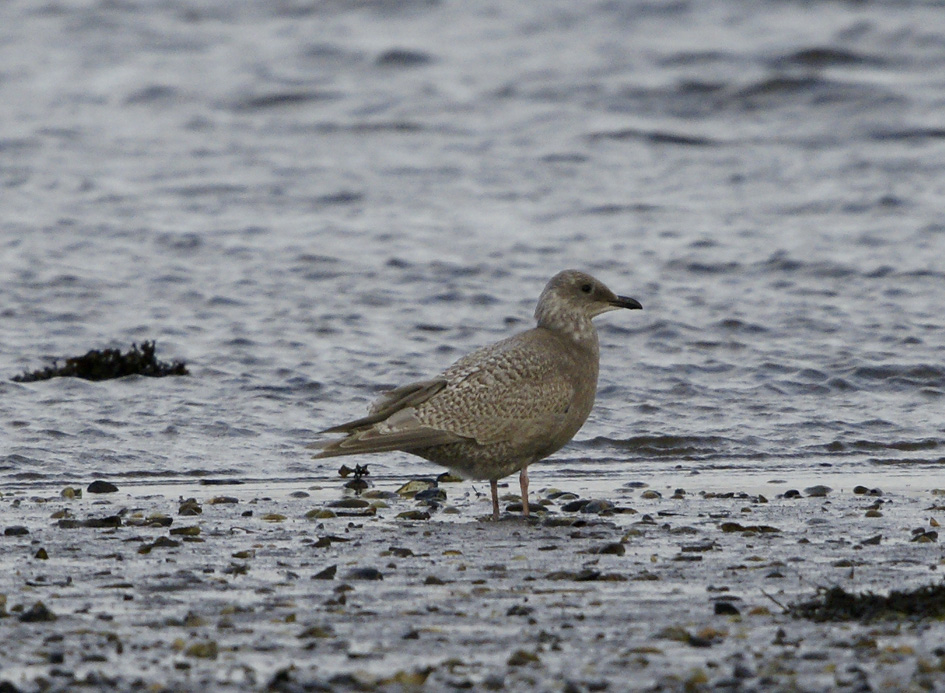
Jim Dickson took these 'new' photographs of the Dunstaffnage juvenile Thayer's-type gull today


Monday, 21 November 2011

BLACKPOLL WARBLER in Kent

The 44th BLACKPOLL WARBLER for Britain and the first for KENT was found and identified by Andrew Appleton in the St James' area of Royal Tunbridge Wells mid-afternoon on Saturday 19 November. News of its discovery was broadcast within minutes and fortuitously for county birders Barry Wright and Chris Gibbard, both were within 17 miles driving distance of the site and arrived less than 45 minutes later.

Andy had discovered the bird whilst working at his garage and had managed to keep on it up until the time the two other observers arrived. It was keeping fairly low in the foliage and was favouring a belt of trees and shrubs bordering Pennine Walk where he lived. It remained on view for about an hour, allowing both Barry and Chris to connect, but disappeared just ten minutes before Andy Lawson and others started to arrive. It represented the 451st species of this year in Britain and Ireland....

On Sunday 20 November, no less than 100 observers turned out and despite exhaustive searching of the entire area, it was not relocated and was considered to have departed on the cold, clear night. It was a surprise therefore, to hear that Miles Wheeler had relocated it in the same initial bank of trees at 1115 hours today. Once again, the bird was feeding alone, although very loosely associating with Blue and Long-tailed Tits. At least 40 observers turned out again but alas, no further sign was had. A truly elusive bird.

DIRECTIONS: Leave the A21 at the A264 turning and head towards Royal Tunbridge Wells. After exactly 1.2 miles, turn right on to Sandrock Road and then first right in to Cleveland. Park sensibly and courteously along Cleveland and continue on foot into Pennine Walk cul-de-sac. The belt of trees and overhanging Willows that the bird has been frequenting border the road on the right.

For a Finder's Account, read my blog at http://rarebirdsinbritain.blogspot.com/

Wednesday, 16 November 2011

EASTERN YELLOW WAGTAILS in Britain in Autumn 2011

Lee, You mention EASTERN YELLOW WAGTAIL as having not occurred in the UK this year. It seems then that you have overlooked the two records from Shetland this autumn, both very well-photographed (by Michael McKee & Robbie Brookes) and at least one sound-recorded. See images here. Michael's shot especially is superb.

http://birdingfrontiers.com/2011/10/28/magic-words-eastern-origin/wagtail-sp-2_1-r-brookes-2-resize/http://www.michaelmckee.co.uk/regionview.asp?ID=1852&Region=Shetland

James Hanlon

Record is well and truly smashed as we break through the 450 barrier.........

We've made it ! Today's VEERY in NW Scotland takes us to 450 species in Britain and Ireland in 2011 - smashing the previous record by five species.......

The latest addition - VEERY - was discovered on the island of Muck in Highland Region - showing well until dusk at Gallanach Farm. Note that there is no ferry to the island until Friday and even then you get just 20 minutes on the island before returning......

Another overlooked addition was EASTERN YELLOW WAGTAIL - of which there were two photographed in Shetland in October

But still the autumn produces, with the mild SE winds ensuring an almost constant run of new rarities on a daily basis...

It has been a superb autumn for DESERT WHEATEARS with the most recent being males on Skomer Island (Pembs), at Titchwell Beach (North Norfolk) and a female at Dungeness (Kent)

DUSKY WARBLERS and HUME'S LEAF WARBLERS have also been in plentiful supply with DUSKYS today or very recently at Girdleness (Aberdeenshire), trapped and ringed on the Isle of May (Fife), at Spurn Point Dunes (East Yorks) (one of two birds present in recent days), Horsey (East Norfolk) (in Willows and scrub around the car park entrance), on The Lizard (Cornwall), Gimble Porth, Tresco (Scilly), and in Lower Moors, St Mary's (Scilly) and HUME'S LEAF WARBLERS at Trondra (Shetland), in Roker, Sunderland (Co. Durham), in Lowestoft (Suffolk) (in gardens along London Road North and opposite Tesco's - access along the alleyway adjacent to the Crop Shop), at Gunton (Suffolk) (present since Sunday but not seen today), in the large area of scrub at Foveran Bushes (Aberdeenshire) A few PALLAS'S LEAF WARBLERS are also still to be seen, with singles at the north end of Flycatcher Alley in Lowestoft (Suffolk) and at Balmedie Country Park (Aberdeenshire).

In East Kent, only the second EASTERN BLACK REDSTART for Britain continues for its 6th day at Walpole Bay, Margate, showing extremely well by the slipway below Palm Bay Cafe north of the B2051 at TR 372 713. A further nine individuals have appeared elsewhere in Western Europe this autumn, including 5 in Sweden and singles in Germany, Holland and France. And as I type, news is coming in of yet another - on the beach below the vicar's garden on Holy Island in Northumberland.

An OLIVE-BACKED PIPIT was frequenting the famous Shetland garden at Wick, Gulberwick, this morning, with another on the archipelago in dunes at Norwick on Unst.

A confiding juvenile GREATER YELLOWLEGS present since Saturday in Northumberland has been hugely popular, coming hard on the heels of the summer adult in Wadebridge (Cornwall) much earlier in the autumn. It is favouring the main scrape at Hauxley Nature Reserve and showing very well from the Wader Hide; a first-winter GREY PHALAROPE is on the same pool also. It also regularly commutes to East Chevington Pools nearby. The long-staying first-winter LESSER YELLOWLEGS remains on Tresco Great Pool (Scilly).

The juvenile female BUFFLEHEAD remains mobile and elusive on The Loe Pool at Helston (Cornwall).

An adult RED-BREASTED GOOSE is with Dark-bellied Brent Geese in fields near The Strood at East Mersea (Essex) whilst the first-winter of unknown origin continues on the Exe Estuary in South Devon.

A long-staying juvenile SEMIPALMATED SANDPIPER is still to be found in the Teesmouth area (Cleveland), favouring Seal Sands with Dunlin at low tide and Greatham Creek pools at high tide, whilst the WILSON'S SNIPE is still present on Lower Moors, St Mary's (Scilly).

Up to 4 GREY PHALAROPES were on the sea off Kelling Water Meadows (North Norfolk) today, with another on Ibsley Water, Blashford Lakes HWT (Hampshire), with the adult SPOTTED SANDPIPER still at Herriott's Bridge at Chew Valley Lake (Avon) and the juvenile LONG-BILLED DOWITCHER at Wigtown Harbour (D & G).

A cracking summer adult WHITE-BILLED DIVER just beginning to moult remains for at least its third day off of Peninerine Beach on South Uist (Outer Hebrides)

COMMON CRANES have proved eventful in the past week with a flock of 24 birds (including one juvenile) between Padstow and Wadebridge at St Issey in North Cornwall and the resident 30 in the Horsey area (East Norfolk). There have also been 7 birds in a field just south of Burgh Castle (Norfolk) in recent days - at TG 483 050 and viewable from Burgh Castle monument car park on Butt Lane

GREAT WHITE EGRETS include singles at Chainbridge Lane Scrape, Idle Valley NR (Notts), Linford Nature Reserve (North Bucks), by the Royal Military Canal in fields behind Wyevale Garden Centre in Hamstreet (Kent), at Denge Marsh, Dungeness RSPB (Kent), on Southport Marine Lake (Lancs), on Warton Marsh (Lancs) and at Greylake RSPB (Somerset).

The long-staying CATTLE EGRETS remain at Blakeney Freshmarsh (North Norfolk) and in the cattle field at the end of Thorney Lane on Thorney Island (West Sussex)

A GLOSSY IBIS has been roosting each evening on Drake's Island, off Devil's Point, in Plymouth Sound (South Devon), whilst the first-winter continues to show well at Stodmarsh (Kent) from the Marsh Hide and another remains for a second day on the pool viewable from the footpath between the car aprk and the river at Malltraeth Marsh RSPB on Anglesey. The long-staying and very confiding first-winter also remains at Stanpit Marsh in Christchurch Harbour (Dorset).

There has been a tremendous arrival of Eurasian White-fronted and TUNDRA BEAN GEESE throughout the country, as well as many arrivals of BEWICK'S SWAN herds. TUNDRA BEAN parties include 19 at Bigton (Shetland), 23 on North Ronaldsay (Orkney), 4 on Echna Loch, Burray (Orkney), 9 at Cara, South Ronaldsay (Orkney), 17 in stubble field pools at the crossroads NW of Crail (Fife) on the B9405, 5 at Girdleness (Aberdeenshire), 10 at Nethy Bridge (Spetside), 2 at Capringstone Flash (Ayrshire), 2 on Holy Island (Northumberland), 4 at Low Newton-by-the-Sea (Northumberland), 14 at Benacre Broad (Suffolk) and 2 on Huxter Well Marsh at Potteric Carr YWT (South Yorks). Meanwhile, 3 apparent TAIGA BEAN GEESE are on Anglesey, in fields near Llyn Coron

A drake AMERICAN WIGEON remains at Wintersett Reservoir (West Yorks) with that on the River Exe in Shutterton Creek at Cockwood (South Devon) present also, and a further wintering bird at the south end of Loch Bee, South Uist (Outer Hebrides).

ROUGH-LEGGED BUZZARDS also remain in good numbers, with two in the Holkham Freshmarsh area of North Norfolk, a showy juvenile at The Burgh at Burpham (TQ 048 110) (West Sussex) and a very confiding juvenile between the Nickoll's Quarry and sewage works atBotolph's Bridge, Hythe in East Kent. Bedfordshire's latest-ever OSPREY continues to fish daily at Warren Villas. Sandy.

Another vexing juvenile High Arctic gull resembling Thayer's Gull has been seen and photographed in Dunnstaffnage Bay at Dunbeg, just north of Oban (Argyll) in recent days - work is still ongoing as to its identification.

RICHARD'S PIPITS on the other hand, have been noticeable by their absence, with only small numbers being detected. The Cheshire Leasowe bird was still around today, being seen in the paddocks and rough fields by the lighthouse

The 3 SHORE LARKS are still present on the edge of the lagoon just north of the John Weston Reserve at The Naze (Essex), with 5 on the saltings east of Holkham Gap (North Norfolk). One is also well north at the West Voe of Sumburgh (Shetland).

A PENDULINE TIT showed well on bulrushes in front of the Sea Wall Hide at Oare Marshes NR (North Kent) today, whilst yet another RED-FLANKED BLUETAIL was at Whitburn (Co. Durham) on 10 November.

It also seems as though WAXWINGS will again invade us this winter, with a flock of 28 in St Andrews (Fife), 60 by the road in Budle village today (Northumberland), 23 in Stafford, 20 in Kessingland (Suffolk), 8 in Burnham Deepdale (North Norfolk) and 6 in Ramsgate (East Kent)

Also of interest, a RED-NECKED GREBE is at Valley Lakes RSPB at Llyn Penrhyn, an immature VELVET SCOTER remains on Staindale Lake in Dalby Forest (North Yorks), a RED-THROATED DIVER is on Lake Lothing, Lowestoft (Suffolk), a juvenile GREAT NORTHERN DIVER at Caldecott North Lake (North Bucks) representing the 18th county record, 5 PIED AVOCETS are at Port Meadow, Oxford (Oxon) and another at Boddington Reservoir (Northants)

IRELAND

The PALLAS'S LEAF WARBLER remains in Cork today at Power Head, whilst elsewhere in County Cork, the flock of 19 COMMON CRANES are still to the west of Waterrock up the cul-de-sac lane. Another PALLAS'S LEAF WARBLER is at Brownstown Head (Co. Waterford), in the main Willow garden, and a juvenile PALLID HARRIER again at Poer Head on 13th. A HOOPOE was at Clougher Head at Almondstown yesterday, with the two male DESERT WHEATEAR still at Bray (Co. Wicklow).

Monday, 14 November 2011

Some additional images from Argyll - High Arctic gull


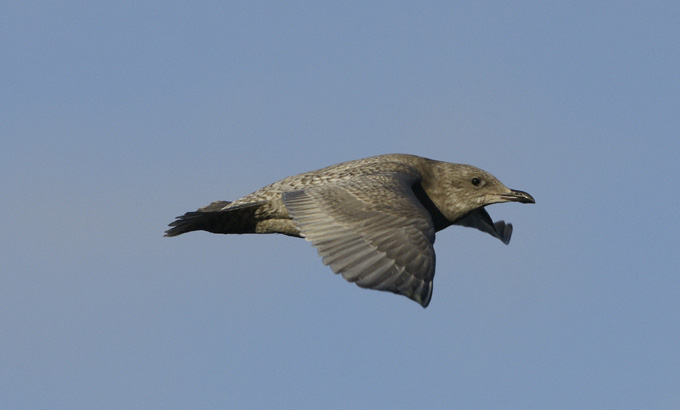
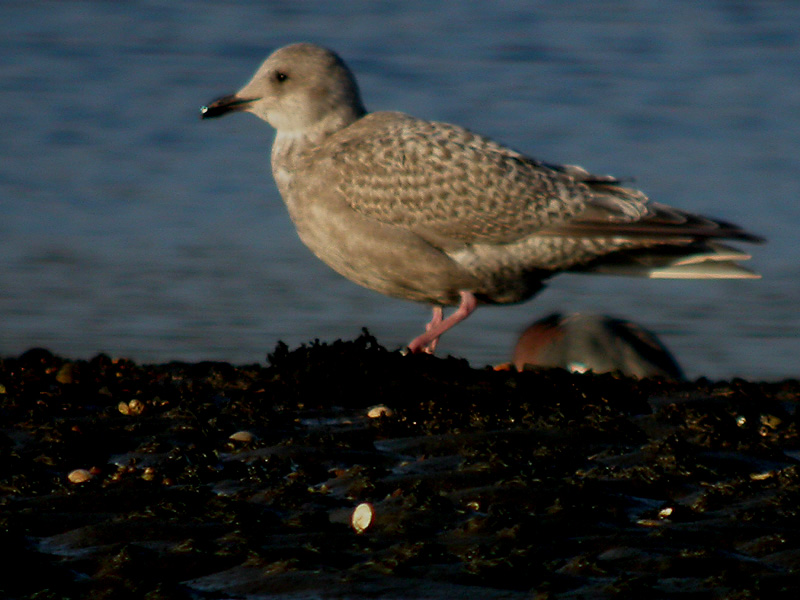
The Oban thayeri-type, photographed by Jim Dickson (top two) and the finder Bill Allan (bottom). Experts cannot seem to agree on the identification of this individual, some opting for Thayer's and others for hybrid.

A putative THAYER'S GULL in Argyll


This interesting juvenile gull from the High Arctic was discovered yesterday
by Bill Allan at Dunstaffnage Bay, just north of Oban (Argyll). It seems to show a lot of traits of juvenile THAYER'S GULL, although does have a few anomalous features. Once again, there may be a possibility of outside influence, perhaps with Smithsonian's Gull (North American Herring Gull). Jim Dickson managed to obtain this very interesting and educational set of images. I would be most interested in any comments regarding identification - LGREUK400@aol.com


Sunday, 13 November 2011

EASTERN BLACK REDSTART in Kent - addition to the British List

See http://f1.grp.yahoofs.com/v1/4D3ATiSke3gXvQ_KcbbZCUzbY2E7APZd3zSwKDCvfRWX04sqYaBSb4XWJxrpBkTrONcfRoj-Hg1I8uwC2S7tRmiXiI8fgyGy/EASTERN%20BLACK%20REDSTART%20in%20EAST%20KENT.pdf

EASTERN BLACK REDSTART in East Kent for third day


A male EASTERN BLACK REDSTART is present for its third day at Walpole Bay, Margate (East Kent), favouring the chalk cliffs and adjacent beaches around the sheltered cove immediately north of the Palm Bay Cafe. The latter is located at Postcode CT9 3DH and accessed along the coastal B2051 east of Margate town centre. The bird was discovered by local patch worker Barry Hunt and is particularly confiding and consequently very photogenic. Remarkably, it follows at least three records in Scandinavia this autumn.

It represents the first confirmed record of this form in Britain

Tuesday, 8 November 2011

Record well and truly smashed !

As of today, with the first HUME'S LEAF WARBLERS of the year appearing, the total of species recorded in Britain and Ireland this year is an incredible 448 - a new record........

It has been another few days filled with Eastern surprises with the pick of the bunch being two different ISABELLINE WHEATEARS (a well-twitched bird on the beach at Spurn Point, East Yorkshire, for a couple of days and the third of the year at Wernffrwwd, on the Gower, frequenting the mound on the saltmarsh at SS 506 939 - still present today). Spurn has also attracted a PIED WHEATEAR - showing well today on the beach adjacent to the Point car park) whilst male DESERT WHEATEARS include singles midway between Boulby mast and Hummersea Farm opposite the Micklow Junction at Loftus (Cleveland) and at and in the bulb field near Mill Bay, 200 yards beyond Faraway Cottage, in Nanjizal Valley (West Cornwall) (3rd day).A female PINE BUNTING remains in the crop at Clibberswick on Unst (Shetland)

Warblers of Siberian origin include the aforementioned HUME'S LEAF WARBLER on Shetland at Kergord Plantation (with putative additional birds in Lothian and Suffolk), with a DUSKY WARBLER still in bushes at the north end of the car park at Balmedie Country Park (Aberdeenshire) and another in Willows south of the central track at North Warren RSPB, Aldeburgh (Suffolk). The only PALLAS'S LEAF WARBLER of the day was in the Point Dunes at Spurn Point (East Yorks).

Of Nearctic origin, the first-winter NORTHERN WATERTHRUSH survives on the Isles of Scilly at Lower Moors, nearly two months after it first arrived, whilst virtually sharing the same bush is an exceptionally late GREAT REED WARBLER. The long-staying WILSON'S SNIPE remains on the main ISBG pool. On neighbouring St Agnes, the CENTRAL ASIATIC LESSRER WHITETHROAT continues, with the RUDDY SHELDUCK nearby on Porth Killier Beach.

A HOOPOE remains popular in West Sussex, favouring lawns by the thatched cottages in Climping, whilst an adult SPECTACLED WARBLER was present at Needs Ore (Hampshire) from 29-30 October.

A GLOSSY IBIS continues to show well on the main pool at Filey Dams Nature Reserve (North Yorks) with another on Carter's Flood at Pett Levels (East Sussex), a first-winter at Fingringhoe Wick EWT (Essex) and the Plymouth Sound (Devon) bird again on Drake's Island, whilst the juvenile SQUACCO HERON was still present in the Attenborough NR (Notts) area this morning.

A first-winter RED-BREASTED GOOSE of unknown origin was still present at Exminster Marshes RSPB (South Devon) today, this individual being formerly seen with Dark-bellied Brent Geese at Christchurch Harbour and on The Fleet in Dorset.

The juvenile female BUFFLEHEAD is now building up strength on the Loe Pool at Helston (Cornwall), favouring the eastern side of the northern end to dive and feed.

The first-winter LONG-BILLED DOWITCHER was again in Wigtown Harbour (D & G) today, with one of the two juveniles still at the east end of Blagdon Lake (Somerset) and the other at Chew Valley Lake (Avon). Meanwhile, the long-staying AMERICAN GOLDEN PLOVER remains in Europie village, by the Atlantic Cottage in Fivepenny at the extreme north end of Lewis (Outer Hebrides) and the LESSER YELLOWLEGS by the bridge at the east end of the Alaw Estuary on Anglesey. A WHITE-RUMPED SANDPIPER remains for a second day at Black Hole Marsh, Seaton (South Devon), with the adult still at Rutland Water (Leics) and a juvenile on St Agnes (Scilly), whilst SPOTTED SANDPIPERS remain at Chew Valley lake (Avon) and at the north end of the River Plym, Plymouth (South Devon).. A very late juvenile RED-NECKED PHALAROPE continues to survive at Cley Marshes NWT (North Norfolk) (viewable from Avocet Hide), whilst the two juvenile WHITE-RUMPED SANDPIPERS and SEMIPALMATED SANDPIPER remain on Harris (Outer Hebrides) at the south end on the saltmarsh at Scarasta, north of Northton (at NF 999 928).

GREAT WHITE EGRETS are becoming ever more familiar in the UK with birds today still present at Linford NR (North Bucks), on the Windsurfing Pit at the Idle Valley NR (Notts), on the North Marsh at Minsmere RSPB (Suffolk), at Burton Mere Wetlands RSPB (Cheshire) (two birds), at Old Hall Marshes RSPB (Essex), at Campfield Marsh RSPB (Cumbria), at Capel Fleet Marshes, Isle of Sheppey (North Kent), at Walmsley Sanctuary (Cornwall) and on the Out Skerries on Shetland. A CATTLE EGRET continues on the Camel Estuary feeding opposite the sewage works west of Wadebridge (Cornwall).

The party of 8 COMMON CRANES are still feeding in the field 300 yards from the A47 between Thorney and Guyhirn (Cambs), with another on the north shore of The Fleet at Langton Hive Point, south of Langton Herring (Dorset).

A second-winter RING-BILLED GULL is still present by the Lifeboat Station in Stornoway Harbour, Lewis (Outer Hebrides), with a first-winter at Balivanich on Benbecula.

A party of 6 TUNDRA BEAN GEESE arrived today at Covehithe (Suffolk), favouring a stubble field NE of the church with 6 European White-fronted Geese.


A juvenile ROSE-COLOURED STARLING is present for at least its 5th day at garden feeders at Mumbles Head on the Gower Peninsula, visible from All Saints Church on the Mumbles Road, whilst another was in gardens along Manse Road, Inverkeithing ((Fife) yesterday..

Five SHORELARKS are back for the winter at Holkham Gap saltings (North Norfolk), whilst a juvenile ROUGH-LEGGED BUZZARD has been showing very well at Nicholl's Quarry, Hythe (East Kent), just one of a major influx of this species into Britain this autumn.

It has been an excellent period inland, with Dark-bellied Brent Geese, Red-breasted Mergansers and Velvet Scoters passing through) whilst highlighting include inland LONG-TAILED DUCKS at Bromley Trout Fishing Lake (London) (accessed along the track between George and Rookery Lanes) and at the west end of the Green Lawn at Blagdon Lake (Somerset), a SLAVONIAN GREBE at Spade Oak Nature Reserve, Little Marlow (South Bucks) and a PURPLE SANDPIPER at Queen Mother Reservoir (Berks). Many SNOW BUNTINGS have been displaced inland, including twitchable individuals in Essex, Bucks and Berks

SHORT-EARED OWLS are plentiful throughout the UK due to an excellent breeding season in northern Scandinavia, whilst HEN HARRIERS are also very evident. It is also a good late autumn for GREAT GREY SHRIKES - those reported recently including singles just north of the Box Car Park at Ashdown Forest (East Sussex) (TQ 463 294), just east of the waterworks and south of the railway line in Cromer (Norfolk), in trees around Kingshill Farm, Elmley RSPB (North Kent), along the coastal path 400 yards west of Morston Quay (North Norfolk), along the track leading to the hides at Swale NNR (North Kent). in the hedgerow along Muspit Lane - SK 759 849 - at South Wheatley (Notts) and by the Cemetery Road junction at Donna Nook (North Lincs).

North Norfolk and elsewhere have seen small numbers of BOHEMIAN WAXWINGS arrive in recent days on the easterly winds

In IRELAND, a WATER PIPIT is on the Silver Strand at Ballycotton (Co. Cork), with the same general area boasting an AMERICAN BUFF-BELLIED PIPIT, BARRED WARBLER, AMERICAN GOLDEN PLOVER and a WHITE-RUMPED SANDPIPER.

Friday, 4 November 2011

Record breaking number of Nearctic Shorebirds in IRELAND this autumn


Not the best-looking but the rarest - Dan Brown's SEMIPALMATED PLOVER in County Kerry


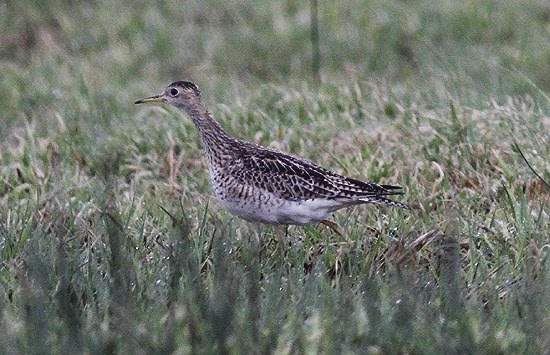
The prize of the autumn for Irish birders - Dave Suddaby's UPLAND SANDPIPER on The Mullet at Termoncarragh Loch photographed by Aidan Kelly


Quick totals (individual birds) from the Provisional List up to the end of this October (numbers in brackets 2010 totals).


Semipalmated Plover - 1 (0)

American Golden Plover - 35 (19)

Semipalmated Snadpiper - 60 (4)

Least Sandpiper - 2 (0)

White-rumped Sandpiper - 33 (16)

Baird's Sandpiper - 15 (7)

Buff-breasted Sandpiper -91 (34)

Long-billed Dowitcher - 2 (4)

Hudsonian Whimbrel - 1 (0)

Upland Sandpiper - 1 (0)

Spotted Sandpiper - 5 (1)

Lesser Yellowlegs - 4 (4)

Wilson's Phalarope - 1 (6)


Leaving out Pectoral Sandpipers that gives a grand total of 251 individuals. I think its safe to say it's been a record year for American waders!


Dermot Breen