Tuesday, 27 September 2011

LEAST SANDPIPER in KERRY - an interesting individual (by CIARAN CRONIN)


I need to learn a bit more about these guys, and have no experience of either lLEAST SANDPIPER or LONG-TOED STINT. While I'm pretty happy with the identification as a LEAST SANDPIPER, I'd like to raise a couple of points out of interest.
1) The bird shows very clearly that the dark crown extends to the bill base,breaking the supercilium - supposedly a feature for Long toed.

2) It also shows whitish fringed wing coverts contrasting somewhat with rufous edged scapulars - again apparently a feature for long toed.

3) The call, heard a number of times this morning was clearly a monosyllabic sound, which I rendered as 'prit' - not similar to other descriptions read.

4) In flight there appeared to be a hint of toes projecting beyond tail, although this was very difficult to be sure of - if present a feature for Long toed.

The bill is clearly solidly dark, including base of lower mandible - a LEAST feature. The shape did not remind me of Wood Sandpiper, rather a small furtive Temminck's Stint, and the tibiae did not seem particularly long.

On balance, I'm quite happy that the bird is indeed a Least Sandpiper, particularly on shape, leg length and bill colour. An absolutely superb find, and a truly fantastic bird. However, I thought it worthwhile raising these features so I can be educated, and just as a reminder that the features may not be as consistent as we would like, and the books might suggest!

Might have some better shots later when I learn how to use my camera - dashing out the door now into a lovely, wonderfully misty Galley Head!!!

Ciaran Cronin

Southerly winds set for the week.........

This week is said to be dominated by warm southerly winds - in fact hinting at ''Indian Summer'' conditions, with temperatures expected to climb to a sweltering 84 degrees by Friday !

It has been Nearctic waders continuing to make the headlines - and none so newsworthy as BUFF-BREASTED SANDPIPERS. Killian Mullarney recorded an incredible 26 birds at the East End of Tacumshin wetlands (County Wexford) yesterday, increasing by 3 the previous day's record totals. This joins the 40 or more seen in Britain in recent weeks, those still around including juveniles on St Mary's Airfield, St Mary's (Scilly) (still 4 of the original 8 remaining), Sennen (West Cornwall) (2 birds), Slimbridge Dumbles (Gloucs), Carr Bank, Arnside (Lancs), Bornish, South Uist (Outer Hebrides) (2 birds), North Ronaldsay (Orkney) and at Eshaness (Shetland). Ricard Guttierez also informed me of an exceptional 11 birds in the Ebro Delta, Tarrragona, SPAIN, whilst at least 35 have appeared elsewhere in the WP in the past month)

The juvenile SOLITARY SANDPIPER still remains on Lower Moors, St Mary's (now with the juvenile LESSER YELLOWLEGS in tow), whilst further juvenile LESSER YELLOWLEGS include singles at Drift Reservoir and on the Tresilian River at Tresemple Pool (SW 853 439) at Truro (West Cornwall) and ENE of Glasson (Lancs) on the south side of the Lune Estuary at the mouth of the River Conder.

It has also been a record year for SEMIPALMATED SANDPIPERS with juveniles at Saarasta Beach, Northton (Harris, Outer Hebrides), Slimbridge Dumbles (Gloucs) and Lower Pennington Marshes (Hampshire) (following another at Cliffe Pools Flamingo Pool, Kent, on Sunday), whilst current SPOTTED SANDPIPERS include an adult at Chew Valley lake Herriott's Bridge (Avon) and juveniles at Lydney Harbour (Gloucs) and at the north end of the Plym Estuary, Marsh Mills, Plymouth (South Devon). At least 15 PECTORAL SANDPIPERS also remain around the country none so entertaining nor approachable as the ridiculously tame juvenile on Crookham Common Pools, Greenham Common (Berkshire). AMERICAN GOLDEN PLOVERS include a juvenile on St Mary's (Scilly) and an adult in Gwent at West Usk, with two juveniles together on Barra (Outer Hebrides), whilst the two juvenile LONG-BILLED DOWITCHERS remain respectively at Baron's Haugh RSPB (Clyde) and at the southern (Carnmenellis) causeway at Stithians Reservoir (Cornwall)..

As is usual in late September, all attention focuses on the Isles of Scilly and on the Northern Isles. Thus far it has been Scilly's swing, following the succession of East Coast USA hurricanes, although now the only showstopper left being the slightly-more showy NORTHERN WATERTHRUSH on the newly created Higginson Pool at Lower Moors. A RED-EYED VIREO also remains in tamarisks in this area. Other than rare waders and the two former-mentioned ;'stars', the archipelago harbours an ORTOLAN BUNTING at the north end of the island near Maypole, the odd WRYNECK, a long-staying first-summer WOODCHAT SHRIKE by the airport terminal buildings and a very elusive ICTERINE WARBLER in Lower Moors.

At the opposite end of the country, and following the departure SOUTHBOUND of the weekend's adult SANDHILL CRANE from Strathbeg RSPB (Aberdeenshire) yesterday morning, John Bell and others have the RED-EYED VIREO on Barra at Breivig and the 90 or so twitchers/birdfinders currently scouring Shetland have thus far amassed an adult LESSER GREY SHRIKE SE of Laxo, a RED-BREASTED FLYCATCHER, several NORTHWESTERN REDPOLLS and a usual scattering of Common Rosefinches, Yellow-browed Warblers and Barred Warblers. North Ronaldsay has certainly been scoring points and featuring prominently this autumn, both a NORTH AMERICAN BUFF-BELLIED PIPIT and first-winter CITRINE WAGTAIL remaining yesterday (as well as a GREATER SHORT-TOED LARK, PEC SAND and commoner scarce passage migrants), whilst the observers on Fair Isle are still watching LITTLE BUNTING, CITRINE WAGTAIL, MELODIOUS WARBLER, ROSE-COLOURED STARLING and GREAT GREY SHRIKE.

The record influx of juvenile PALLID HARRIERS continues unabated with at least one still on Shetland Mainland quartering the Hillwell area, another on North Ronaldsay, the richly-coloured bird by the hide at The Loons RSPB reserve on Orkney Mainland, the bird on Mull at Fidden (Argyll) and the very popular bird hunting the game strip every two hours just NNE of Burpham village near Arundel (West Sussex).

SABINE'S GULLS left over from the 'wreck' include the two brother or sister combination at Sturt Pond, Milford-on-Sea (Hampshire) and two juveniles off Exmouth Beach (South Devon), whilst the very distinct adult AZOREAN-TYPE ATLANTIC GULL continues to roost each evening at Stewartby Lake (Bedfordshire). In North Lincolnshire, the juvenile NORTH AMERICAN BLACK TERN continued to afford excellent views.

A juvenile ROSE-COLOURED STARLING is also at Fidden on Mull (Argyll), with about 10 WRYNECKS scattered about the country, an exceptional juvenile BARRED WARBLER in East India Dock (Central London) yesterday and juvenile RED-BACKED SHRIKES at Frinton-on-Sea (Essex), Lodmoor (Dorset) and Sharkham Point (South Devon).

At least one BLACK KITE remains in West Cornwall, frequenting the Polgigga area, but EUROPEAN HONEY BUZZARDS continue to be particularly few in number.

IRELAND has seen some of its most entertaining and productive birding in its history this autumn with an outstanding list of rare waders to its name: the juvenile SEMIPALMATED PLOVER remained at Ventry Harbour, WSW of Dingle (Co. Kerry) until 1040 hours yesterday morning whilst nearby, a confiding LEAST SANDPIPER crawled about the tidal dykes and ditches at Carrahane Strand (Co. Kerry). Juvenile SEMIPALMATED SANDPIPERS include up to four together at Sruhill Lough, Achill Island (Co. Mayo), two at Tacumshin (Co. Wexford) and at Ballinskelligs (Co. Kerry) of no less than 36 recorded this autumn, with AMERICAN GOLDEN PLOVERS at Portagovie/Kirkistown (Co. Down) and Black Rock Strand (Co. Kerry). An adult BONAPARTE'S GULL remains at Blennerville Marsh. Many BUFF-BREASTED SANDPIPERS and PECTORAL SANDPIPERS are still to be found too and most likely the HUDSONIAN WHIMBREL at Mizen Head (Co Cork).

And contrary to a previous comment of mine, the INDIAN HOUSE CROW is still in Cobh Harbour (Co. Cork) and not stowed away to Cyprus !!

BUFF-BREASTED SANDPIPERS at Tacumshin - Killian makes it 26 !!

Having spent a good part of yesterday birding at Tacumshin I was surprised by the apparent absence of Buff-breasts at any of the spots they normally tend to be found. It wasn't until I was heading back to the east end in the late afternoon that I first glimpsed the flock, circling around in the distance almost above the east end channel. It was clearly a substantial flock, but when I got a bit closer and scanned the area I could see only six birds, the rest presumably being hidden in a dense swathe of Sea Aster. After a while three more emerged into view, but it wasn't until something spooked them that another bunch suddenly jumped up from the back of the Aster and joined the nine out front. I counted carefully (there were some Ringed Plover and a Dunlin or two among them) and reached a total of 22 birds, including one with an injured leg; all were juveniles. Then a single bird flew in from the left and joined them, so it seemed that the full complement of the previous day's record flock of 23 was still present.Within a minute or two they started to spread out, with the majority melting back into the Aster to become invisible again. I hoped they might all get up once more, as it was when they were in the air that the size of the flock was most impressive. After about 15 minutes they suddenly took off and flew directly away, toward the east end pool, before banking right over Sigginstown island and then turning back, passing me at very close range before they disappeared westwards, against the sun. I took a series of photos as they did so, the last few being a hopeless blur.

It wasn't until late last night that I had a chance to check the photos. I must have missed a few birds when I counted them on the deck as when I exclude the single Dunlin and two Ringed Plovers in their midst, the total number of Buff-breasts in the photos is 26!

With the addition of two Semipalmated Sandpipers, a White-rumped and an American Golden Plover the number of American waders present at Tacumshin yesterday was at least 31 birds. Kerry has had the quality in the past few days, but Tacumshin has the quantity!

Killian Mullarney

Sunday, 25 September 2011

BUFF-BREAST gathering breaks new record

Although Tacumshane Lake in County Wexford, SE Ireland, is undoubtedly one of the best birding sites in Britain and Ireland, mainly because of the quality of the habitat and its vast expanse, today saw no less than 23 BUFF-BREASTED SANDPIPERS counted - the largest congregation ever recorded on this side of the Atlantic. The previous record was of 16 individuals on St Mary's, Scilly, in September 1976.

Most likely due to the succession of Tropical Storms or hurricanes tracking NE along the Eastern Seaboard and out to sea during the past few weeks, both Britain and Ireland are experiencing one of the best autumns for Nearctic waders for decades with impressive numbers of up to 14 species being recorded - including normally much scarcer species such as Least Sandpiper, Hudsonian Whimbrel, Greater Yellowlegs and Semipalmated Plover. Never has there been a better time to find that WILLET.........

Saturday, 24 September 2011

Digitalwildlife.co.uk - Superb images by RICHARD FORD


The Burpham juvenile PALLID HARRIER - see much more of Richard Ford's excellent work at www.Digitalwildlife.co.uk

The Year of the PALLID HARRIER


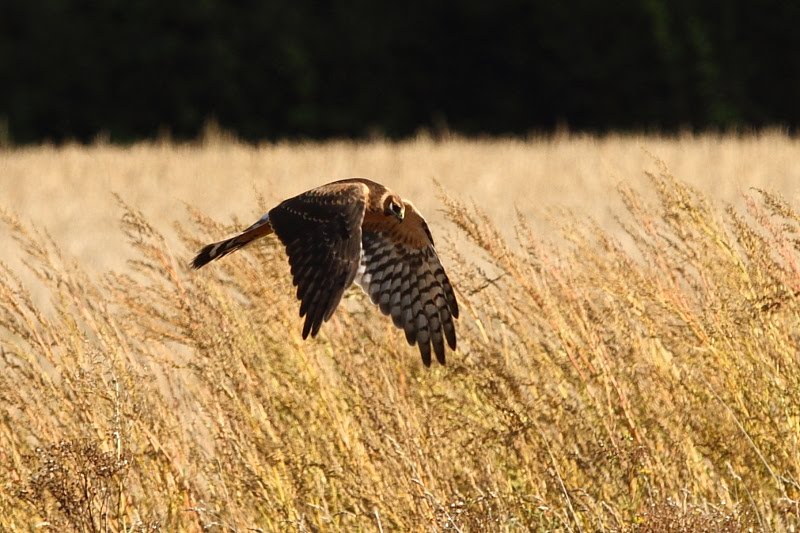
......And the most watched and photographed of them all - the juvenile in the Burpham area of West Sussex (Richard Ford)


The juvenile that spent two days in Essex at St Osyth Marshes and Colne Point (Stephen Allen)


No less than 3 different juvenile PALLID HARRIERS have reached Shetland this autumn, including this splendid individual in the Hillwell area captured beautifully on film by Dougie Preston

Grafham Water's Double-Bill


Mike Lawrence was able to savour the delights of both the adult SABINE'S GULL and first-winter GREY PHALAROPE as they fed literally just inches from each other on Grafham Water's dam all last week


WEST CORNWALL did well too


Penwith birder BRIAN FIELD managed these beautiful images of Drift Reservoir's recent juvenile SEMIPALMATED SANDPIPER and LESSER YELLOWLEGS.........

The Star of the Scilly show - bah humbug !


Ashley Powell captured the Lower Moors first-winter female BLACK-AND-WHITE WARBLER in bright sunlight.......shame it did such a premature departure

Scilly's Purple Patch


Robin Mawer has been kept busy during the past week photographing rarity after rarity as it appeared on St Mary's - the Newford Duck Pond SOLITARY SANDPIPER and BLUE-WINGED TEAL, Borough Farm BEE-EATER and Garrison BALTIMORE ORIOLE.....


Pennington BAIRD'S SANDPIPER


The recent juvenile BAIRD'S SANDPIPER on the Fishtail Lagoon at Pennington Marshes in Hampshire (Simon Knight)


This very confiding juvenile AMERICAN BLACK TERN was still present at Covenham Reservoir today
- this species becoming virtually annual in recent years. Graham Catley obtained these excellent flight shots.


Nearctic beach plover lay undetected in West Ireland

Dan Brown and other members of the so-called ''Punkbirder'' crew fully clinched the identification of a juvenile SEMIPALMATED PLOVER in west IRELAND today 4.5 miles WSW of Dingle (County Kerry) at the south end of Ventry Harbour on the beach just north of the southern stream mouth. The bird was showing very well and was photographed this afternoon by Michael O'Keefe and was also seen by a number of Kerry birders including Maurice Hanafin and Jill Crosher.(information per Ed Carty).

Rare Nearctic waders continue to dominate the IRISH headlines with a bag of juvenile SEMIPALMATED SANDPIPERS still to be seen, including two at Tacumshin (Co. Wexford) and two at Blennerville Marsh (Co. Kerry), as well as numerous BUFF-BREASTED SANDPIPERS (4 at Tacumshin still, another 4 between Newbridge and Kildare amongst European Golden Plovers on Curragh Racecourse, Co. Kildare, and 2 at Truska Marsh, Ballyconneelly, Co. Galway), a juvenile AMERICAN GOLDEN PLOVER (and juvenile Dotterel) at Truska Marsh and the HUDSONIAN WHIMBREL still at Mizen Head (Co. Cork). Other highlights include the continuing juvenile PALLID HARRIER at Tacumshin and a female BLUE-WINGED TEAL at Inch Lake on Lough Swilly (Co. Donegal).

On the Isles of Scilly today, the NORTHERN WATERTHRUSH commuted between the St Mary's Dump Clump Project Pool and the main Lower Moors pools in front of the ISBG hide but was always very elusive, whilst the juvenile SOLITARY SANDPIPER remained at the Project Pool, just one BUFF-BREASTED SANDPIPER on the Airfield, the first-summer WOODCHAT SHRIKE by the Airfield and an ORTOLAN BUNTING there also. The Black-and-White Warbler and Baltimore Oriole departed midweek.

In the far Northwest, on the Outer Hebrides, Barra's RED-EYED VIREO was trapped and ringed today at Brevig.

As well as in Ireland, SEMIPALMATED SANDPIPERS and other Nearctic waders appeared in numbers in Britain today with new juvenile SEMI-P's being discovered in South Devon (on the Axe Estuary north of Seaton at Black Hole Marsh) and in Hampshire (at Pennington Marshes' Shoveler Pond), an adult SPOTTED SANDPIPER on the Herriott's Bridge causeway at Chew Valley Lake (Avon) and a juvenile LESSER YELLOWLEGS ENE of Glasson (Lancs) on the south side of the Lune Estuary at the mouth of the River Conder (at SO 454 562) (both LESSER YELLOWLEGS remained in West Cornwall, at Drift Reservoir and Tresilian River, Truro, respectively, and the juvenile SPOTTED SANDPIPERS at the north end of the Plym Estuary in Plymouth, South Devon, and at Lydney, Gloucs). A sprinkling of BUFF-BREASTED SANDPIPERS included the Thornwick Bay, Flamborough (East Yorks), bird again, whilst an adult AMERICAN GOLDEN PLOVER was to be seen at Uskmouth Lighthouse (Gwent) and a WHITE-RUMPED SANDPIPER at Llanrhidian Marsh. Both juvenile LONG-BILLED DOWITCHERS remain at Baron's Haigh RSPB (Clyde) and Stithians Reservoir (Cornwall) respectively

The deluge of juvenile PALLID HARRIERS continues, breaking all previous records, with a new bird at Cliffe Pools RSPN (North Kent) this afternoon joining at least two different birds on Shetland, a confiding bird at The Loons RSPB (Orkney), another on Mull (Argyll) at Fidden, Moss and the most observed of all still just NNE of Burpham (West Sussex) at The Burgh already on the list.

The light SE winds this afternoon bought in a nice ARCTIC WARBLER to the East Coast - showing well in bushes and scrub ENE of the boardwalk at Burnham Overy Dunes (North Norfolk) - whilst on Shetland, the GREY-CHEEKED THRUSH at West manse garden, Fetlar, replaced the attraction of yesterday's South Mainland Swainson's Thrush on the archipelago.

Over 40 twitchers made the long trip north to Aberdeenshire overnight and were rewarded with early morning views of the adult SANDHILL CRANE at Strathbeg RSPB, the bird continuing to show throughout the day until it decided to fly south at 1613 hours. Not that far away to the south, the adult drake NORTH AMERICAN BLACK SCOTER remained with Common Scoter off Murcar Beach.

The juvenile AMERICAN BLACK TERN continues at Covenham Reservoir in North Lincolnshire, with both juvenile SABINE'S GULLS still lingering at Sturt Pond, Milford-on-Sea (Dorset) (the long-staying adult at Grafham Water, Cambs, departed this morning).

Many Yellow-browed Warblers are now moving through Shetland, along with Common Rosefinches and the odd Barred Warbler, whilst at least 1 AMERICAN BUFF-BELLIED PIPIT and 1 CITRINE WAGTAIL remain on North Ronaldsay (Orkney). A GREAT SNIPE is still lingering on Fair Isle. A juvenile ROSE-COLOURED STARLING is at Land's End (West Cornwall), whilst juvenile RED-BACKED SHRIKES are appearing in small numbers (with singles on Tresco, Scilly, and at Frinton-on-Sea, Essex, Kings Hall at Herne Bay, East Kent and in Dorset) and WRYNECKS with more frequency than in recent weeks.

Bedfordshire's apparent adult AZOREAN ATLANTIC GULL failed to appear in the Stewartby lake roost this evening, perhaps due to the increase in water ski-ing and speedboat racing today.

Also intriguingly, there was no sign of Cobh's INDIAN HOUSE CROW today; Dave Carter found and photographed the first-ever on Cyprus on Thursday !

AZOREAN ATLANTIC-TYPE GULL at Stewartby Lake


Martin Palmer obtained these flight record images of the Stewartby Lake bird on Thursday evening.


The bird did not appear in the roost this evening - just two adult CASPIAN GULLS.....


AZOREAN ATLANTIC GULLS - a gallery of November adults


Richard Bonser has very kindly emailed me these images taken of adult AZOREAN ATLANTIC GULLS in the Azorean archipelago in November.


These three individuals show how variable the head streaking can be. You can see the rather heavy appearance of this species with proportionally shorter legs than michahellis, and the much paler iris than a typical michahellis. There is a substantial amount of black in the outer primaries, more so than in michahellis (though P4 is meant to often show a subterminal band but obviously there's no spread wing shots here). Also interesting to note how dark the mantle colour is compared to the LBB Gull in the lower shot.


The current Bedfordshire bird does share some of the characteristics apparent in these images, although the leg colour is very different (much duller).

Friday, 23 September 2011

420 could be reached by October.......

With the addition of GREY-CHEEKED THRUSH today from Fetlar (Shetland), the total number of species recorded in Britain and Ireland this year has now risen to 418 species - just 21 shy of last year's total

AZOREAN ATLANTIC-TYPE GULL still present

FRIDAY 23 SEPTEMBER

STEWARTBY LAKE AND ENVIRONS (BEDFORDSHIRE)

After obtaining reasonable views of the Atlantis-type gull in ploughed fields north of the new bypass this afternoon, I returned this evening to see it roosting.....

Just 14 observers turned out this evening - mostly Beds locals but also including Howard Joliffe from Essex and John Lees from Sussex. The bird was located by Allan Stewart at 1855 hours and roosted until dusk - part of an assembled group of about 1,700 large gulls, which included at least 22 YELLOW-LEGGED GULLS (13 adults, 4 2nd-winters and 4 first-winters), 27 Great Black-backed Gulls (mostly adults) and 56 Herring-types; just 2 Common Gulls were amongst the throng. There was also an adult Lesser Black-backed Gull with a very heavily streaked head.

The subject bird was almost certainly the bird that visited Oxfordshire two years ago, now in full adult plumage. It is as distinctive now as it was then, typified by its very noticeable hood (darkest in saturation on the ear-coverts and crown-sides), the prominent pearly-white iris, the distinct bluish cast to the grey upperparts, gleaming white underparts, thick bill and short washed-out creamy-yellow legs. Interestingly, despite now being adult, the bill pattern is largely the same - insepid greyish-green at the base and pale orange at the tip and blackish in the middle. It is also a particularly sturdy and large individual.

In every respect the bird appears to be an AZOREAN ATLANTIC GULL but recent correspondence I have received from Daniel Velasco, a good birding friend from Spain, has placed grave doubts about the authenticity of these type individuals. Daniel has spent a lot of time in recent years studying the large white-headed gulls that occur in the Cantabric and Northwest Atlantic coasts of Spain and his findings make very interesting reading. The presence of Yellow-legged Gulls with extensive dark grey hoods are not that unusual and begs the question of what is actually occurring in this region. Although there are several key features that do separate the Oxon/Beds individual from those that Dani has highlighted below, it really does raise the prospect of confident identification - a few links to images below

http://farm4.static.flickr.com/3114/2920168504_3c8191c010_o.jpg
http://es.groups.yahoo.com/group/galiciaves/attachments/folder/1192979208/item/1921112256/view
http://sgosgo.org/fotos.asp?id_fotos=1582
http://sgosgo.org/fotos.asp?id_fotos=1581
http://sgosgo.org/fotos.asp?id_fotos=1558
http://sgosgo.org/fotos.asp?id_fotos=1557
http://sgosgo.org/fotos.asp?id_fotos=2065
http://sgosgo.org/fotos.asp?id_fotos=2066
http://sgosgo.org/fotos.asp?id_fotos=1947
http://sgosgo.org/fotos.asp?id_fotos=1946
http://sgosgo.org/fotos.asp?id_fotos=2071
http://sgosgo.org/fotos.asp?id_fotos=2072
http://sgosgo.org/fotos.asp?id_fotos=2106
http://sgosgo.org/fotos.asp?id_fotos=2171
http://sgosgo.org/fotos.asp?id_fotos=2154
http://sgosgo.org/fotos.asp?id_fotos=2136

The propensity of so many birds of this appearance on the west coast of Iberia is truly perplexing, not least because winter-plumaged Yellow-legged Gulls on Madeira and the Canary Islands do not show such dark head streaking but white heads like most michahellis. The majority of Cantabric gulls relate to Yellow-leggeds of the form lusitanicus, which are darker, smaller and slightly more streaked on the head in winter and also importantly, frequently have a single white mirror on p10 (see montage at http://gaviotasyanillas.blogspot.com/)

Dani informs me that hybridisation between Yellow-legged Gull and Lesser Black-backed Gull in Galicia is commonplace, making him ponder about the appearance of these 'atlantis lookalikes', but it also seems likely that a cline exists between atlantis and lusitanicus and that perhaps explains the anomalies. Pure Azorean Atlantic Gull is essentially a saltwater gull and preliminary studies in the Azores of birds of all ages have shown little evidence of northward migration or displacement.

Thursday, 22 September 2011

AZOREAN GULL in BEDFORDSHIRE

An adult AZOREAN-TYPE YELLOW-LEGGED GULL (Larus atlantis azorea) is present for its second day at Stewartby Lake in Bedfordshire. It flew in to roost at about 1830 hours and remained until dusk, roosting amongst just over 3,000 other large gulls. It was found by local birder Steve Blain - a number of images of the bird being displayed on his blog site.

Stewartby Lake is easily accessed from the new A507 bypass now stretching from the A1 to the M1, the gull watchpoint site being at the north end and just 50 yards walk from the cul-de-sac

This is only the eighth record for Britain of this species mainly confined to the Azorean islands

SANDHILL CRANE anniversary


An apparent adult SANDHILL CRANE (see Joseph Nichols superb shot above), perhaps the bird of Orkney of two Septembers ago, appeared in front of two photographer's eyes today at around 1500 hours - distantly from the Starnafin Centre hide at Loch of Strathbeg RSPB (Aberdeenshire) at the Low Ground. Interestingly, its arrival coincided with the first real push of Pink-footed Geese this autumn, involving several thousand birds.

Warden Dominic Funnell was quick to hear of the sighting and relocated the bird after a lot of effort. Once the identification had been established, Dominic 'phoned Birdline Scotland (07968 700234) and immediately news of the bird was broadcast.

The bird remained at Savoch Low Grounds for about 45 minutes before it flew off low into fields around the village of St Combs and Cairnbulg - where it was still present until at least 1915 hours, presumably settling down for an overnight roost. Both locals Pauline Johnson and Ken Jack managed to obtain some decent images of the bird and these can be viewed on the official RSPB Strathbeg blogsite

This record follows reports of a Sandhill Crane in Lothian last Friday and records of a vagrant this autumn in the Baltic States

Meanwhile, on Shetland South Mainland, a confiding SWAINSON'S THRUSH remains for a second day in gardens of the Dalsetter Croft - presumably another bird displaced by the recent deep Atlantic depressions.

On North Ronaldsay (Orkney), whilst there is no sign of the sub-adult Lesser Kestrel which sheltered on Tuesday and Wednesday on the island today, two NORTH AMERICAN BUFF-BELLIED PIPITS were discovered - both feeding together this afternoon (per Paul Brown), whilst two first-winter CITRINE WAGTAILS remain.

Furthermore, two entripid Barra (Outer Hebrides) autumn regulars discovered a RED-EYED VIREO today in Creachan - the second of this species to be found in Britain this autumn - whilst in Argyll, a BLYTH'S REED WARBLER continues on Tiree......

Wednesday, 21 September 2011

Images of LONG-TOED STINT

Double click the link http://www.flickr.com/photos/sinlw/6169991460/in/photostream to view

A very very distant LONG-TOED STINT in SUSSEX

Pete Johnson came upon a small stint at Weir Wood Reservoir last Thursday and immediately phoned Garry Bagnell, who happened to be out-of-county trying to locate a Long-tailed Skua at Dungeness. As Garry was unable to get there, he contacted Jacob Everitt and Nigel Driver who both travelled down to check it out. The problem of course, as with the recent adult summer Little Stint occurrence there, was the range that this particular bird was feeding - beyond the rafts north out from the car park. After much discussion, it was eventually agreed that the bird was a Temminck's Stint and news to this effect was subsequently broadcast. Jacob however, was not convinced, but a lack of experience with the rarer species it could be meant that it he went 'with the flow'. The bird remained throughout the weekend and into this week but never came close.

As I happened to be visiting Sussex for my first-ever Pallid Harrier in that county, I decided to stop off at Weir Wood on my way back home to Buckinghamshire. Initially I failed in my quest to locate the bird - only a flock of 15 Dunlin and 8 Ringed Plovers - but after a prolonged effort, I eventually tracked it down - but at great distance. However, having had experience of reidentifying numerous Temminck's Stints in the UK, especially in autumn, I was not too surprised when I set eyes on this one. This was no Temminck's Stint but something much more interesting........

It was a very tiny stint with a characteristic feeding action - distinctly front-heavy and feeding at a 45 degree angle - much in the same way as a Wilson's Phalarope. It was particularly lethargic and slow-feeding and was closely hugging the mud. It had a nice rufous tint to the crown, a marked gorget of breast-streaking, a prominent eye-stripe (often appearing forked) and no obvious projection beyond the tail. It was too far away to see any critical patterning on the head but was gleaming white below on the lower underparts. Everything pointed towards it being either a LEAST SANDPIPER or LONG-TOED STINT. I immediately contacted Jake, Ian Barnard, Paul Marten, Garry Bagnell and other Sussex birders and within half an hour, eight of them joined me. Frustratingly, the light soon went and the bird wandered into an area of vegetation and became even more difficult to see.

All of the time I was worried about the length of the tibia (noticeably long) and its habit of strangely lifting its head and peering around (giving a long-necked appearance). I was also worried about the lack of primary projection, as well as the apparent dark underwing in flight I also heard it call at one stage as it flushed - a trilling call not that dissimilar to a Pectoral Sandpiper. There was a chance that it was a LONG-TOED STINT. I contacted a very experienced friend for backup and he kindly agreed to visit today.

When the Coopers and other Sussex birders confirmed that the bird was still present this morning, arrangements were made to finally nail the identification. The bird was videoed and the presence of pale greyish-green legs long in the tibia, dark lores, fine breast-side streaking and an isolated cheek/ear covert spot confirmed my suspicions that it was a LONG-TOED STINT after all - the first to be recorded in Sussex. This news was immediately broadcast on Birdline South East and consequently on the pager services. A total of 95 birders connected before nightfall.

IMPORTANT FACTORS TO TAKE INTO CONSIDERATION

This bird can be seen from the main car park and hide at the west end of Weir Wood Reservoir situated about 300 yards along Legsheath Lane from Grinstead Lane at TQ 384 341. There is room for about 20 vehicles here. Parking may also take place on the neighbouring verges but be very careful of hidden ditches. Frustratingly, the bird is only visible at vast range - about 400 yards at the least - so be fully prepared for your worst-ever views of a new British bird if you travel for it. It is also hugging the mud and the short vegetation close to the inlet stream and can be very camouflaged and difficult to find.

THERE IS STRICTLY NO ACCESS TO THE RESERVOIR from this point onwards and anyone doing so will be named and shamed. Information has been released on the proviso that twitching birders are on their best behaviour and local marshals will be on site to watch over proceedings. The reservoir is extremely low at present and hence why the viewing facilities are so poor but if some sort of closer access can be arranged, it will be widely broadcast. Please adhere to these instructions even though you may feel cheated by the views obtained but this is a popular local patch with birders and I wish it to remain that way.

LONG-TOED STINT is a very rare vagrant in Britain and Ireland with very few records - the only really twitchable bird being a very confiding juvenile at Saltholme Pools (Cleveland) from 28 August to 1 September 1982. There is also an additional bird which remained briefly at Ballycotton Marsh (County Cork) on 15-16 June 1996

Tuesday, 20 September 2011

More American vagrants and another from the South or East

Bob Flood walked into a BALTIMORE ORIOLE today as he ventured out on the Garrison on St Mary's. The bird, a first-winter female, was frequenting the bracken and scrub in the lower pig fields below the campsite at the Morning Point end of the Lower Broome Platform and was showing reasonably well. It was soon twitched by a myriad of day-trippers and remained in the same area for the rest of the day. Both the NORTHERN WATERTHRUSH and BLACK & WHITE WARBLER were also seen throughout the day, although the former performed much better early and late in the day.

At the opposite end of the country on North Ronaldsay (Orkney), a small falcon caused consternation and after being pinned down and photographed, was confirmed as Orkney's first-ever LESSER KESTREL (see Paul Brown's excellent image on the North Ronaldsay blogsite). It appeared to be in first-summer plumage.

Ireland's third HUDSONIAN WHIMBREL was excellently found by Paul Moore this morning in Cushlough Bay at Three Castles Head near Mizen Head (County Cork). It was occasionally present with Eurasian Curlews and was watched on and off during the afternoon.

HUDSONIAN WHIMBREL in IRELAND

In County Cork this morning, a HUDSONIAN WHIMBREL has been identified at Three Castles Head near Mizen Head............

On Scilly, although nothing 'new' has been discovered, the package of current goodies is still present with the NORTHERN WATERTHRUSH this morning showing reasonably well in the area of the 'Project Pool', accessed through the Dump Clump on the Incinerator track

Monday, 19 September 2011

The GREATER YELLOWLEGS


Ewan Urquhart obtained these two images of last Tuesday's GREATER YELLOWLEGS on the Camel Estuary in Cornwall. This difficult bird stayed just two days and the erratic behaviour it established ensured that just 65 birders were able to savour its appearance. It was frightened off on its second day by wildfowlers shooting.

Elusive WATERTHRUSH thwarts visiting twitchers

On the Isles of Scilly, the NORTHERN WATERTHRUSH remains for its fourth day in Lower Moors, St Mary's, favouring the trackside vegetation and Sallows to the east of Shooter's Pool. Please be aware that this bird is highly elusive - for example being seen by just 10 of over 100 twitchers today - and that the track where it is is very muddy and slippery.

Just a few yards away is the much easier and more obliging first-winter female BLACK & WHITE WARBLER (also present for its third day) showing well intermittently in the Sallows and Willows in the vicinity of the second vegetated arch along the Trail from Airport Lane, whilst on the Garrison, the RED-EYED VIREO showed well today in pines and trees on the Lower Broome Platform.

Meanwhile, Newford's juvenile SOLITARY SANDPIPER has relocated to behind the ''Dump Clump'' onto the new ''Project Pool'' (take the pathway between the Incinerator and Carn Gwaval School and at the Clump, walk into the wood where the glove has been placed; turn left at the tree with the polythene wrapped around it and then cross the ditch to the new hide). Two juvenile PECTORAL SANDPIPERS continue to commute between Porthellick and Lower Moors, whilst up to 4 BUFF-BREASTED SANDPIPERS and a juvenile DOTTEREL are on the Airfield..

There are two different WOODCHAT SHRIKES to be seen on St Mary's: the first-summer not far from the Airport terminal and the juvenile up on the Garrison

An extremely confiding juvenile BLUE-WINGED TEAL is now on Newford Duckpond (replacing the Solitary there) whilst the adult EUROPEAN BEE-EATER is often to be found nearby on the wires by Borough Farm.

An ORTOLAN BUNTING was seen on St Martin's along the coast path south of Lower Town Hotel, with a juvenile RED-BACKED SHRIKE on Tresco.

The juvenile BAIRD'S SANDPIPER remains on Periglis Beach, St Agnes, with up to 3 juvenile PECTORAL SANDPIPERS on Tresco Abbey and Great Pools.

In neighbouring CORNWALL today, the selection of Nearctic waders therein continues to attract attention. Both the juvenile SEMIPALMATED SANDPIPER and juvenile LESSER YELLOWLEGS remain at the west end of Drift Reservoir (with a Curlew Sandpiper and Spotted Redshank also thrown in for good measure) and the adult WHITE-RUMPED SANDPIPER, juvenile BUFF-BREASTED SANDPIPER and TEMMINCK'S STINT at Davidstow Airfield. A further WHITE-RUMPED SANDPIPER has been at Devoran Creek, Truro, on recent high tides and a juvenile LONG-BILLED DOWITCHER remains from last Wednesday at the southern Carnmenellis Causeway at Stithians Reservoir.

Another juvenile LONG-BILLED DOWITCHER is to be found at Baron's Haugh RSPB Reserve near Motherwell (Clyde), showing well from the Marsh Hide, whilst 2 BUFF-BREASTED SANDPIPERS arrived at Saltfleet Haven (North Lincs) in the Samphire beds on the beach and the long-staying juvenile remained on the beach by Traigh Golf Course near Mallaig (Highland Region); a further juvenile remains at Slimbridge WWT (Gloucs) on the Dumbles.. A PECTORAL SANDPIPER is at Back Saltholme Pool (Cleveland) and at Dungeness ARC Pit (Kent), with another on the 100-Acre Lake at Beddington Sewage Farm (Surrey) and the long-staying juvenile at Neatholme Scrape, Lound Idle Valley NR (Notts) and the two at Minsmere Scrape (Suffolk), whilst the TEMMINCK'S STINT remains distant at the west end of Weir Wood Reservoir (Sussex). An elusive and often very distant SEMIPALMATED SANDPIPER is also still present on The Dumbles at Slimbridge WWT (Gloucs). The latter county also plays host to a juvenile SPOTTED SANDPIPER at Lydney, frequenting the mud to the south of the harbour at SO 642 011.

The first LEAST SANDPIPER in over 50 years in the Shetland archipelago remains at South Ness on Foula, where also a single BUFF-BREASTED SANDPIPER is to be seen

West Cornwall still plays host to at least two different BLACK KITES and after the thick fog lifted, both the Polgigga and Trewethy Common birds were seen in flight.

In North Lincolnshire, a juvenile NORTH AMERICAN BLACK TERN is present for a fourth day at Covenham Reservoir, sharing the site with two brightly-billed Red-necked Grebes. The tern is favouring the west bank of the reservoir by the Sailing Club and also commuting to neighbouring ploughed fields to feed. A juvenile Northern Gannet also flew over the reservoir this morning.

It has been an unprecedented past week for SABINE'S GULLS with west Ireland delivering exceptional numbers (see below) and West Cornwall also bagging at least 50 since last Monday. Left over from the displacement by Hurricanes Irene and Katria, the fabulous moulting summer adult continues to show to just 5 feet at the Grafham Water (Cambs) dam (today sharing algae feeding rights with a first-winter GREY PHALAROPE) whilst others remain at Newhaven West Beach (East Sussex) and by Sturt Pond, Milford-on-Sea (Hants). Also inland is a juvenile at Leadenham Tip (Lincs), where it is frequenting the pool viewed from Pottergate Road. Other straggling GREY PHALAROPES include a first-winter east of the Hook-with-Warsash LNR scrape on the Meander Pool (Hants) and another on the River Ribble at Preston (Lancs) visible from the bridge at SD 527 286, as well as at least two lingering in the Chesil Cove, Portland (Dorset). Another remains for its second day on the foreshore pool at West Usk Lighthouse, St Brides Wentlooge (Gwent).

The first wave of YELLOW-BROWED WARBLERS is now apparent with at least 16 identified on Shetland and the odd other on Orkney, the Northern Isles also yielding a GREATER SHORT-TOED LARK on Unst at Skaw, a RED-BACKED SHRIKE on Unst and a cluster of Barred Warblers and Common Rosefinches at a number of locations.

Fair Isle trapped and ringed a BLYTH'S REED WARBLER today (where a BLUETHROAT and LITTLE BUNTING were also newly found and both GREAT GREY SHRIKE and GREATER SHORT-TOED LARK were still present, as well as CITRINE WAGTAIL and MELODIOUS WARBLER) whilst another was identified at Balephuil on Tiree (Argyll) and incredibly a third at North Garden, Bixter, on Shetland. Elsewhere, drift migrants are surprisingly few and far between, with a BARRED WARBLER in bushes on the Straight Lonnen, Holy Island (Northumberland)

Following a westward expansion into European Russia and Finland by breeding male PALLID HARRIERS, further apparent juveniles continue to arrive in Britain, with most recent being singles at Colne Point/St Osyth Marshes (Essex) and at The Burgh (West Sussex) following the three or more currently ranging over Shetland. Today saw another probable juvenile fly low north over Barns Ness (Lothian).

Ever-present GREAT WHITE EGRETS include single adults at Meare Heath (Somerset) and Denge Marsh, Dungeness RSPB (Kent) whilst the adult in North Bucks continues to be seen at Linford Nature Reserve. A CATTLE EGRET is at Wall Common Beach (Somerset).

Seawatching in East Anglia at the end of last week yielded two FEA'S SOFT-PLUMAGED PETRELS - one off Lowestoft North Denes (Suffolk) and then Sheringham (Norfolk) followed by another north past Frinton-on-Sea (Essex) - as well as a bumper number of GREAT and CORY'S SHEARWATERS for the North Sea.

On a relatively local basis, the male LAPLAND BUNTING continues to attract admirers and show remarkably well on the main causeway between the two Farmoor Reservoirs (Oxfordshire), whilat a first-year drake AMERICAN WIGEON continues on the main lake at Wellington GP in Herefordshire.

A party of 6 COMMON CRANES remains on arable farmland at Welney WWT (Norfolk)

IRELAND'S birdwatching fraternity have been concentrating on seawatching and wader-finding in recent times with Bridges of Ross (County Clare) breaking all records of SABINE'S GULLS. Not content with daily counts of between 400 and 700 birds for almost a week, one day peaked at an incredulous 859 individuals - the highest number ever recorded. Also associated were exceptional numbers of LONG-TAILED SKUAS at the site, whilst WILSON'S STORM PETRELS have almost been seen daily.

The adult WHITE-RUMPED SANDPIPER is still to be found at the eastern end of Lady's Island Lake (Co. Wexford) with another at Boora Lake, Lough Boora Parklands (Co. Offaly). An AMERICAN GOLDEN PLOVER is at Black Rock Strand (Co. Kerry), with a SEMIPALMATED SANDPIPER still on the Muckross Estuary at Clonakilty (Co. Cork) and a WILSON'S PHALAROPE on the Douglas Estuary (Co. Cork). A single COMMON CRANE was on the North Slob (Co. Wexford) today.

Further comments on the demise of Scilly Birding

Visiting numbers of birders to the Isles of Scilly in autumn has been in freefall since probably the best-ever year in October 1999. That particular autumn saw just under 5,000 individual birders either visit or twitch (remember one single day's package included Short-toed Eagle and both White's and Siberian Thrushes).

Incredibly, the following year saw a slump to about 700 people and in the following years in the noughties a dramatic fall. Since about 2008, there have been little more than 350 individuals visit between the end of August and first week of November - perhaps just 20% of these being old-timers or suitably qualified to locate rarities (compare this to about an average of 3,000 birders per October in the 1980's and 1990's and 65% qualititve observers)

Alex Lees is correct in his prognosis though and Adrian Kettle hints at other reasons for the decline. The facts are that the number of migrating birds is very much reduced in number to what they once were and the habitat on Scilly has very much turned for the worse and far less attractive to migrants. Take the number of Hippolais warblers now turning up annually in Scilly - a fraction of the numbers that once did - a situation mirrored by the Hippolais migrant capital of Portland Bill in Dorset. Furthermore, North American breeding species such as Dendroica Warblers and thrushes are now in steep decline and this too has a bearing on UK occurrences. Couple all of this with the drop in observer coverage and the number of rarities or scarce migrants found will be very much less.

The magic of Scilly has gone and its attraction to the UK's twitchers in this internet age of instant news dissemination has killed its appeal for most. Where once all of Britain's finest trampsed the well-worn muddy paths of Porthellick and Holy Vale, this has now been replaced by local patches in October or worst still just waiting at home. A few intrepids prefer the tranquility of Shetland or the Outer Hebrides in their quest for that dreamt-of find.

But yes Adrian - Barry's taking over and subsequent departure from the 'Cressa did have repercussions and relocation to the Scillonian Club has never had the same vibe or the room to accommodate us all. The constant stream of birders wanting to check out my daily log for sightings is now a far-distant memory. And prices - never been so high - £89 by boat or around £129 by air just to cover the 27 miles of sea to get there is one thing, but then £35-75 per night to stay and £8.40 per trip to visit an outlying island - and all of this before you get oneselves to Penzance. And eating is another matter - if you do find a restaurant willing to serve you, there will be little change from 20 notes for little better than a packed lunch.

But despite all of this, I am still mightily saddened by the demise in interest and really miss it from a personal view. There will always be very good birds to find and what we are seeing there at the moment is just a tiny fraction of what is almost certainly present there following all of the Atlantic gales. It was one place where experts and relative beginners could share a birding platform side by side and many relationships could bloom and prosper. It was a great place to serve your rarity apprenticeship and iron out the many teething problems we see today.

Best wishes

Lee Evans

Sunday, 18 September 2011

The SCILLY blog

To keep abreast of developments on Scilly this autumn and to review where and what is being seen, bookmark http://www.scilly-birding.co.uk/

I have found this to be an excellent resource when investigating records from the archipelago

Saturday, 17 September 2011

Succession of Tropical Storms really starting to pay dividends..........

The Isles of Scilly has been at the forefront of British Birding for a very long time and today showed glimmers of previous golden days...........

A succession of deep Atlantic lows has really been reaping rewards over the past week or so, with waders being the major talking point, particularly Buff-breasted Sandpipers in bumper numbers - and Sabine's Gulls in record numbers

Today however, St Mary's played host to both a NORTHERN WATERTHRUSH and first-winter female BLACK-AND-WHITE WARBLER in Lower Moors - the latter showing well on occasions in trees and bushes at the Airport Lane end of the Trail. The waterthrush was seen prior to 0700 hours and late yesterday evening in front of the Bird Club hide and was later relocated this afternoon not far away from the warbler. Both arrivals follow on from Scilly's earliest-ever RED-EYED VIREO - on the Garrison and Sallyport on Tuesday-Thursday of last week

A juvenile SOLITARY SANDPIPER continues to show down to just ten feet on Newford Duckpond, with two PECTORAL SANDPIPERS at Lower Moors and at least 4 of the recent 8 juvenile BUFF-BREASTED SANDPIPERS on the Airfield. Long-stayers include the mobile EUROPEAN BEE-EATER and the juvenile WOODCHAT SHRIKE near the airfield.

With such quality birds so early and the predictions of more hurricanes and tropical storms to follow the same track, this sets to be a hugely eventful autumn. Yellow-bellied Sapsucker and Common Nighthawk must be on the cards !