Wednesday, 18 September 2013

WILSON'S PHALAROPE at Cley NWT

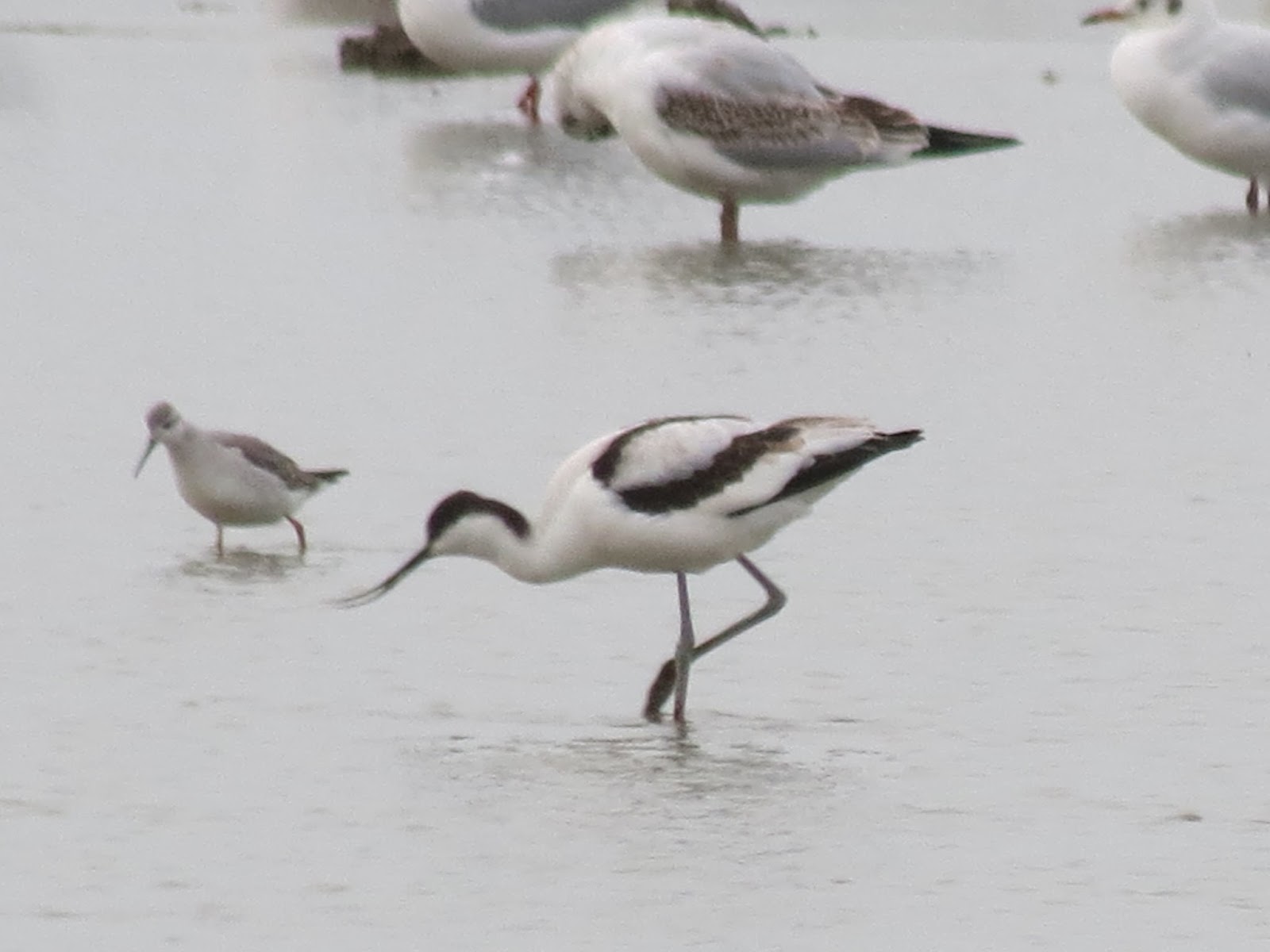
A first-winter WILSON'S PHALAROPE is currently residing on Pat's Pool at Cley NWT Reserve (North Norfolk) showing best from the Bishop's Hide, free to members but £4.50 permit for visitors. It still retains quite a few juvenile wing-coverts and is commuting between the scrape and fields inland with Ruff and Black-tailed Godwits. It is the first in the area since a similarly-aged bird from 7th-17th October 2008. Although pretty distant, I took these record shots on Tuesday....


LESSER GREY SHRIKE in Suffolk

A first-winter LESSER GREY SHRIKE is present for its fourth day in Suffolk after being discovered on Sunday by two novice birdwatchers who eventually notified RSPB staff at Minsmere RSPB after they had enjoyed a few beers in the Eels Foot Inn at Eastbridge. John Grant quickly made his way to the location and confirmed the bird's identification. It has been showing well in the paddocks immediately SSE of Halfway Cottages, just east of Leiston town (situated on Sizewell Road about a mile down from the main Leiston to Yoxford road) at approximately TM 463 621. Park sensibly opposite the Cottages and respect the privacy of the residents. It constitutes the 9th record for Suffolk following singles at Hollesley Common on 22nd-23rd May 1970 (trapped & ringed), Walberswick Heath on 7th June 1973, Lakenheath on 4th June 1977, Lound Waterworks from 10th-12th September 1989, Walberswick Common on 25th May 1996, Thelnetham Fen in Suffolk Breckland on 29th June 2006 (singing male), Shingle Street from 8th-11th July 2006 (adult female) and at Trimley Marshes on 14th September 2009 (first-winter).

Here is a selection of my shots from Tuesday......


Saturday, 7 September 2013

Wave of SEMIPALMATED SANDPIPERS reach UK

Some 20 or more SEMIPALMATED SANDPIPERS have reached the UK and Ireland in recent days perhaps reflecting the change in weather to a more westerly airflow since last Sunday. One juvenile in particular commuted back and forth between Abbotsbury Swannery and Brownsea Island in Dorset and may well have been the bird I photographed today at Keyhaven Marshes in Hampshire. It was a particularly confiding individual...........


Thursday, 29 August 2013

ITALIAN SPARROW in East Norfolk


A male Italian Sparrow photographed in the core of this species' range...


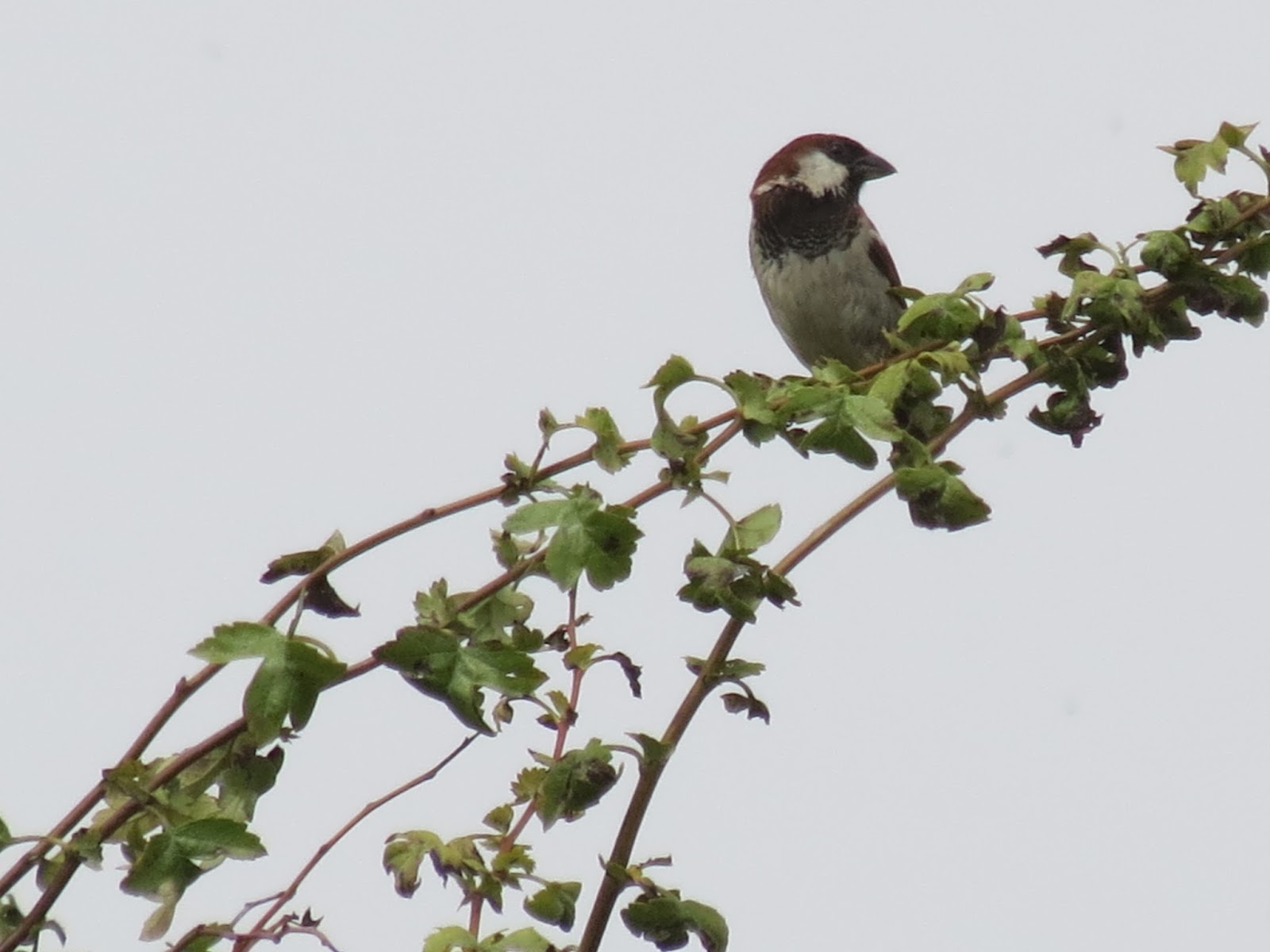
A male House Sparrow in Hungry Hill, Northrepps (East Norfolk)..


...and the male 'Italian' Sparrow currently residing at 27 Hungry Hill.

I was struck at how big and bulbous the bill looked compared with the male House Sparrow's - a feature I noted from Italy - and although this male is missing the characteristic hint of a superciliary, it certainly bears a chestnut crown, very white cheeks and paler 'tramlines'.

The Italian Sparrow occurs in northern and central Italy. In the north of the range, it forms a narrow zone of intergradation with House Sparrow, from about Imperia in the west (following a broad arc along the Alps) to Monfalcone in the east. South of Naples, there is an extensive clinal zone of intergradation with Spanish Sparrow, extending through southern Italy to Sicily and Malta. Post-breeding movement/dispersal of the northern population has been noted in southern France and Austria, whilst Italian Sparrows seem to breed widely on Corsica.

The UK400 Club considers Italian Sparrow as a species in its own right following the results in 2001 of a detailed study on the form by a number of scientists - 
  1. Hermansen, Jo S.; Sæther, Stein A.; Elgvin, Tore O.; Borge, Thomas; Hjelle, Elin; Sætre, Glenn-Peter (September 2011). "Hybrid speciation in sparrows I: phenotypic intermediacy, genetic admixture and barriers to gene flow". Molecular Ecology 20 (18): 3812–3822.