Monday, 24 June 2013

Turkish immigrant stops the traffic

This beautiful ROSE-COLOURED STARLING stopped the traffic at East Quay, Wells-next-the-Sea (North Norfolk) for five days last week, moving on unexpectedly on Saturday night....

More photographers than birders - the scene in East Quay on Saturday. And where was the bird? Yes, in that tree directly opposite the crowd - there for its 5th day.


The Guest House noticeboard gave full details of its arrival


My initial views were all like this - beautiful pink rump


But then he turned around revealing that bright pink beak


Prepared to tolerate the odd female House Sparrow but not fellow Starlings


And, after some considerable time, the shots I was waiting for


Adult male Rose-coloured Starlings really are a nice proposition


And the favoured tree where it roosted each night

Thursday, 20 June 2013

I'd have forgotten just how beautiful female WILSON'S PHALAROPES are in spring

My good friend Paul Rowe and I - and long-standing acquaintance Pete Campbell - enjoyed a fabulous afternoon in the company of a female WILSON'S PHALAROPE on the Isle of Wight in Yarmouth..........it was so good, I took over 200 images..........here are a few of my best, noting the hot sunshine hindering focusing.....


Tuesday, 18 June 2013

We have a new man at the top


1.
STEVE GANTLETT (NORFOLK 586 2. MEL BILLINGTON* (NORFOLK 586 3. CHRIS HEARD (BERKS) 586 4. RON JOHNS* (NORFOLK) 584 5. DAVID ODDY (YORKS) 583 6. JOHN REGAN (TEESIDE) 577 7. LEE EVANS (BUCKS) 576 8. NEIL ALFORD (NORFOLK) 573 9. RICHARD MILLINGTON (NORF 571 10. JERRY WARNE* (KENT) 571 11. JOHN HEWITT (BARNSLEY) 570 12. CHRIS BELL (DURHAM) 570 13. MALCOLM ROXBY DURHAM) 569 14. BILLY SIMPSON* (NOTTS) 569 15. BARRY REED (HERTS) 568 16. BRETT RICHARDS (YORKS) 568 17. DAVE WILLIS* (LONDON) 566 18. STEVE WHITEHOUSE (WORCS 564 19. JOHN ARCHER (LONDON) 564 20. PAUL CHAPMAN (BRISTOL) 563

With this latest PACIFIC SWIFT and earlier additions in the form of PACIFIC SWIFT, EASTERN SUBALPINE WARBLER and ROCK THRUSH, the Top 20 Listing Birders in the UK now looks like the above. CHRIS HEARD is now in Joint First Place for the first time in his birding career

Monday, 17 June 2013

Another twitchable ROLLER

Whilst checking out a suitable area of clearing for Woodlarks yesterday, Norfolk birder Peter Colston stumbled upon a ROLLER perched on a stump just 50 yards from the road. He had just 8 minutes of views before the bird duly flew and disappeared out of view. He immediately notified local birders and RBA but after an initial search, the bird could not be relocated. Then, about an hour later, Robert Smith relocated it, about half a mile away east of the Dragonfly Pond, on the opposite side of the road. It was then kept on, by a procession of Norfolk birders, from early evening until dusk, flighting between the two areas.


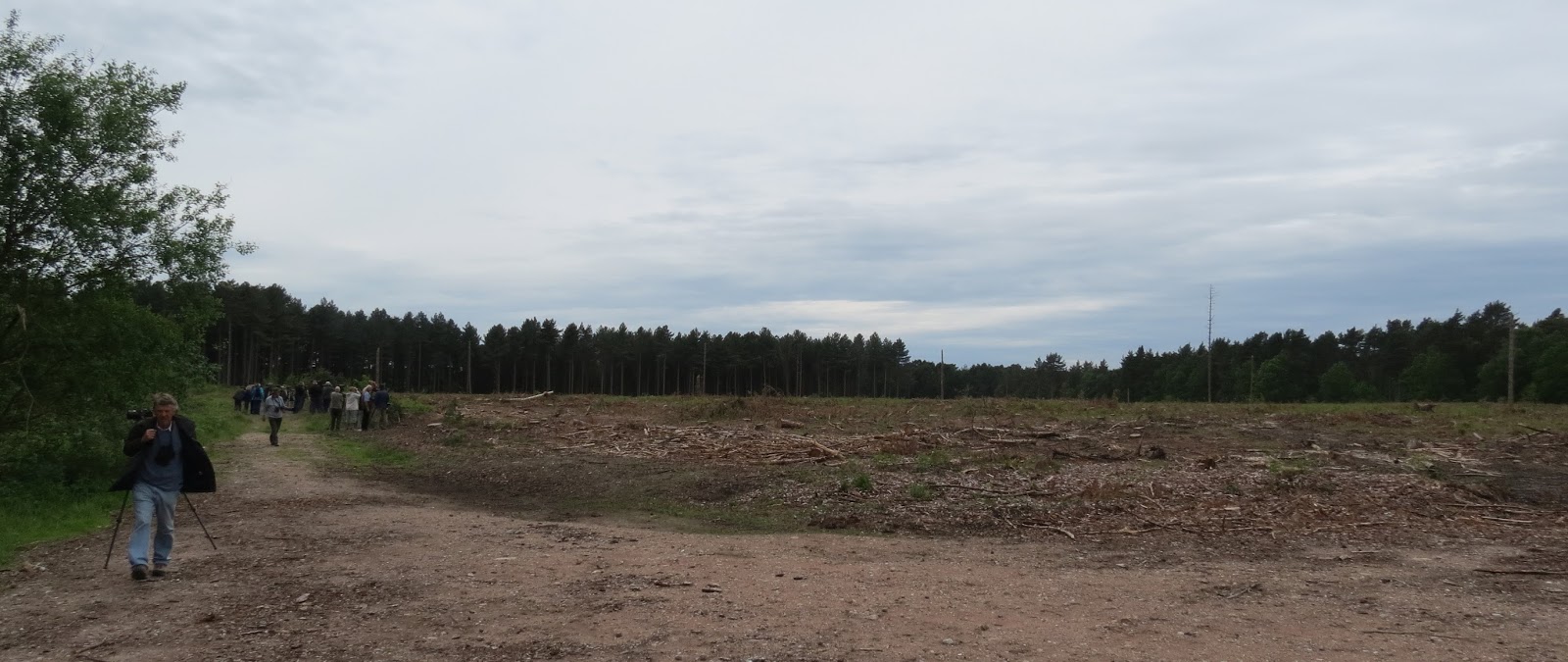
It followed the same modus of operandi today - moving between the clearing of Heath House Woods to the open heath half a mile east behind the Dragonfly Pond - and rarely allowing approach of less than 250 yards. I spent the day with the bird, my best photographic efforts being published above.

The location is just north of Edgefield on the B1149 - at the south end of Holt Country Park. There is ample parking for around 60 vehicles on the east side of the road, the bird showing best on the stunted trees in the clearing directly opposite.


Elsewhere in Britain today, the singing male GREENISH WARBLER continues at Turton Golf Course in Egerton (Lancashire), singing regularly from the Beech plantation bordering the third tee - park on Cox Green Road close to the entrance of Great Stones Close, taking the footpath adjacent to the sheep field until you reach the golf course.


The first-summer BONAPARTE'S GULL is also still to be found - either loafing with non-breeding Black-headed Gulls on Oare Marshes' East Flood or in Faversham Creek adjacent.


Singing male MARSH WARBLERS can be found in Uig village, on the Isle of Skye (Highland Region) and in Lochmaddy, North Uist (Outer Hebrides), as well as at 30 or so other locations between East Yorkshire and East Sussex, whilst a female RED-BACKED SHRIKE is near Easington (East Yorks).