Friday, 15 May 2015
Late Vacancy
Still have one place available on my next ROUND BRITAIN TOUR of 7-14 June 2015, targetting just over 200 species of bird that can be found in the UK at that time of year including Corncrake, Red-necked Phalarope, Honey Buzzard and Montagu's Harrier. If interested, drop me an email at LGREUK400@aol.com

Thursday, 14 May 2015
It's all change at the top......
After a succession of new birds (Little Bustard, Great Blue Heron, Hudsonian Godwit, Citril Finch and Moltoni's Subalpine Warbler), 2015 has really taken off Rare Bird wise with some members of the Top 10 adding no less than four new birds in the space of a month! Having seen North Norfolk's latest two additions, Chris Heard now drops into third place and SJMG retakes the crown.....
|
1.
|
STEVE
GANTLETT (
|
593
|
|
2.
|
MEL BILLINGTON*
(
|
592
|
|
3.
|
CHRIS HEARD
(BERKS)
|
591
|
|
4.
|
DAVID ODDY (YORKS)
|
587
|
|
5.
|
RON JOHNS* (
|
585
|
|
6.
|
LEE EVANS
(BUCKS)
|
583
|
|
7.
|
JOHN REGAN
(TEESIDE)
|
582
|
|
8.
|
NEIL ALFORD (
|
578
|
|
9.
|
JERRY WARNE*
(
|
577
|
|
10.
|
CHRIS BELL (
|
576
|
Monday, 4 May 2015
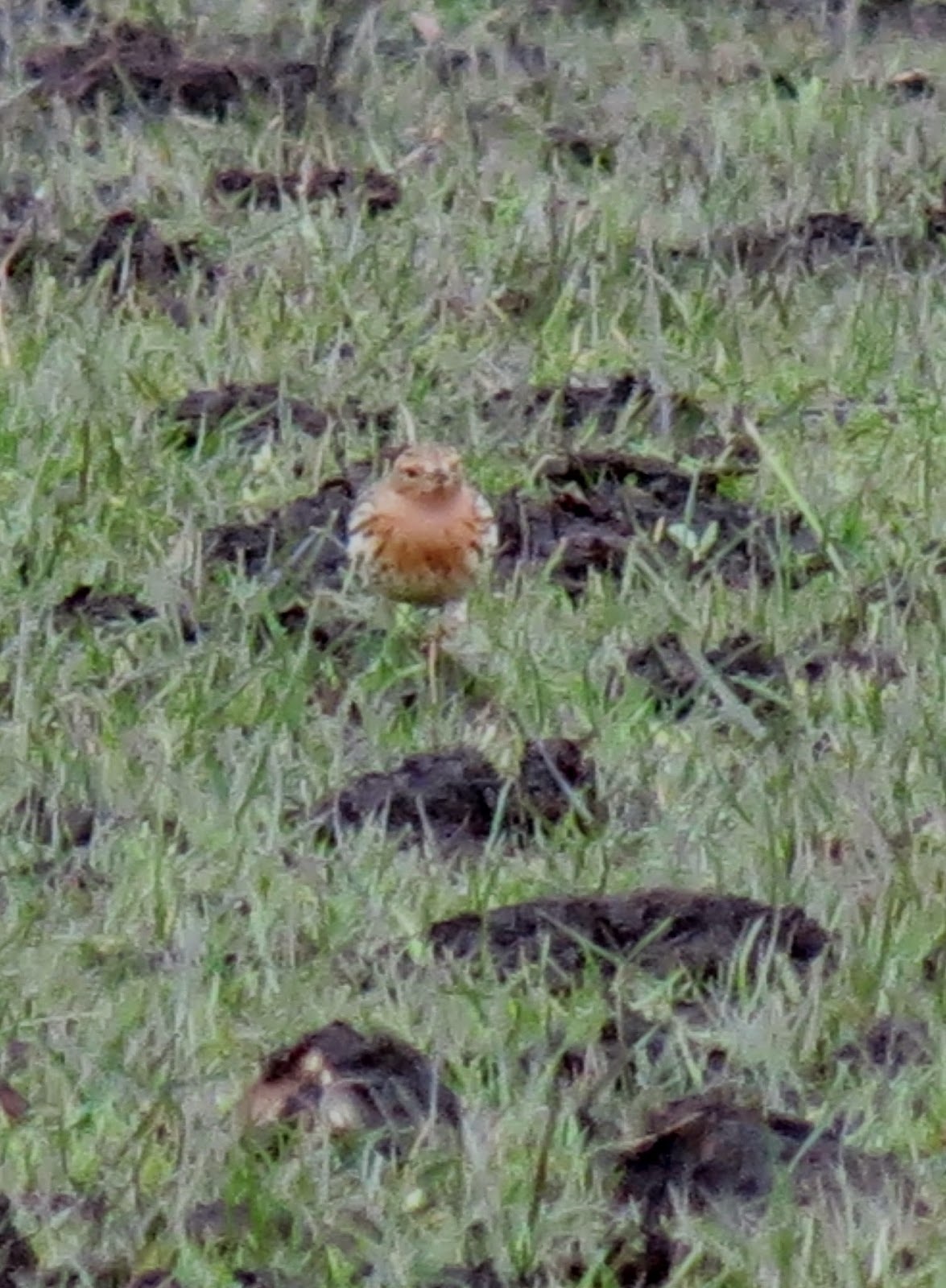
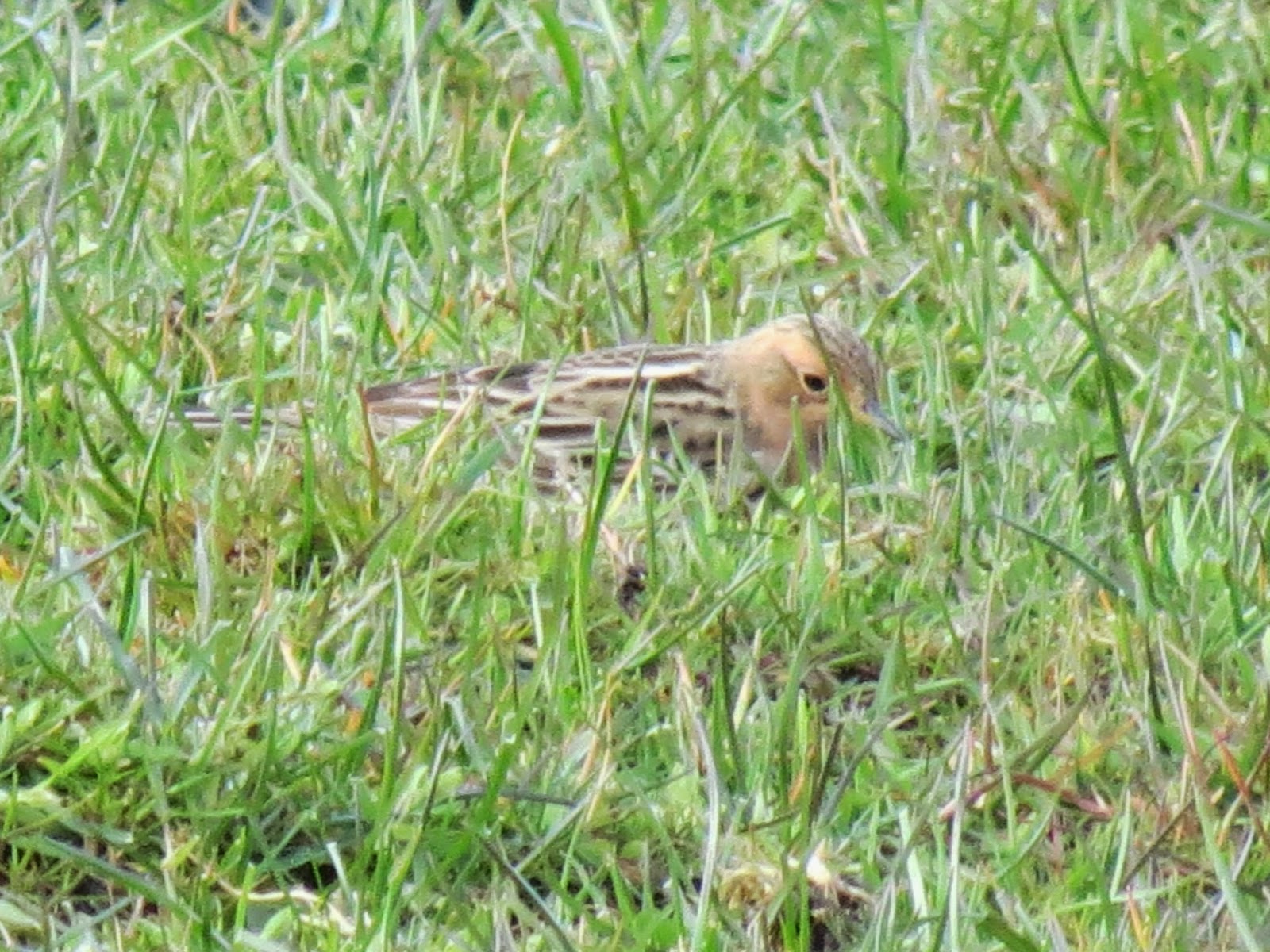
Bird of the May Bank Holiday weekend - a stunning RED-THROATED PIPIT
When local patchworker John Rainer made a visit to Ludworth Moor (Derbyshire/Gtr Manchester border) to count and check on Northern Wheatears, little did he expect the first bird he sets eyes on to be a RED-THROATED PIPIT!! Not only that, the bird was in stupendous salmon-pink breeding plumage - certainly a sight to behold. The bird had made landfall on the extreme western edge of the Peak District with a party of 40 or so Meadow Pipits on route north and was in a sheep field west of the track that leads up to Robin Hoods Picking Rods at SK 004 910.
John immediately realised the enormity of his find and within minutes placed his find in the public domain. Fortunately for all, the bird remained faithful to the same field for the rest of the day, delighting well over 300 observers before it roosted just after 8pm. Although Red-throated Pipits are annual in Britain with a yield of up to 10 per annum, twitchable individuals are few & far between, particularly in such outstanding plumage. By some surprise, the bird was still present Bank Holiday Monday (4th May), attracting upwards of a further 400 twitchers from far and wide.
It represents the third record for Derbyshire following singles at Rother Valley Country Park from 20-23 May 1985 and Hillyfields, Poolsbrook Country Park, on 23-24 April 1996.


John immediately realised the enormity of his find and within minutes placed his find in the public domain. Fortunately for all, the bird remained faithful to the same field for the rest of the day, delighting well over 300 observers before it roosted just after 8pm. Although Red-throated Pipits are annual in Britain with a yield of up to 10 per annum, twitchable individuals are few & far between, particularly in such outstanding plumage. By some surprise, the bird was still present Bank Holiday Monday (4th May), attracting upwards of a further 400 twitchers from far and wide.
It represents the third record for Derbyshire following singles at Rother Valley Country Park from 20-23 May 1985 and Hillyfields, Poolsbrook Country Park, on 23-24 April 1996.


John Raines - the man of the moment





Monday, 27 April 2015
UNDISCOVERED OWLS - the new production from The Sound Approach Team
UNDISCOVERED OWLS: A Sound Approach
Guide


This is the latest in a series of
lavishly-produced books pioneering identification strategies based primarily on
sound recordings. Once again, it is a very impressive piece of work - extremely
pleasing on the eye, thought invoking text and crammed full of essential
information. This publication concentrates on all of the Western Palearctic's 27
owl 'species' and allows for a comprehensive study of each and every
one.
The Sound Approach team is made up of a
small band of elite and highly experienced ornithologists, namely Arnoud van den
Berg, Mark Constantine, Magnus Robb, Dick Forsman, Killian Mullarney and Rene
Pop, and has been actively pursuing such projects since the early 1990's. Magnus
is the main man when it comes to recordings and the understanding and production
of sonograms, while the others all have their own individual niches to fill -
all in all a formidable team. Add to that the professional design expertise of
Cecilia Bosman and Mientje Petrus and then you have one production team bar none
and this book is working proof of such marvel - it is an undoubted
masterpiece.
In just under 300 pages, it's 9 chapters
work their way through all of the Western Palearctic Owls and to get the optimum
from the text, the book really needs to be read in conjunction with the four
CD's that accompany the tome. It is a book from my own heart, adopting the
rather liberal approach of taxonomy and running with 27 rather than 19 species,
based around both physical & morphological differences as well as
vocalisation differences. The book has numerous surprises up its sleeve,
splitting Barn Owl into 4 (Common, Slender-billed, Madeiran & Cape Verde),
Scops Owl into 4 (Eurasian, Cyprus, Pallid & Arabian), Eagle Owl into 3 and
recognising Maghreb Tawny Owl as distinct, as it clearly is by those that have
seen and heard the species in Morocco.
Each chapter is highly detailed, often
running to 15 pages per species, and incorporates lavish photography, lots of
sonograms and useful histories. The text is very readable but with an obvious
bias on sound recordings - great detail going in to describe how and when each
segment was obtained. A map highlighting the approximate distribution of each
species is also included. The majority of the images used to illustrate each
species are sumptuous whilst Hakan Delin's evocative artwork is patch-quilted
around the text and histograms, complimenting the presentation. Many of the
names used to describe each species are straightforward but 'Cucumiau' for
Desert Little Owl was somewhat unexpected and Great Grey becomes Lapland Owl in
justification for separating it from the Nearctic counterpart 'species'. I must
admit to being rivetted to the book at times, the chapters on Hume's and Omani
Owls being particularly illuminating - the latter remaining undiscovered before
work commenced on this project.
All in all an absolutely essential purchase
and a book to be extremely proud of.
Thursday, 9 April 2015
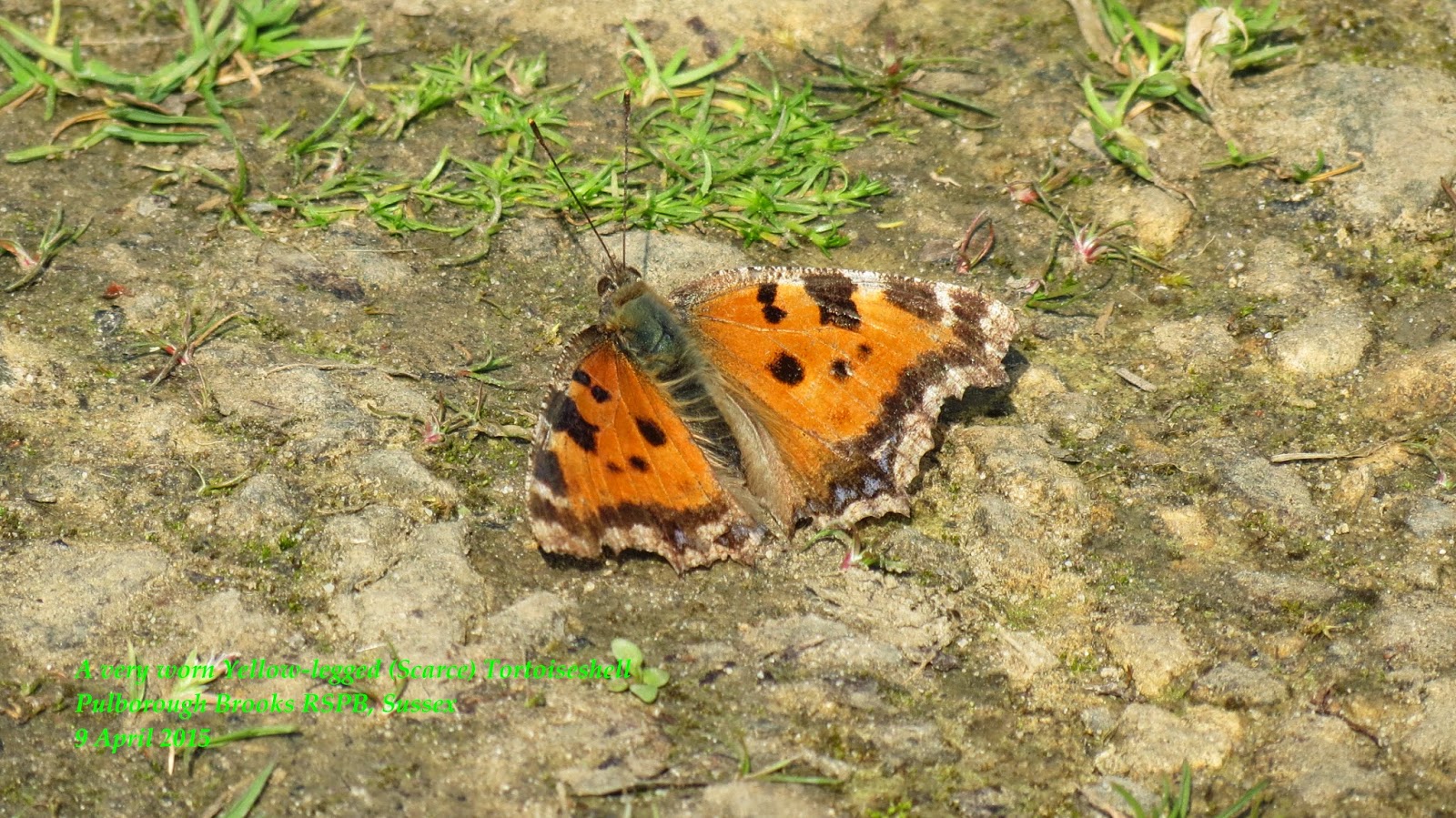
SCARCE TORTOISESHELLS now emerging
Following an unprecedented influx into Britain last autumn, involving perhaps 25 individuals, several have survived the winter and with this recent spell of warm weather have been emerging. The fourth to be discovered (and my first in the UK) has been showing at Pulborough Brooks RSPB reserve in West Sussex since Tuesday.......



Tuesday, 10 March 2015
Action BADGER
Dear
All,
The
meeting with the DEFRA Secretary of State yesterday was very useful and we had a
frank exchange of views on the following key issues:
Cull
Roll Out
We
pressed the Secretary of State (SoS) to confirm plans for roll out post May 7th,
should Tories return to office.
SoS
was not willing to commit herself on this issue, other than to say culling would
remain part of the TB reduction strategy.
We
pointed out that any plans for cull roll out must involve full consultation with
all key stakeholders and a financial impact assessment.
We
also discussed the need to engage local communities, the police and local
authorities in this process.
We
also raised concerns over Natural England (NE) and DEFRA officials being
involved in recent farm meetings held in the South West, to discuss extension
of the culls.
We
also pointed out that Gloucestershire had fallen well short of its cull targets
and even the Chief Vet had confirmed it was a border line decision if this pilot
area should continue.
Since
leaving the meeting, we have received confirmation from NE via our solicitor at
Bindmans that the Gloucestershire cull licence could be revoked, due to failures
by the cull contractors. We have used this information in follow up media
interviews.
Misleading
information from vets and NFU on the impact of culling
We
did raise serous concerns about the misleading information on the impact of the
badger culls coming from Roger Blowey and the NFU.
We
pointed out that any move by Ministers to give credibility to these reports
would undermine public confidence in the cull policy further and call into
question the integrity of DEFRA and its science based policy process.
We
also drew attention to a recent statement by the Chief Vet, that any reductions
in bovine TB was due to cattle measures not badger culling or vaccination.
SoS
did not make any effort to support the Roger Blowey or NFU claims, but she would
not commit to getting Nigel Gibbens to issue a further statement on this issue.
We
will follow this request up in writing following the meeting.
Testing
badgers for TB
We
criticised SoS for not ensuring badgers culled were tested for TB.
We
also pointed out that European Food Safety Authority (EFSA) had confirmed 232
dead badgers were tested in the UK in 2013 for an EU wide survey. Test results
showed an infection rate just over 15% in line with RBCT data.
SoS
seemed to have little knowledge of the EFSA survey, but her officials were
clearly uncomfortable with us bringing up this issue and they stated the test
data could have come from Northern Ireland.
We
confirmed we would follow up in writing with a request for more information on
the EFSA data including if any of the badgers used came from the cull
zones.
We
also criticised Owen Paterson for making claims that badgers had a TB disease
rate of 40% plus and called on the SoS to ensure any future culls would involve
full testing of badgers for TB.
SoS
did not give any assurance on this issue, but it's clear the low level of
disease in badgers is causing concern in DEFRA & we will keep pressing on
this issue.
TB rates in England
We
discussed at some length the picture emerging of falling TB rates in England as
a result of tightening of cattle measures.
We
also went over some of the historical policy mistakes which had led to the
increase in TB over the last 15 years, particularly restocking after foot and
mouth.
SoS
showed a worrying lack of awareness in this area and a willingness to keep
playing the Ireland and New Zealand card to support culling.
We
used the meeting to take apart the justification for culling based on the New
Zealand and Ireland experiences and left the SoS with key data showing how
cattle measures were working (compiled by Jan Bailey).
Annual
Testing
We
pressed hard on the growing support for annual testing of cattle for TB in
England, not only from wildlife groups but also vet, farm and landowning
organisations.
We
said the NFU excuse that this is too costly, does not hold water after the tax
payer has spent £15 million plus on the culls to date.
SoS
listened with interest and her officials confirmed a further tightening of test
measures was being considered, but they did not go as far as to say this would
involve Annual Testing across all of England.
We
will continue to press this issue following the meeting, as we are clearly
making progress in this area.
Badger
Vaccination
We
said we were pleased that the SoS had recognised the value of badger vaccination
as a tool in reducing the spread of TB in badgers.
We
pointed out that the Badger Trust was working with farmers and landowners across
the country to increase the level of badger vaccination.
We
gave our broad support to the Badger Edge Vaccination Scheme, but pointed out
that we expected key Badger Trust vaccination projects in areas such as
Derbyshire and Cheshire to receive funding under the scheme.
SoS
showed a willingness to ensure this would be the case and we will follow up
with DEFRA officials following the meeting.
Badger
Persecution
We
finished the meeting by referring to the DEFRA Risk Registers we recently
obtained via the High Court.
We
pointed out that officials and Ministers knew that the cull policy had a high
risk of increasing badger persecution.
We
made it clear to SoS that we had most definitely seen a significant increase in
badgers being illegally killed and badger setts destroyed by landowners and
farmers since the culls started.
SoS
made it clear that she condemned all wildlife crime and agreed with her
officials to issue some form of statement on this issue following the
meeting.
Wider
views on the meeting
The
Secretary of State seemed nervous and at times not on top of her brief.
Nigel
Gibbens the Chief Vet was very noticeable by his absence.
The
only officials present were her Private Secretary and representatives from the
legal and TB policy units.
The
Secretary of State took the unusual step of saying at the start of the meeting
it would be considered private and off the record.
On
walking down Whitehall earlier I nearly bumped into Liz Truss as she headed into
Downing Street. I can only think the call for radio silence on the meeting came
from the Prime Minister himself.
We
gave no commitment not to share the discussions in the media (particularly as
ITV & BBC were waiting to film interviews on steps of DEFRA after
meeting).
Media
Coverage
We
have had extensive media coverage following the meeting with interviews on ITV West, BBC South East, BBC Radio Gloucestershire, BBC Radio Sussex and in the national &
regional press.
Conclusion
We
were never going to see a U Turn in the cull policy as a result of this
meeting.
However
we put the Secretary of State under significant pressure and we made a very
strong case for why the cull policy should be halted.
We
showed we had the majority of the public, scientists and even politicians on our
side.
We
knew our facts and we were no doubt better briefed and had a clearer
understanding of TB policy than the Secretary of State who is responsible for
its implementation.
We
made some useful progress on the need for tighter cattle testing controls, more
badger vaccination and a stronger response from the Government on badger
persecution and wildlife crime.
We
also left no one in any doubt that cattle not badgers are the key factor in TB
spread.
Badger
Trust can be very proud of the fact we are the only wildlife or conservation NGO
to have such a meeting with either Owen Paterson or Liz Truss in last 4
years
Our
campaigning, lobbying & legal challenges have taken us to a place many much
larger and better funded NGO's have not been able to reach.
We
fight on.
All
best,
Dominic
Dyer
CEO
Badger Trust
Monday, 23 February 2015
Identification of a TUNDRA BEAN GOOSE
Today, I had the rare opportunity of getting up close & personal with a TUNDRA BEAN GOOSE (Anser rossicus), feeding with a flock of 45 Greylag Geese at Rookwood Golf Course, Horsham (West Sussex), opposite Warnham LNR just off of the A24. Unlike some Tundra Bean Geese, this was a real 'classic', being markedly smaller than Greylag and reminiscent of Pink-footed Goose in size & structure. It had the short, stumpy bill characteristic of the species, the 'ginning' patch and short, thick neck. It did have extensive orange on the bill, but this feature is entirely variable, the bill-base being deep and the culmen somewhat concave.
Taiga Bean Goose (Anser fabalis) is much more Greylag Goose like, both in structure, size & gait; it has a much longer bill, a longer tail and a longer, narrower neck. The head colour is generally paler, contrasting less so with the dark neck, with generally more orange on the bill, some individuals being orange from base to tip.
An exhaustive selection of images follow. Enjoy.....


Taiga Bean Goose (Anser fabalis) is much more Greylag Goose like, both in structure, size & gait; it has a much longer bill, a longer tail and a longer, narrower neck. The head colour is generally paler, contrasting less so with the dark neck, with generally more orange on the bill, some individuals being orange from base to tip.
An exhaustive selection of images follow. Enjoy.....
Subscribe to:
Posts (Atom)