Sunday, 31 March 2013

QUIZBIRD 2 - worth 6 points


The biggest twitch that I have been on this year by far but what mega bird was being espied by us all - six points on offer for the first correct answer


It was this fabulous adult male CASPIAN PLOVER that was causing all of the excitement - all 6 points going to Bardsey's Steve Stansfield......

2) Craig Fulcher, 5 points; 3) Miguel Demeulemeester, 4 points; 4) Paul Higson, 3 points; 5) Mark Bailey, 2 points and 6) Pete Kinsella, 1 point

For the latest league positions, browse the UK400 Club forum

Thursday, 28 March 2013

We have a leader board


Here he is - the tertials should have been a dead giveaway. Quizbird 1 was in fact Radipole Lake's famous dapper drake HOODED MERGANSER. Many of you plumped for Harlequin Duck but you were all wrong. The leaderboard is as follows - Belvide's Stevie Nuttall leading the way...

1) Steve Nuttall, 7 points
2) Sean Foote, 6 points
3) Will Brame, 5 points
4) Miguel Demeulemeester, 4 points
5) Pete Kinsella, 3 points
6) Jake Everitt, 2 points
7) Sam Viles, 1 point

Quizbird 2 will be uploaded on Sunday

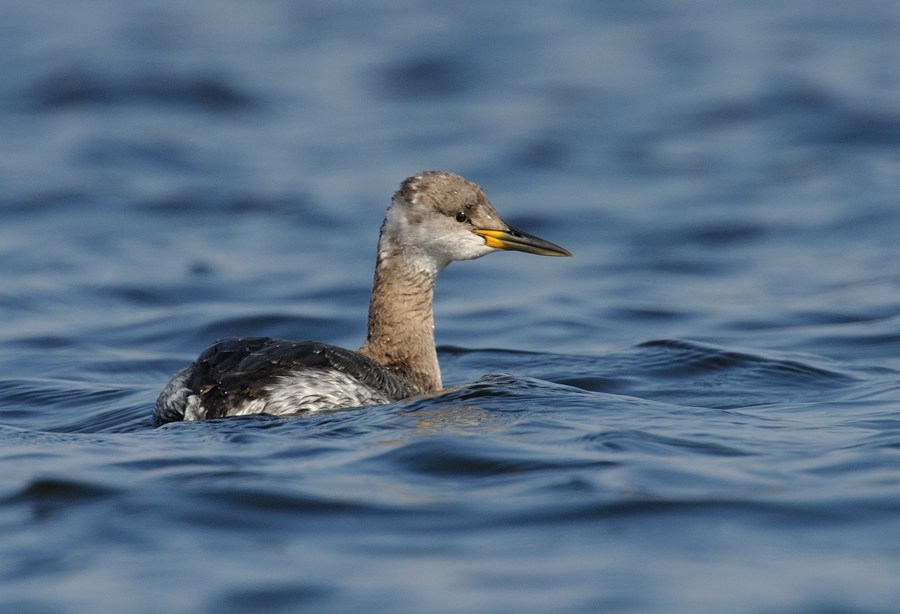
RED-NECKED GREBE at Siblyback Reservoir


Just look at this outstanding shot taken by Steve Rogers of the Siblyback Reservoir RED-NECKED GREBE - a pretty rare bird these days. See more top quality images on Steve's site at http://www.swopticsphoto.com/

Wednesday, 27 March 2013

Quizbird Part 1 - The new UK400 Club challenge


Identify this bird. This particular challenge is worth 7 points, the first correct answer receiving all 7 points and the seventh just 1 point. A league table of contestants will be found on the new UK400 Club forum. Email your correct answers to LGREUK400@aol.com

Wednesday, 13 March 2013

The Ham Wall Spectacular - breaking new records (GREAT WHITE EGRETS)

I visited Ham Wall RSPB Reserve today on the Somerset Levels where, amongst other rares, I saw the 9 GREAT WHITE EGRETS on the drained Meare Heath lagoon, 250 yards west of the main car park at Ashcott Corner. This is the largest single concentration ever recorded in the UK beating by just one, a gathering of 8 on the ARC Pit at Dungeness (Kent) last week. Two birds are from Brittany, bearing colour-rings from the scheme at Loire Atlantique.


All 9 birds on the drained lagoon


8 of the 9 individuals followed by closer, enlarged shots of all 9 individuals


Two different birds are ringed - both from Brittany


Sunday, 10 March 2013

Winter returns with a vengeance


Paul Rowe Rare Bird Photography: drake American Wigeon at Bowling Green Marsh RSPB and Pied-billed Grebe at Ham Wall RSPB

Bitterly cold Northeasterly winds battered the country today pegging back further migration and halting up the likes of Sand Martin, White Wagtail and Northern Wheatear. The first House Martin was reported today (in Berks) and Little Ringed Plover, with a few European Barn Swallows being seen.


Nothing really new on the rarity front but quite a movement inland of PIED AVOCETS and KITTIWAKES, as well as eastbound Northern Pintails

The drake HARLEQUIN DUCK remains on North Uist, with a record 9 GREAT WHITE EGRETS on the Somerset Levels at Meare Heath and the PIED-BILLED GREBE nearby at Ham Walls RSPB

Still an adult RED-BREASTED GOOSE (at Farlington), 15 Black Brants, 7 Hutchinsii, 4 American Wigeons, 15-22 American Green-winged Teals, drake Ferruginous Duck in Hampshire, 2-3 drake Lesser Scaup, 9 Ring-necked Ducks, 3 BONAPARTE'S GULLS, 5 Ring-billed Gulls, 2 GLOSSY IBIS, the YELLOWLEGS and Welsh LBD, the Thetford BBD, Rosy Starling (Exminster) and of course the DESERT WHEATEAR at Rattray Head

Friday, 8 March 2013

New BBA Forum is now launched

After a number of technical problems, the new BBA Forum is now up and running and available to use for members. You may be prompted to register - if so, I would prefer that you log on under your own names and not pseudonym names


Many thanks

Lee

The New Site is at http://uk400club.freeforums.net/index.cgi

Defra refuse to give BLACK GUILLEMOTS their full rights

Read on.....and make your feelings known

WANTED:


Marine protection for the only breeding black guillemots in England

Walking along the Cumbrian coast at this time of year, the cliffs with their sheer drops can look wild and inhospitable; it is easy to think that nothing could exist here. But come spring 8 million seabirds will make the long trip home to their breeding grounds around the UK's coast; soon the cliffs will be alive with squabbling guillemots, groaning puffins and graceful fulmars.

At St Bees Head in Cumbria an additional treat is in store for visitors as these cliffs are home to the only breeding black guillemot population in England; if you are lucky, you might just catch them descending into their burrows with sandeels and butterfish in bills ready to feed their chicks.

St Bees is a fantastic example of how faithful seabirds are to the sites they use; some seabirds return back to the exact same nests every year.Thankfully the colony here is a nationally designated Site of Special Scientific Interest (SSSI), which means that seabird nest sites are protected from damaging human activities; however the areas that these birds use at sea are not.

It's a sad truth that this story is the same all around the UK - seabirds are currently protected when on land, but as soon as they leave the shore to hunt for food for themselves and their chicks, they face threats such as net entanglement and disturbance from offshore developments in unprotected waters.

I'd like to thank everyone who Stepped Up for Nature and signed the RSPB's Marine Pledge throughout 2011-12. At the moment less than 0.1% of the UK's waters are protected from all damaging activities and there is an urgent need for the development of an ecologically coherent network of Marine Protected Areas. In November 2011, thanks to your support, we were able to hand-in over 50,000 signatures to Fisheries Minister Richard Benyon and show the UK Government that people out there like you care about the marine environment including the fate of our seabirds.

But we must ask you now to take further action.

We were thrilled that in September 2011 it was agreed that BLACK GUILLEMOT should be a species for protection within the recommended Cumbria Coast Marine Conservation Zone (MCZ). This MCZ would form part of a collection of 127 sites around English waters, for consultation in 2013.

The Department for Environment, Food and Rural Affairs (Defra) launched their public consultation on the designation of English MCZs in December 2012. We now know that Defra only intend to take up to 31 of the 127 sites forward for designation in 2013. What's more, black guillemot has not been taken forward as a species within the Cumbria Coast MCZ which means that they will continue to have no protection at their key feeding and loafing areas close to their nesting grounds. We are bitterly disappointed by these unambitious proposals.

What you can do to help:

Please join us in letting Defra know that that they need to reinstate BLACK GUILLEMOT (or Tystie as it is affectionately known) as a species for protection within the Cumbria Coast MCZ for designation in 2013. Furthermore, that they need to implement a well-managed network of Marine Protected Areas, including MCZs, which offers full protection for all our marine wildlife, including seabirds, without further delay. You can do this and encourage others to do the same by responding to Defra's English Marine Conservation Zones consultation.
You can submit your letter email to MCZ@defra.gsi.gov.uk

mail to: MCZ@defra.gsi.gov.uk or by writing to the address below:

MCZ Team

C/O Post Room, Nobel House, 17 Smith Square, London SW1P 3JR

The consultation closes on 31 March 2013.

Why not also add a personal flavour to your letter by describing why the Cumbrian coast is so special to you and why our marine environment needs protecting.

Thursday, 7 March 2013

LESTER MULFORD meets the end of the line

When I first got into twitching in the early 1970's, one of the first 'teams' that John White and I first came across was that lead by Tony Smith. There were about eight members of this 'band' around this time and LESTER MULFORD was an integral part of it. The team 'operated' out of West London, Tony with his Ealing connections and Lester his Feltham. Other members included Pete Smith, Ralph Hobbs, John East,  John Williamson, 'Surf City', 'Collocks' and Wayne Borras, and amongst their remit was to visit every pub in the land featuring a bird name in its title. Both Tony and Lester instilled their interests from their early LNHS days in the 1960's, quickly relocating from Dungeness to Portland Bill as there favoured weekend haunt. Lester quickly fell in love with Portland Bill and for 30 years or more, the entire batallion would be partially resident in the Observatory (particularly during the Mike Rogers period). Lester also held Staines Reservoirs as his 'local patch' and it would be both of these localities that I would see him on often a weekly basis. Workwise he spent years at British Airways, where his priveleged travel passes would frequently take him on global birding trips, Kenya and its Guinness Breweries being a particular favourite. Latterly, Thailand took his favour - and he married there - and spawned at least one toddler.

Lester loved birding - he lived and breathed it - and even after a serious motorbike accident in the 1980's was up-and-running after a short time and bagging Wheatears and other spring migrants. Like me, he loved Scilly - and never missed a year between 1966 and 2002. Tregarthen's then became his local and on many an occasion, I would be running through the arches on the Garrison on route for a rare to be faced with Lester and a Guinness in his hand asking me what had just turned up. Like many of his ilk, he was a true British birding character, the likes of which will never be replaced. Although he never joined the twitching jetset, prepared to 'cheque book' birds at any cost, he did finally achieve his goal, scoring his 500th UK-only species in 2009 (Ireland was never in his remit). He was a lovely man, very compassionate, caring, trusting and kind - and doting to the end to his mum, whom sadly died at the age of 102 in 2009. After that, Lester moved to Wisbech in Cambridgeshire to be closer to Tony and Liz in Holt. I very rarely saw him after that. Another huge loss and a gaping hole in my history. Goodbye Lester.

Sunday, 3 March 2013

GOSHAWK TOURS - weather forecast is poor

The weather forecast for this week is poor (rain from Wednesday) so the only planned trip for this week is TUESDAY 5 MARCH. Meet at Junction 18 of the M25 at 0700 hours prompt or pickup en route - trip vouchers obtainable from LGRE at LGREUK400@aol.com

More trips are planned from Monday to Thursday of next week weather allowing

Breaking News of a mega mammal - WALRUS on North Ronaldsay

Discovered loafing at Bridesness today - see spectacular images at http://northronbirdobs.blogspot.co.uk/

Thursday, 28 February 2013

Breaking News - the shocking and very tragic death of RUSSELL SLACK

I was shocked to hear this morning of the very tragic death of RUSSELL SLACK after he passed away yesterday evening. Unbeknown to even his closest associates, Russell was suffering from acute liver cancer and never recovered from his illness. He had been actively birding at his beloved Wheldrake Ings in Yorkshire as recently as January of this year and continued to work on Volume 2 of his 'Rare Birds, Where and When' in his spare time. Russell was just 46 years of age and leaves behind his wife Linda and his beautiful daughters India and Ruby - my sincere condolescences go out to them at this very sad time.


Russell had a lifelong interest in birds and our paths regularly crossed in the 1990's when he dabbled with twitching for a spell of some ten years or more. His main interest always lied in 'self-finding' birds and intensive 'patch watching', although Rare Birds always remained a core attraction. He co-authored 'Rare and Scarce Birds in Yorkshire' with Andrew Wilson and also spent several years working with the BirdGuides team, often updating the Daily Bird News.

In recent years, Russell contacted me on a more regular basis, primarily in his work on the aforementioned Rare Birds book and my close relationship with our mutual 'in-house' artist, young Mr Scally. The book was the usual labour of love but Russ was bowled over with delight when it finally ran off the presses and landed on the desk and within a very short time, the entire print run sold out it proved so popular.

He was a very popular guy on the Yorkshire scene and will be very, very sorely missed. We have all been robbed prematurely of a major talent.

Lee G R Evans, 28 February 2013

GOSHAWKS performing well today

The weather in East Anglia today was ideal for displaying NORTHERN GOSHAWKS so I took advantage and ran my first trip of the year to see them. They did not disappoint and I saw two males and a female at one site up in the air for nearly an hour from mid-morning. As a word of warning, due to the work on the bypass, there is no access to the regular Ollie's Farm site this spring - birdwatchers today being turned away by security.


Weather permitting, I shall be running my GOSHAWK WORKSHOP days over the next two weeks - provisional dates being 5th, 6th, 7th, 8th, 12th and 13th March - spaces still available on all of these dates at present. Tours cost £20 per person and depart Junction 18 of the M25 at 0700 hours each day - pickup possible if on route. Vouchers must be pre-purchased - email LGREUK400@aol.com


Wednesday, 27 February 2013

Another Scottish Weekender


Planning a Long Weekend Tour to Speyside to see this beautiful male SNOWY OWL on Cairngorm - along with Capercaillie (a rogue male), Ptarmigan, Crested Tit, Grouse, Golden Eagle, Dipper and Surf Scoter. Up to 5 spaces available - email me on LGREUK400@aol.com if interested

New offerings from WILDGuides

Five new titles from WILDGuides have just arrived on my desk -:


1) Britain's Sea Mammals, by Jon Dunn, Robert Still and Hugh Harrop (priced £12.95)

2) A Field Guide to the Wildlife of South Georgia, by Robert Burton & John Croxall (£17.95)

3) A Visitor's Guide to South Georgia, by Sally Poncet & Kim Crosbie (£19.95)

4) Birds of the Masai Mara, by Adam Scott Kenedy (£17.95)

5) Animals of the Masai Mara, by Adam & Vicki Kennedy (£17.95)

All are highly presentable, very well-produced, in full colour and highly informative and of a size that easily allows you to take them into the 'field' or pack within a small bag.

The Sea Mammals book is particularly impressive and focuses exclusively on the 34 species of sea mammal recorded in Britain and Ireland, detailing and highlighting the 14 species that are most readily seen. Its 128 pages include more than 100 fabulous photographs and introductory chapters explore how, when and where to look for each species. Individual species accounts summarise the key identification criteria and include useful information on status, habitat requirements and distribution. It is an essential guide to the Whales, Dolphins, Porpoises and Seals found in coastal Britain and Ireland and at just £12.95, an essential companion volume purchase to those field guides on birds, mammals, butterflies and moths.

South Georgia is the most spectacular of the world's subantartic islands and these two new WILDGuides publications are the first to comprehensively charter the region's exclusive wildlife and provide a photographic guide to identifying them. The 200-page Field Guide features no less than 368 lavish photographs of more than 180 different species, including 65 birds, 20 Sea Mammals, 60 insects and 40 plants - each individual account giving a brief, but concise, guide to identification, status and distribution. The Visitor's Guide gives more of a history of the island, with detailed maps highlighting the key sites and presents a range of specialist expert contributions on the ecology, wildlife, vegetation, historic artefacts and topographical features of the archipelago. There is an excellent section on visiting arrangements and an invaluable guide to the Key Sites, accompanied by detailed maps and top-quality images - absolutely essential purchases for anyone thinking of travelling to the area.

The two Masai Mara productions are very much as they say 'on the packet' - photographic guides featuring the birds and mammals likely to be encountered by visitors to the hugely-popular Masai Mara National Nature Reserve in Kenya. Over 200 species of bird and 65 of mammal are included thus proving indispensable to visitors to this famous park. The photographs used are of a particularly high standard and the design format is unique and eye-catching and perhaps most useful was the detail supplied on key sites for specific species of mammal.

WILDGuides are to be congratulated in providing such outstanding, high-quality, near-pocket guides.

All titles are now available from Princeton University Press

Monday, 25 February 2013

HARLEQUIN DUCK remains top billing


Harlequin Duck (Andrew Kinghorn)

On the Outer Hebrides, the drake HARLEQUIN DUCK in advanced plumage continues to attract a constant stream of admirers, showing well between the offshore rocky island and the beach some 800 yards south of the Skua-watching site at Aird an Runair, Balranald RSPB on North Uist. In modern times (eg, post 1970), this is the best-looking Harlequin to ever grace our shores. The Balranald area continues to host up to 3 juvenile Glaucous Gulls, a juvenile Kumlien's Gull, a female Ring-necked Duck at Loch Scaraidh and a RICHARDSON'S CANADA GOOSE with up to 400 Barnacle Geese at Loch Grogarry. A few miles to the south, at Knockintorran, two adult SNOW GEESE remain with Greylags. WHITE-TAILED SEA EAGLES are very much in evidence and easy to see, with up to 7 on the Committee Road.

Elsewhere in Northern Scotland, the record-breaking female DESERT WHEATEAR remains at Rattray Head (Aberdeenshire), with the drake KING EIDER at nearby St Combs (offshore of the Tufted Duck Hotel) and adult drake SURF SCOTERS off Ruddons Point, Largo Bay (Fife) and Loch Ryan, Stranraer (D & G). The drake BLUE-WINGED TEAL is also still present on the River Dee at Lamb Island, Threave (D & G), showing again from the hide at NX 735 606.

At the opposite end of the country and attracting far bigger crowds is Somerset's adult breeding-plumaged PIED-BILLED GREBE - still showing intermittently on the main lake visible from the second observation platform just under a mile east of Ashcott Corner car park at Ham Walls RSPB.

Equally popular is a juvenile WHITE-TAILED SEA EAGLE in NW Norfolk, favouring the Bunker's Hill area just NNW of Great Bircham.. Elsewhere in Norfolk, the singing male BLACK-BELLIED DIPPER remains in Thetford just east of the Three Nun's Bridges at TL 874 824.

Newly discovered is a drake NORTH AMERICAN GREEN-WINGED TEAL in Warwickshire at Brandon Marsh NR, where it is frequenting the River Pool, whilst the GLOSSY IBIS that has wintered in Hampshire is now performing south of the natural burial site at Warblington, SE of Havant, at SU 731 054.

The drake RED-BREASTED GOOSE is still consorting with wintering Dark-bellied Brent Geese on Thorney Island (West Sussex), with South Devon's drake AMERICAN WIGEON once more on Dart's Farm Fishing Ponds just SE of Topsham and drake FERRUGINOUS DUCKS at Priory Country Park, Bedford (Beds) and again on Ivy Lake, Blashford HWT (Hants). In Lancashire, a blue morph LESSER SNOW GOOSE is with Pink-feet in the Eagland Hill area, often viewable from Bradshaw Lane.

The juvenile COMMON CRANE is still frequenting the ploughed field close to the B1407 near East Linton (Lothian) (at NT 607 784)

The LESSER YELLOWLEGS is still to be found in Ernesettle Creek by the River Tamar (South Devon), with the LONG-BILLED DOWITCHER still showing well on the Pickeridge Pools at the north end of the Gann Estuary at Dale (Pembs).

In East Sussex, the adult winter BONAPARTE'S GULL continues to show very well in Eastbourne on Princes Park Crumbles Pond, with adult RING-BILLED GULLS still in Dingwall (Highland) and Walpole Boating Lake, Gosport (Hants).

The first-winter ROSE-COLOURED STARLING is still favouring the lone Hawthorn to the right of Milbury Lane, Exminster (South Devon), just as you enter the road from the High Street, whilst on the Hampshire/Berkshire border, the PALLAS'S LEAF WARBLER is still with Long-tailed Tits on the River Blackwater SW of Moor Green Lakes..

Freshwater GREAT NORTHERN DIVERS include singles at Rutland Water (Leics) and Staines Reservoirs (Surrey), and the juvenile BLACK-THROATED DIVER still at Lisvane Reservoir (Glamorgan), whilst LONG-TAILED DUCKS include singles at Queen Mother Reservoir (Berks), Angler's Country Park (West Yorks)

It has been something of an excellent winter for HAWFINCHES with still some 35 birds being attracted to the flowering shrubs at Romsey (Hants), 4 still at Millfield LNR, Old Basing (Hants), 23 by Norton sub Hamdon Churchyard (Somerset), up to 12 at Llanbedr (Conwy), 8 in Bramfield Churchyard (Herts) and the very confiding female at Wimpole Hall (Cambs). Two TWITES at Aust Warth (Gloucs) are an excellent local record.

In IRELAND, recent highlights include the continuing CATTLE EGRET at St Johnston piggery (County Donegal), the FORSTER'S TERN in Galway Harbour (County Galway), the NORTHERN HARRIER at Tacumshin (County Wexford) and the two AMERICAN BLACK DUCKS at Crookhaven (County Cork).

Winter Scottish Trip a huge success

Just returned from another extremely successful Scottish trip. Although pretty gruelling, with a total of 1,715 miles covered, species encountered included the fabulous drake HARLEQUIN DUCK on the Outer Hebrides, thousands of wintering geese including 2 SNOW GEESE and a single SMALL CANADA, lots of raptors including some spectacular WHITE-TAILED SEA EAGLES, GOLDEN EAGLES, MERLIN, Peregrine and Hen Harrier, 70 TWITE, Corn Buntings, a cracking juvenile GLAUCOUS GULL on a Seal carcass, numerous Common Ravens and some nice breeding-plumaged Black Guillemots.


Elsewhere, we enjoyed fabulous views of ermine PTARMIGAN, fed an adult RING-BILLED GULL, came face-to-face with CAPERCAILLIES, attracted Coal and CRESTED TITS to peanut butter and watched 6 cock BLACK GROUSE feeding in stubble.

Finished off with drake KING EIDER and record-staying DESERT WHEATEAR and Tree Sparrows

Fantastic and most memorable trip

Have added one more space to my forthcoming ROUND BRITAIN TOUR of 25 May to 2 June 2013 if anybody is interested - email me on LGREUK400@aol.com for details

Thursday, 21 February 2013

HARLEQUIN Winter Scottish Trip FULL but still some places on GOSHAWK/LESSER SPOT tours

The 'Harlequin' Winter Scottish birding tour is now completely FULL but availability is still there on GOSHAWK tours in early March. Available dates are 1, 4, 5, 8, 11 & 12 March. Tours are £20 each and commence 0700 hours from Junction 18 of the M25. LADY A tours are completely sold out for 2013 and 2014 at present but spaces are available on LESSER SPOTTED WOODPECKER tours in March. To receive your Voucher, please email Lee on LGREUK400@aol.com

Still lots of places on forthcoming tours, particularly SPAIN (two different trips), EGYPT (7 days in early April), MOROCCO/WESTERN SAHARA (10 days in May), OHIO (May), CHINA (September) and seawatching trips from late summer onwards. Three places left on OCTOBER EXTRAVAGANSA rarity specials (1-2 week trips).

Arranging trips for up to 6 persons on an ongoing basis, so if you have ideas or favour a particular venue, please do not hesitate to contact me.

Monday, 18 February 2013

Drake HARLEQUIN DUCK off North Uist

At 1615 hours this afternoon, Steve Duffield photographed a drake HARLEQUIN DUCK 80 yards offshore near Balranald RSPB on North Uist (Outer Hebrides). Farther north, at the NW tip of Lewis, the first WHITE-BILLED DIVER of the year there was offshore at Port Nis.

Saturday, 16 February 2013

STEJNEGER'S STONECHAT added to UK List

The BBA/UK400 Club has added STEJNEGER'S STONECHAT to the latest List - Saxicola stejnegeri - following the latest revisions by the CSNA in their most recent report (Dutch Birding 35: 40-43). This form is now considered distinct from both Siberian and Caspian Stonechats (cf Wink et al 2002; Zink et al 2009 & Gill & Donsker 2012). The first for THE NETHERLANDS was on Texel, Noord-Holland, from 8-23 October 2012 and this same bird was present (and trapped) at Portland Bill, Dorset, on 24-26 October 2012 (see Birding World 25: 408).

The species is also added to the latest update to the WESTERN PALEARCTIC LIST, along with PRAIRIE WARBLER from The Azores last October. Three species previously only recorded from Mauretania have been removed from the list - Temminck's Courser, Kordofan Lark and Grey-backed Fiscal Shrike - all occurrencies were south of the WP boundary line it now transpires (Crochet et al, Dutch Birding 35: 28-30)