A STILT SANDPIPER in full breeding plumage is present for its fourth day at Lodmoor RSPB. It is frequenting a muddy scrape just inland of the coast road with 4 Green Sandpipers and 4 Icelandic Black-tailed Godwits but can be very elusive, disappearing for up to six hours at a time. It also occasionally commutes to the pools to the west of Breachdown Way.
It is best to park in Overcombe car park in Preston (£1.60 for every two hours) and walk the 300 or so yards along the main road and cycle track to the raised bank to view. Only the muddier section of the scrape can be seen and for much of the time, the Stilt Sand can be out of view feeding in the wetter, closer part of the scrape obscured by tall vegetation.
Tuesday, 26 July 2011
Thursday, 21 July 2011
PADDYFIELD WARBLER in Dorset
Dorset recorded its first-ever PADDYFIELD WARBLER today when an adult was trapped and ringed in a small reedbed on The Fleet just east of Chickerell's Hive Point. This is only the second-ever July occurrence in Britain and does beg the question of what it is doing here so early in the autumn.
Continuing an excellent year for another reed-dwelling warbler - SAVI'S - one was singing this evening for its third consecutive day at Hickling Broad NWT (Norfolk) and audible from the Observation Tower.
Waders still remain the talking point, with the adult MARSH SANDPIPER still at Blacktoft Sands RSPB (East Yorks) and now visible from the Marshland Hide, an adult WHITE-RUMPED SANDPIPER at West Saltholme Pools (Cleveland) viewable from the main A178 layby and the adult PECTORAL SANDPIPER at Strathbeg (Aberdeenshire). Interestingly, Iceland recorded its first-ever Short-billed Dowitcher a few days ago and two different adult Red-necked Stints have been located on the Continent - in Norway and The Netherlands.
In South Devon today, the CATTLE EGRET remains for a second day on the Otter Estuary at Budleigh Salterton, showing from the hide along the west bank just north of the Lime Kilns car park. The 2nd-summer GLAUCOUS GULL remains there too.
In Cambridgeshire, the first-summer COMMON ROSEFINCH remains in Fowlmere Road in conifers at Foxfield House near Melbourn whilst yesterday, an early migrant MELODIOUS WARBLER was on the shingle ridge the seaward side of Dungeness Power Station (Kent) not far from the Patch seawatching hide.
Continuing an excellent year for another reed-dwelling warbler - SAVI'S - one was singing this evening for its third consecutive day at Hickling Broad NWT (Norfolk) and audible from the Observation Tower.
Waders still remain the talking point, with the adult MARSH SANDPIPER still at Blacktoft Sands RSPB (East Yorks) and now visible from the Marshland Hide, an adult WHITE-RUMPED SANDPIPER at West Saltholme Pools (Cleveland) viewable from the main A178 layby and the adult PECTORAL SANDPIPER at Strathbeg (Aberdeenshire). Interestingly, Iceland recorded its first-ever Short-billed Dowitcher a few days ago and two different adult Red-necked Stints have been located on the Continent - in Norway and The Netherlands.
In South Devon today, the CATTLE EGRET remains for a second day on the Otter Estuary at Budleigh Salterton, showing from the hide along the west bank just north of the Lime Kilns car park. The 2nd-summer GLAUCOUS GULL remains there too.
In Cambridgeshire, the first-summer COMMON ROSEFINCH remains in Fowlmere Road in conifers at Foxfield House near Melbourn whilst yesterday, an early migrant MELODIOUS WARBLER was on the shingle ridge the seaward side of Dungeness Power Station (Kent) not far from the Patch seawatching hide.

Tuesday, 19 July 2011
Returning waders making the headlines


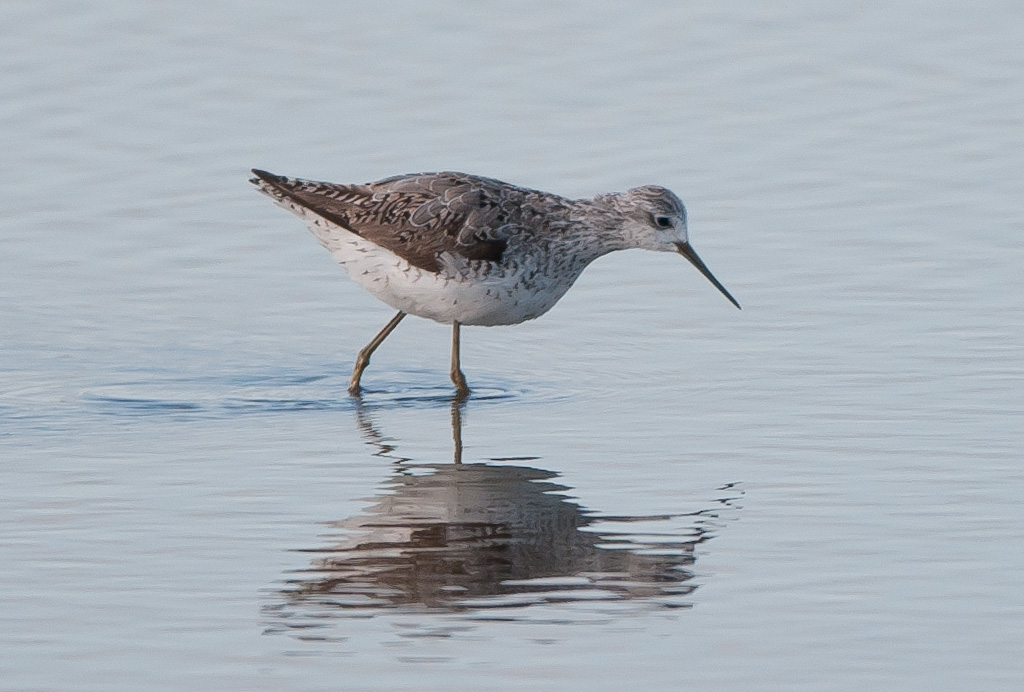

The total number of bird species recorded in combined Britain and Ireland in 2011 now stands at 385........the adult MARSH SANDPIPER at Blacktoft Sands RSPB (East Yorkshire) being the latest addition (see Martin Standley's superb images above). This bird is still present today favouring the mud visible from the Ousefleet Screen
The adult summer SPOTTED SANDPIPER is still present too - showing well on occasions from the Shallow Water Hide on the Lyndon Reserve at Rutland Water (Leics). You can see this bird very distantly from the Manton Bay bridge but under no circumstances climb the gate and walk down. This area is covered by CCTV, is closely monitored and is home to a nesting pair of Ospreys.
A TEREK SANDPIPER roosting with lapwings was a new discovery this afternoon at Holywell Pond (Northumberland), visible from the public hide as it sat on the island. Meanwhile, an adult TEMMINCK'S STINT remains at Gibraltar Point NNR (Lincs) and an adult PECTORAL SANDPIPER is at Loch of Strathbeg RSPB (Aberdeenshire).
A couple of summering first-year BONAPARTE'S GULLS remain: the bird on Exmouth Beach (South Devon) (just west of the lifeboat station) and the other on Berneray (Outer Hebrides). Also in South Devon, the 2nd-summer GLAUCOUS GULL remains at the west end of Budleigh Salterton beach, with 3 adult ROSEATE TERNS nearby at Dawlish Warren NNR.
As usual, the build up of LITTLE GULLS at this time of year is spectacular, with no less than 520 gracing Hornsea Mere (East Yorks)
In NW Derbyshire, the male WESTERN BONELLI'S WARBLER remains at Arnfield Reservoir, favouring the woodland by the bridge at SK 014 976, whilst in Cambridgeshire, the drab first-summer male COMMON ROSEFINCH continues at Foxfield House on Fowlmere Road near Melbourn. A RED-RUMPED SWALLOW was a very unusual mid-July occurrence on Shetland - showing well mid-afternoon over the Loch of Hillwell at the south end of the archipelago.
For at least its third day, a CATTLE EGRET is with Little Egrets in Pagham Harbour (West Sussex), whilst the summering COMMON CRANE can still be found in the set-aside NE of Saxby Bridge at Saxby All Saints (Lincs) (at SE 975 167). GREAT WHITE EGRETS include the long-stayer at Denge Marsh, Dungeness (Kent) and the regularly reappearing adult at Sturminster Marshall GP (Dorset).
The adult drake Ferruginous Duck is to be found at Blagdon Lake (Avon), feeding with other Aythya ducks off of the lodge at 'Tiny's Shallow', whilst in Aberdeenshire, the adult drake NORTH AMERICAN BLACK SCOTER remains with 3 drake SURF SCOTER and over 2,200 moulting Common Scoters off Murcar Beach.
In the west country, small numbers of CORY'S SHEARWATERS flew west past Land's End (West Cornwall) and Deep Point, St Mary's (Scilly) today.
In IRELAND, the two PACIFIC GOLDEN PLOVERS remain on the Myroe Levels (Co. Derry), whilst seawatching has begun in earnest off of the Bridges of Ross (County Clare), with Sabine's Gull, Cory's Shearwater and good numbers of Sooty and Balearic Shearwaters recorded in recent days.
The adult summer SPOTTED SANDPIPER is still present too - showing well on occasions from the Shallow Water Hide on the Lyndon Reserve at Rutland Water (Leics). You can see this bird very distantly from the Manton Bay bridge but under no circumstances climb the gate and walk down. This area is covered by CCTV, is closely monitored and is home to a nesting pair of Ospreys.
A TEREK SANDPIPER roosting with lapwings was a new discovery this afternoon at Holywell Pond (Northumberland), visible from the public hide as it sat on the island. Meanwhile, an adult TEMMINCK'S STINT remains at Gibraltar Point NNR (Lincs) and an adult PECTORAL SANDPIPER is at Loch of Strathbeg RSPB (Aberdeenshire).
A couple of summering first-year BONAPARTE'S GULLS remain: the bird on Exmouth Beach (South Devon) (just west of the lifeboat station) and the other on Berneray (Outer Hebrides). Also in South Devon, the 2nd-summer GLAUCOUS GULL remains at the west end of Budleigh Salterton beach, with 3 adult ROSEATE TERNS nearby at Dawlish Warren NNR.
As usual, the build up of LITTLE GULLS at this time of year is spectacular, with no less than 520 gracing Hornsea Mere (East Yorks)
In NW Derbyshire, the male WESTERN BONELLI'S WARBLER remains at Arnfield Reservoir, favouring the woodland by the bridge at SK 014 976, whilst in Cambridgeshire, the drab first-summer male COMMON ROSEFINCH continues at Foxfield House on Fowlmere Road near Melbourn. A RED-RUMPED SWALLOW was a very unusual mid-July occurrence on Shetland - showing well mid-afternoon over the Loch of Hillwell at the south end of the archipelago.
For at least its third day, a CATTLE EGRET is with Little Egrets in Pagham Harbour (West Sussex), whilst the summering COMMON CRANE can still be found in the set-aside NE of Saxby Bridge at Saxby All Saints (Lincs) (at SE 975 167). GREAT WHITE EGRETS include the long-stayer at Denge Marsh, Dungeness (Kent) and the regularly reappearing adult at Sturminster Marshall GP (Dorset).
The adult drake Ferruginous Duck is to be found at Blagdon Lake (Avon), feeding with other Aythya ducks off of the lodge at 'Tiny's Shallow', whilst in Aberdeenshire, the adult drake NORTH AMERICAN BLACK SCOTER remains with 3 drake SURF SCOTER and over 2,200 moulting Common Scoters off Murcar Beach.
In the west country, small numbers of CORY'S SHEARWATERS flew west past Land's End (West Cornwall) and Deep Point, St Mary's (Scilly) today.
In IRELAND, the two PACIFIC GOLDEN PLOVERS remain on the Myroe Levels (Co. Derry), whilst seawatching has begun in earnest off of the Bridges of Ross (County Clare), with Sabine's Gull, Cory's Shearwater and good numbers of Sooty and Balearic Shearwaters recorded in recent days.
Up to 60,000 Badgers may be culled - a black day indeed
The coalition government today gave in to farmers demands to allow a partial cull to take place in Britain - from Cornwall and Devon through Somerset and Wiltshire up to Gloucestershire and the West Midlands. In other words, in the stronghold of the species' breeding range. This is disgraceful and needs to be opposed vehemently. Even former government advisor Lord Knebs acknowledges that the science of the cull is heavily flawed. Bovine TB has been known from the Isle of Man in cattle - Badgers do not occur there.
At worst, Badgers should be caught and vaccinated against the disease. Killing up to 60,000 of these charming animals is a disgusting misuse of the laws of this country - the actions of Fera never failing to amaze me
Lee G R Evans
At worst, Badgers should be caught and vaccinated against the disease. Killing up to 60,000 of these charming animals is a disgusting misuse of the laws of this country - the actions of Fera never failing to amaze me
Lee G R Evans
Monday, 18 July 2011
Whilst Defra destroy our non-naturalised MONK PARAKEETS cowardly at night, New York sets out to fully protect theirs
http://open.nysenate.gov/legislation/bill/A8526-2011
Section 1. Legislative intent. The legislature finds that the MONK PARAKEET has been existing in a wild, undomesticated state in New York since the late 1960s. The ancestors of the current flocks are believed to have been imported legally into the United States from their native land in Argentina. Since then, monk parakeets have established colonies in parts of New York city and lower Westchester county. Their colonies are small, and the population of monk parakeets seems to be rather stabilized over the past 20 years. It is estimated that there are less than 1,000 wild monk parakeets in the state of New York. Reports of poaching and less than humane regard for nesting sites have led to the need for formal protection of this species, which is recognized as non native, but not currently categorized as invasive, according to the report Regulatory System for Non-native Species (New York Invasive Species Council, 2010). The purpose of this act is to protect the wild monk parakeet (a/k/a Quaker parakeet), the parrot species Myiopsitta monachus, living in a wild state in various parts of the state of New York. This act shall also provide humane methods of relocation or removal, especially where threat to human life, private or public prop erty, or agricultural concerns, are imminent.S
2. This act shall be known and may be cited as the "monk parakeet protection act."
In particular:
S 11-2703. MONK PARAKEETS; PROTECTION. 1. NO PERSON SHALL CAPTURE OR HARM A MONK PARAKEET CHICK, FLEDGLING, OR ADULT, OR TAKE OR SELL ITS EGGS, TO ANY RETAIL OR PRIVATE ESTABLISH MENT OR CONCERN.
2. NO PERSON SHALL REMOVE THE NEST OF A MONK PARAKEET, UNLESS THERE IS A DOCUMENTED AND IMMEDIATE THREAT TO HUMAN LIFE OR PUBLIC AND PRIVATE PROPERTY.
3. THE COLLECTION OF EGGS, CHICKS, FLEDGLINGS, OR ADULT MONK PARAKEETS SHALL BE DONE ONLY UNDER THE SUPERVISION OF A DESIGNATED AND QUALIFIED INDIVIDUAL OR EXPERT.
4. THE REMOVAL OF THE NEST OF A MONK PARAKEET, IF NECESSARY, SHALL OCCUR OUTSIDE OF BREEDING SEASON, UNLESS THERE IS A DOCUMENTED AND IMME DIATE THREAT TO HUMAN LIFE OR PUBLIC AND PRIVATE PROPERTY.
5. THE STATE OR A QUALIFIED DESIGNATED AGENT OR AUTHORITY SHALL BE NOTIFIED AT LEAST FIVE DAYS IN ADVANCE OF ANY PROPOSAL TO REMOVE THE NEST OF A MONK PARAKEET. THE DESIGNATED AGENT OR AUTHORITY SHALL PROPOSE ALTERNATIVE ACTIONS, AND SHALL SUPERVISE ANY NEST REMOVALS IF AN ALTER NATIVE PLAN IS NOT POSSIBLE.
6. PRIVATE COMPANIES AND ORGANIZATIONS, UTILITY COMPANIES, AND GOVERN MENTAL AGENCIES, SHALL MAKE EVERY EFFORT TO SUPPLY AND ERECT ALTERNATIVE NESTING PLATFORMS WHERE REASONABLY POSSIBLE, IF CURRENT MONK PARAKEET NESTING SITES HAVE BEEN DEMONSTRATED TO BE A THREAT TO HUMAN LIFE, PRIVATE OR PUBLIC PROPERTY, OR AGRICULTURAL CONCERNS. EXAMPLE PLANS AND DRAWINGS FOR NESTING PLATFORMS SHALL BE MADE AVAILABLE TO THE PUBLIC ON THE OFFICIAL WEBPAGE OF THE DEPARTMENT.
7. IF AN EFFORT TO PROVIDE MONK PARAKEETS WITH ALTERNATIVE NESTING PLATFORMS FAILS OR PROVES TO BE UNSUCCESSFUL, AN ENTITY MAY EMPLOY HUMANE MEANS TO REMOVE AND EUTHANIZE MONK PARAKEETS, ONLY AS A LAST RESORT. ALL OTHER METHODS TO PROVIDE ALTERNATIVE NESTING OPTIONS SHALL BE FIRST EXHAUSTED. SUCH ENTITY SHALL DEMONSTRATE IN WRITING AND DOCUMENTATION THAT ALL EFFORTS TO PROVIDE ALTERNATIVES HAVE FAILED, AND SHALL OUTLINE THE METHOD BY WHICH EUTHANASIA SHALL BE APPLIED. SUCH A. 85263 ENTITY SHALL ALSO DEMONSTRATE THAT THERE IS A DOCUMENTED AND IMMEDIATE THREAT TO HUMAN LIFE OR PUBLIC AND PRIVATE PROPERTY.
8. FOR PURPOSES OF THIS TITLE:
A. THE USE OF CARBON MONOXIDE OR ANY OTHER GAS OR VAPOR AS A METHOD OF EUTHANASIA IS PROHIBITED; B. THE ONLY ACCEPTABLE FORM OF EUTHANASIA SHALL BE BY INJECTION OF AN ANESTHETIC OR ANESTHETIC MIXTURE WHICH CAUSES IMMEDIATE AND PAINLESS CESSATION OF PULMONARY AND CORONARY FUNCTION; AND C. ADMINISTRATION AND SUPERVISION OF THE EUTHANASIA PROCEDURE SHALL BE DONE BY A LICENSED VETERINARIAN, VETERINARY ASSISTANT OR VETERINARY TECHNICIAN. 9. THE DEPARTMENT MAY DESIGNATE A QUALIFIED ORGANIZATION TO CARRY OUT
THE GENERAL ADMINISTRATION OF THE PROVISIONS OF THIS TITLE.
10. A QUALIFIED ORGANIZATION DESIGNATED PURSUANT TO SUBDIVISION NINE OF THIS SECTION SHALL BE ENTITLED TO REASONABLE REIMBURSEMENT FOR EXPENSES IN ASSOCIATION WITH NEST REMOVAL, FROM ANY ENTITY SO REQUESTING THE SERVICES OF SUCH QUALIFIED ORGANIZATION. THE REQUESTING ENTITY SHALL PROVIDE, AND OPERATE, ALL NECESSARY HEAVY EQUIPMENT, INCLUDING BUCKET LIFTS OR TRUCKS. IN ADDITION, ALL EXPENSES AND COSTS ASSOCIATED WITH THE USE OF VETERINARY SERVICES FOR EUTHANASIA SHALL BE IMMEDIATELY REIM BURSED TO THE ATTENDING VETERINARIAN BY THE REQUESTING ENTITY.
11. ANY VIOLATION OF THE PROVISIONS OF THIS TITLE SHALL BE A MISDEMEANOR.
S 4. This act shall take effect on the sixtieth day after it shall have become a law.
Section 1. Legislative intent. The legislature finds that the MONK PARAKEET has been existing in a wild, undomesticated state in New York since the late 1960s. The ancestors of the current flocks are believed to have been imported legally into the United States from their native land in Argentina. Since then, monk parakeets have established colonies in parts of New York city and lower Westchester county. Their colonies are small, and the population of monk parakeets seems to be rather stabilized over the past 20 years. It is estimated that there are less than 1,000 wild monk parakeets in the state of New York. Reports of poaching and less than humane regard for nesting sites have led to the need for formal protection of this species, which is recognized as non native, but not currently categorized as invasive, according to the report Regulatory System for Non-native Species (New York Invasive Species Council, 2010). The purpose of this act is to protect the wild monk parakeet (a/k/a Quaker parakeet), the parrot species Myiopsitta monachus, living in a wild state in various parts of the state of New York. This act shall also provide humane methods of relocation or removal, especially where threat to human life, private or public prop erty, or agricultural concerns, are imminent.S
2. This act shall be known and may be cited as the "monk parakeet protection act."
In particular:
S 11-2703. MONK PARAKEETS; PROTECTION. 1. NO PERSON SHALL CAPTURE OR HARM A MONK PARAKEET CHICK, FLEDGLING, OR ADULT, OR TAKE OR SELL ITS EGGS, TO ANY RETAIL OR PRIVATE ESTABLISH MENT OR CONCERN.
2. NO PERSON SHALL REMOVE THE NEST OF A MONK PARAKEET, UNLESS THERE IS A DOCUMENTED AND IMMEDIATE THREAT TO HUMAN LIFE OR PUBLIC AND PRIVATE PROPERTY.
3. THE COLLECTION OF EGGS, CHICKS, FLEDGLINGS, OR ADULT MONK PARAKEETS SHALL BE DONE ONLY UNDER THE SUPERVISION OF A DESIGNATED AND QUALIFIED INDIVIDUAL OR EXPERT.
4. THE REMOVAL OF THE NEST OF A MONK PARAKEET, IF NECESSARY, SHALL OCCUR OUTSIDE OF BREEDING SEASON, UNLESS THERE IS A DOCUMENTED AND IMME DIATE THREAT TO HUMAN LIFE OR PUBLIC AND PRIVATE PROPERTY.
5. THE STATE OR A QUALIFIED DESIGNATED AGENT OR AUTHORITY SHALL BE NOTIFIED AT LEAST FIVE DAYS IN ADVANCE OF ANY PROPOSAL TO REMOVE THE NEST OF A MONK PARAKEET. THE DESIGNATED AGENT OR AUTHORITY SHALL PROPOSE ALTERNATIVE ACTIONS, AND SHALL SUPERVISE ANY NEST REMOVALS IF AN ALTER NATIVE PLAN IS NOT POSSIBLE.
6. PRIVATE COMPANIES AND ORGANIZATIONS, UTILITY COMPANIES, AND GOVERN MENTAL AGENCIES, SHALL MAKE EVERY EFFORT TO SUPPLY AND ERECT ALTERNATIVE NESTING PLATFORMS WHERE REASONABLY POSSIBLE, IF CURRENT MONK PARAKEET NESTING SITES HAVE BEEN DEMONSTRATED TO BE A THREAT TO HUMAN LIFE, PRIVATE OR PUBLIC PROPERTY, OR AGRICULTURAL CONCERNS. EXAMPLE PLANS AND DRAWINGS FOR NESTING PLATFORMS SHALL BE MADE AVAILABLE TO THE PUBLIC ON THE OFFICIAL WEBPAGE OF THE DEPARTMENT.
7. IF AN EFFORT TO PROVIDE MONK PARAKEETS WITH ALTERNATIVE NESTING PLATFORMS FAILS OR PROVES TO BE UNSUCCESSFUL, AN ENTITY MAY EMPLOY HUMANE MEANS TO REMOVE AND EUTHANIZE MONK PARAKEETS, ONLY AS A LAST RESORT. ALL OTHER METHODS TO PROVIDE ALTERNATIVE NESTING OPTIONS SHALL BE FIRST EXHAUSTED. SUCH ENTITY SHALL DEMONSTRATE IN WRITING AND DOCUMENTATION THAT ALL EFFORTS TO PROVIDE ALTERNATIVES HAVE FAILED, AND SHALL OUTLINE THE METHOD BY WHICH EUTHANASIA SHALL BE APPLIED. SUCH A. 85263 ENTITY SHALL ALSO DEMONSTRATE THAT THERE IS A DOCUMENTED AND IMMEDIATE THREAT TO HUMAN LIFE OR PUBLIC AND PRIVATE PROPERTY.
8. FOR PURPOSES OF THIS TITLE:
A. THE USE OF CARBON MONOXIDE OR ANY OTHER GAS OR VAPOR AS A METHOD OF EUTHANASIA IS PROHIBITED; B. THE ONLY ACCEPTABLE FORM OF EUTHANASIA SHALL BE BY INJECTION OF AN ANESTHETIC OR ANESTHETIC MIXTURE WHICH CAUSES IMMEDIATE AND PAINLESS CESSATION OF PULMONARY AND CORONARY FUNCTION; AND C. ADMINISTRATION AND SUPERVISION OF THE EUTHANASIA PROCEDURE SHALL BE DONE BY A LICENSED VETERINARIAN, VETERINARY ASSISTANT OR VETERINARY TECHNICIAN. 9. THE DEPARTMENT MAY DESIGNATE A QUALIFIED ORGANIZATION TO CARRY OUT
THE GENERAL ADMINISTRATION OF THE PROVISIONS OF THIS TITLE.
10. A QUALIFIED ORGANIZATION DESIGNATED PURSUANT TO SUBDIVISION NINE OF THIS SECTION SHALL BE ENTITLED TO REASONABLE REIMBURSEMENT FOR EXPENSES IN ASSOCIATION WITH NEST REMOVAL, FROM ANY ENTITY SO REQUESTING THE SERVICES OF SUCH QUALIFIED ORGANIZATION. THE REQUESTING ENTITY SHALL PROVIDE, AND OPERATE, ALL NECESSARY HEAVY EQUIPMENT, INCLUDING BUCKET LIFTS OR TRUCKS. IN ADDITION, ALL EXPENSES AND COSTS ASSOCIATED WITH THE USE OF VETERINARY SERVICES FOR EUTHANASIA SHALL BE IMMEDIATELY REIM BURSED TO THE ATTENDING VETERINARIAN BY THE REQUESTING ENTITY.
11. ANY VIOLATION OF THE PROVISIONS OF THIS TITLE SHALL BE A MISDEMEANOR.
S 4. This act shall take effect on the sixtieth day after it shall have become a law.
Saturday, 16 July 2011
Just desserts for Maltese hunters responsible for White Stork slaying in May
Maltese law courts yesterday sentenced a hunter to two years imprisonment and a $9,000 fine, and another to one year imprisonment and a $5000 fine, for the targeting of White Storks on the 18th May this year. All hunting licenses were permanently revoked for both individuals.
Friday, 15 July 2011
RED-FOOTED BOOBY in Southern France

This RED-FOOTED BOOBY, a near-adult, has spent over 10 days at Lac de Saint-Croix, 43 kms east of Junction 18 of the A51 toll road at Manosque.
Although initially favouring the popular public area of the lake at the NE end by the bridge (especially at dawn and dusk), it has now moved to the tiny harbour at les Salles-sur Verdon, on the south shore, and the extreme west end of the lake.
This lake is particularly popular with tourists and attracts well over 15,000 people daily. Consequently, the Booby finds it hard to find a quiet patch of water to fish and feed. Furthermore, due to the actions of some visiting birdwatchers, local propreitors have taken to flushing the bird early every morning to keep it away from pontoons and quays where birders have been congregating without permission.
Although still present yesterday, it did fly off strongly to the south at 1115 hours and was not seen all afternoon (per Aurelien)
Thursday, 14 July 2011
Excitement looming
On Sunday, what was probably the same PACIFIC SWIFT that had visited on several occasions before flew south along the Spurn Point peninsular (East Yorkshire) at 1340 hours. It lingered briefly at the Warren, only narrowly missing one of the mistnets, and was intercepted by seven lucky observers thanks to the exceptional rapid dissemination of news from the finder John Hewitt. What is quite possibly the same bird was seen at Spurn in both July 2005 and late June 2008.
The first MARSH SANDPIPER of the year - an adult - was found at Blacktoft Sands RSPB reserve (East Yorkshire) on Monday and is still present today frequenting the Ousefleet Lagoon. Meanwhile, an adult SPOTTED SANDPIPER remains at Rutland Water (Leics) for a second day - showing from the Shallow Water hide at the Lyndon Nature Reserve, whilst an adult PECTORAL SANDPIPER is on the scrape at Holland Haven Country Park Essex)..
Cambridgeshire's first-ever twitchable COMMON ROSEFINCH continues to whistle at regular intervals at the Old Barns complex at Foxfield House at TL 399 458, just west of Fowlmere RSPB reserve on the edge of Melbourn.This very drab first-summer male is favouring the tall conifers in the gardens and can be seen from the minor road adjacent or the track leading towards the Kingway Golf Course. There are a few parking places along Fowlmere Road but it is probably best to park at the RSPB reserve and walk the half mile back along the road to view.
In NW Derbyshire, the singing male WESTERN BONELLI'S WARBLER remains on territory at Arnfield Reservoir, favouring the trees by the footbridge at SK 014 976. Take the footpath beyond the fishery to access the small nature reserve.
The male BLACK-HEADED BUNTING remains on Fair Isle (Shetland) and the adult ROSE-COLOURED STARLING at Ardnave on Islay (Argyll)
The GREAT WHITE EGRET remains at Denge Marsh, Dungeness RSPB (Kent) whilst SPOONBILLS have had another good breeding season in North Norfolk, with up to 16 birds including juveniles currently visiting Cley NWT Reserve.
A FERRUGINOUS DUCK is present for a second day at East Holme Heath in Dorset favouring a pool just off of Holme Lane, whilst in South Devon, two juvenile BEARDED TITS remain in reeds in front of the hide at Bowling Green Marsh RSPB, Topsham, on the Exe Estuary.
A few ROSEATE TERNS can still be found away from Northumberland breeding grounds, with 1-2 at Minsmere RSPB (Suffolk) and 1-2 at Lodmoor RSPB (Dorset).
In NORTHERN IRELAND, both PACIFIC GOLDEN PLOVERS remain on the Myroe Levels (County Londonderry), whilst in County Wexford, no less than 8 BEARDED TITS remain in the reedbed at Lingstown, at the west end of Tacumshin.
In the South of France, the near-adult RED-FOOTED BOOBY was still present this morning at the Lac de Saint Croix, now favouring the boats in the small harbour of les Salles-sur Verdon. It did however fly high south at 1115 hours this morning. In Norway, the adult GLAUCOUS-WINGED GULL has relocated to Vardo Harbour in Varanger.
The first MARSH SANDPIPER of the year - an adult - was found at Blacktoft Sands RSPB reserve (East Yorkshire) on Monday and is still present today frequenting the Ousefleet Lagoon. Meanwhile, an adult SPOTTED SANDPIPER remains at Rutland Water (Leics) for a second day - showing from the Shallow Water hide at the Lyndon Nature Reserve, whilst an adult PECTORAL SANDPIPER is on the scrape at Holland Haven Country Park Essex)..
Cambridgeshire's first-ever twitchable COMMON ROSEFINCH continues to whistle at regular intervals at the Old Barns complex at Foxfield House at TL 399 458, just west of Fowlmere RSPB reserve on the edge of Melbourn.This very drab first-summer male is favouring the tall conifers in the gardens and can be seen from the minor road adjacent or the track leading towards the Kingway Golf Course. There are a few parking places along Fowlmere Road but it is probably best to park at the RSPB reserve and walk the half mile back along the road to view.
In NW Derbyshire, the singing male WESTERN BONELLI'S WARBLER remains on territory at Arnfield Reservoir, favouring the trees by the footbridge at SK 014 976. Take the footpath beyond the fishery to access the small nature reserve.
The male BLACK-HEADED BUNTING remains on Fair Isle (Shetland) and the adult ROSE-COLOURED STARLING at Ardnave on Islay (Argyll)
The GREAT WHITE EGRET remains at Denge Marsh, Dungeness RSPB (Kent) whilst SPOONBILLS have had another good breeding season in North Norfolk, with up to 16 birds including juveniles currently visiting Cley NWT Reserve.
A FERRUGINOUS DUCK is present for a second day at East Holme Heath in Dorset favouring a pool just off of Holme Lane, whilst in South Devon, two juvenile BEARDED TITS remain in reeds in front of the hide at Bowling Green Marsh RSPB, Topsham, on the Exe Estuary.
A few ROSEATE TERNS can still be found away from Northumberland breeding grounds, with 1-2 at Minsmere RSPB (Suffolk) and 1-2 at Lodmoor RSPB (Dorset).
In NORTHERN IRELAND, both PACIFIC GOLDEN PLOVERS remain on the Myroe Levels (County Londonderry), whilst in County Wexford, no less than 8 BEARDED TITS remain in the reedbed at Lingstown, at the west end of Tacumshin.
In the South of France, the near-adult RED-FOOTED BOOBY was still present this morning at the Lac de Saint Croix, now favouring the boats in the small harbour of les Salles-sur Verdon. It did however fly high south at 1115 hours this morning. In Norway, the adult GLAUCOUS-WINGED GULL has relocated to Vardo Harbour in Varanger.
Wednesday, 6 July 2011
RED-FOOTED BOOBY in Southern France


This exceptional RED-FOOTED BOOBY is present inland in southern France for its fourth day and is showing extremely well. I intend to visit the site on Friday and have three places if anyone's interested in joining me
Please phone or email for details
Best wishes
Lee Evans
Please phone or email for details
Best wishes
Lee Evans
LESSER GREY SHRIKE latest addition to 2011 Year List


LESSER GREY SHRIKE, St Justinian's, Pembrokeshire, 3-4 July 2011 (David Astins) - more of David's and other observers tremendous images can be seen at the highly informative local website at www.http://Pembsbirds.blogspot,com
Since my last update. the total number of species recorded in combined Britain and Ireland has risen to 383.......with the addition of six new birds, namely MARBLED DUCK (a post-breeding disperser in Sussex), PACIFIC GOLDEN PLOVER (2 individuals in Northern Ireland), WHITE-RUMPED SANDPIPER, CASPIAN TERN (a ringed individual on the East Coast), WESTERN BONELLI'S WARBLER (a rare inland songster) and LESSER GREY SHRIKE (in Pembrokeshire).
As for the latter species, this first-summer individual was still present last night for its second day west of St David's and just north of St Justinian's car park in gorse and bracken along the coastal footpath - showing well. The singing male WESTERN BONELLI'S WARBLER continues at Arnfield Reservoir (NW Derbyshire) (directions as previously directed) with the male BLACK-HEADED BUNTING still at Schoolton on Fair Isle (Shetland).
The MARBLED DUCK mentioned previously was still present this morning 4 miles SW of Hailsahm (East Sussex) at Arlington Reservoir but flighty, whilst FERRUGINOUS DUCKS were still present at Island Mere, Minsmere RSPB (Suffolk)
A single GREAT WHITE EGRET has returned to Pitsford Reservoir (Northants), favouring the Walgrave Bay, where also the summer-plumaged SLAVONIAN GREBE remains in the Scaldwell Bay. Meanwhile, the other summering GREAT WHITE EGRET continues on Denge Marsh in East Kent.
The juvenile WHITE-TAILED SEA EAGLE is still roosting regularly in a favoured tree by Ruckland Ponds (Lincs), SW of the A16 near Burwell
In Northern Ireland, the two PACIFIC GOLDEN PLOVERS remain at Lough Foyle (County Derry) at the mouth of the Roe Estuary at the north end of the Turf Fields at the Myroe Levels.
Sunday, 3 July 2011
BONELLI'S WARBLER surprise: singing male in NW Derbyshire
When Paul Greenall contacted me yesterday with a singing male WESTERN BONELLI'S WARBLER at his local patch on the Derbyshire/Greater Manchester border, my first thoughts were of some very odd Wood Warblers or hybrids I had seen in South Wales and the Midlands some years ago. Paul was very sensibly cautious but before releasing the news nationally, he waited before I could get others at the scene to help confirm the identification and weigh up the access possibilities for the site.
Paul confirmed early this morning that the bird was still present, singing continuously but showing only occasionally, flitting high up in the canopy. By mid-morning, some 20 or so observers had arrived on the scene, the call-note heard and recorded (by Tom McKinney) confirming its identification as the western form bonelli (WESTERN BONELLI'S WARBLER). Singing males on territory in Britain are exceptionally rare and this record not surprisingly constituting the first for Derbyshire.
DIRECTIONS: the bird is just west of Tintwistle at Arnfield Reservoir. Kindly park ONLY at Rossington Park Industrial Estate and take the footpath alongside the river over the bridge. Turn right on the A628 and walk to Cross Gates Lane before taking the footpath behind the fishery and into the small nature reserve. The bird can be seen and heard from within the vicinity of the first footbridge.
Another good find today was of an adult male AMERICAN GOLDEN PLOVER in North Lancashire on the Wyre Estuary half a mile north of Skipool Creek at 'Ramper Pot'. The bird was with 5 European Golden Plovers and was still present this evening. From the A585 roundabout take the B5412 north before turning right on to Wyre Road. Use the car park at the end of the road and walk north beyond the yacht centre but DO NOT walk out on to the jetties.
A BLACK-WINGED STILT was an unexpected surprise at Home Creek on the Hazelwood Marshes SWT reserve west of Aldeburgh in Suffolk, but flew upriver as the tide came in. It was not relocated.
On Fair Isle (Shetland), a male BLACK-HEADED BUNTING arrived today, along with a COMMON ROSEFINCH and unseasonal LAPLAND BUNTING. whilst John Bell stumbled upon an adult ROSE-COLOURED STARLING on Islay (Argyll) just west of the Laphroaig turning at NR 384 453. Another ROSE-COLOURED STARLING was mobile with Common Starlings in the Aberdaron area in Gwynedd, whilst the long-staying EUROPEAN BEE-EATER remained highly mobile about the Isles of Scilly.
At Murcar Beach, north of Aberdeen, the scoter flock is becoming more and more mobile, but still contains the adult drake (NORTH AMERICAN) BLACK SCOTER and up to 3 drake SURF SCOTERS. Over in West Highland, the drake BLACK DUCK-type was still consorting with Mallards on the north shore of Loch Sunart, west of Strontian.
Two juvenile BLACK-CROWNED NIGHT HERONS remain at Stodmarsh (Kent), being visible occasionally from the Tower Hide roosting in the 'Cormorant trees' west of the Lampen Wall. A male SAVI'S WARBLER is also singing again at the reserve in the main reedbed between the Wall and Marsh Hide and a male MONTAGU'S HARRIER drifted through.
In Lincolnshire, the juvenile WHITE-TAILED SEA EAGLE refuses to move back to the continent, preferring to summer at Ruckland Ponds 6.5 miles south of Louth, where also the first-year COMMON CRANE continues at Bonby Carrs, visible from by the river. In North Yorkshire, the similarly aged COMMON CRANE continues at Nosterfield, again on the east side of Lingham Lake.
A surprising number of adult WOOD SANDPIPERS returning early, including singles in recent days at Blacktoft Sands RSPB (East Yorks), Rookery Pit, Stewartby (Beds), College Lake BBOWT (Bucks). and Bowling Green Marsh, Topsham (South Devon). Meanwhile, large numbers of irrupting COMMON CROSSBILLS continue to move through.
At Dungeness (Kent), both the summering GREAT WHITE EGRET and GLAUCOUS GULL are still present, whilst in South Devon, the first-summer BONAPARTE'S GULL is still to be found on the Exe Estuary. The latter site also hosts three juvenile BEARDED TITS at Bowling Green Marsh RSPB.
A CATTLE EGRET spent yesterday at Swillington Ings (West Yorkshire), whilst the gaudy summer-plumaged adult RED-NECKED GREBE continues its summer residency at Ten Acre Lake on Hatfield Moors (South Yorks).
In IRELAND, 11 BEARDED TITS was a nice record for Tacumshin Lake (County Wexford), seen in flight over The Patches this morning, (where both Spoonbill and female MONTAGU'S HARRIER remain), whilst in County Londonderry, first one then two PACIFIC GOLDEN PLOVERS were located on the at the north end of the turf fields at Myroe Levels at Lough Foyle at the mouth of the Roe Estuary.
Paul confirmed early this morning that the bird was still present, singing continuously but showing only occasionally, flitting high up in the canopy. By mid-morning, some 20 or so observers had arrived on the scene, the call-note heard and recorded (by Tom McKinney) confirming its identification as the western form bonelli (WESTERN BONELLI'S WARBLER). Singing males on territory in Britain are exceptionally rare and this record not surprisingly constituting the first for Derbyshire.
DIRECTIONS: the bird is just west of Tintwistle at Arnfield Reservoir. Kindly park ONLY at Rossington Park Industrial Estate and take the footpath alongside the river over the bridge. Turn right on the A628 and walk to Cross Gates Lane before taking the footpath behind the fishery and into the small nature reserve. The bird can be seen and heard from within the vicinity of the first footbridge.
Another good find today was of an adult male AMERICAN GOLDEN PLOVER in North Lancashire on the Wyre Estuary half a mile north of Skipool Creek at 'Ramper Pot'. The bird was with 5 European Golden Plovers and was still present this evening. From the A585 roundabout take the B5412 north before turning right on to Wyre Road. Use the car park at the end of the road and walk north beyond the yacht centre but DO NOT walk out on to the jetties.
A BLACK-WINGED STILT was an unexpected surprise at Home Creek on the Hazelwood Marshes SWT reserve west of Aldeburgh in Suffolk, but flew upriver as the tide came in. It was not relocated.
On Fair Isle (Shetland), a male BLACK-HEADED BUNTING arrived today, along with a COMMON ROSEFINCH and unseasonal LAPLAND BUNTING. whilst John Bell stumbled upon an adult ROSE-COLOURED STARLING on Islay (Argyll) just west of the Laphroaig turning at NR 384 453. Another ROSE-COLOURED STARLING was mobile with Common Starlings in the Aberdaron area in Gwynedd, whilst the long-staying EUROPEAN BEE-EATER remained highly mobile about the Isles of Scilly.
At Murcar Beach, north of Aberdeen, the scoter flock is becoming more and more mobile, but still contains the adult drake (NORTH AMERICAN) BLACK SCOTER and up to 3 drake SURF SCOTERS. Over in West Highland, the drake BLACK DUCK-type was still consorting with Mallards on the north shore of Loch Sunart, west of Strontian.
Two juvenile BLACK-CROWNED NIGHT HERONS remain at Stodmarsh (Kent), being visible occasionally from the Tower Hide roosting in the 'Cormorant trees' west of the Lampen Wall. A male SAVI'S WARBLER is also singing again at the reserve in the main reedbed between the Wall and Marsh Hide and a male MONTAGU'S HARRIER drifted through.
In Lincolnshire, the juvenile WHITE-TAILED SEA EAGLE refuses to move back to the continent, preferring to summer at Ruckland Ponds 6.5 miles south of Louth, where also the first-year COMMON CRANE continues at Bonby Carrs, visible from by the river. In North Yorkshire, the similarly aged COMMON CRANE continues at Nosterfield, again on the east side of Lingham Lake.
A surprising number of adult WOOD SANDPIPERS returning early, including singles in recent days at Blacktoft Sands RSPB (East Yorks), Rookery Pit, Stewartby (Beds), College Lake BBOWT (Bucks). and Bowling Green Marsh, Topsham (South Devon). Meanwhile, large numbers of irrupting COMMON CROSSBILLS continue to move through.
At Dungeness (Kent), both the summering GREAT WHITE EGRET and GLAUCOUS GULL are still present, whilst in South Devon, the first-summer BONAPARTE'S GULL is still to be found on the Exe Estuary. The latter site also hosts three juvenile BEARDED TITS at Bowling Green Marsh RSPB.
A CATTLE EGRET spent yesterday at Swillington Ings (West Yorkshire), whilst the gaudy summer-plumaged adult RED-NECKED GREBE continues its summer residency at Ten Acre Lake on Hatfield Moors (South Yorks).
In IRELAND, 11 BEARDED TITS was a nice record for Tacumshin Lake (County Wexford), seen in flight over The Patches this morning, (where both Spoonbill and female MONTAGU'S HARRIER remain), whilst in County Londonderry, first one then two PACIFIC GOLDEN PLOVERS were located on the at the north end of the turf fields at Myroe Levels at Lough Foyle at the mouth of the Roe Estuary.
Thursday, 30 June 2011
Ste to hit number One on Sunday
Today, saw the long-awaited release of Puff Garry's tribute to the Notorious LGRE, adapted from http://www.youtube.com/watch?v=cRLgO0RC4kY). The new lyrics were written by rapping artist Dickie Bo'. They are reproduced below for those who wish to sing along.........
Verse One and Chorus: Puff Garry aka Baggers (Yeah... this right hear... goes out to everyone who needs somebody to keep track of their list)
Seems like yesterday
Lee used to rock the show
He laced the track, for a long time I know
So far from hangin on the internet for dough
Lee, they got to know that
Listing ain't always what it seemed to be
Words can't express what you mean to me
Even though you may be gone, we still a team
Through your UK400 family, I'll fulfill your dream
In the future, can't wait to see
If you open up the inner circle for me
Reminisce some time, the night Bazooka J took my friend
Try to black it out, but it plays again
When it's real, feelings hard to conceal
Can't imagine all the pain you feel
Give anything to have half your list
I know I’m trying still to live your life, still ranked after Brett
Chorus: Baggers
Every step I take, every move I make
Every single day, every time I pray
I'll be listing for Lee
Thinkin of the days, when you went away
What a list to make, what mega may break
I'll be listing for Lee
Verse Two: Baggers
I miss you Lee
It's kinda hard with you not around
Know you in Chaffinch House smilin down
Watchin twitchers while I list for you
Every day I’ll list for you
Til the day we both twitch again
In my heart is where I'll keep you friend
Memories of that t-shirt in Cobh give me the strength I need to proceed
Strength I need to believe
My thoughts Lee I just can't define
Wish you could stop the internet and go back to the old listing times
Us in the ‘cressa, searchin for new yanks and ticks
Mike McDonnell and Keith Stone taking flicks
Makin lists, forums they receive you on
I still can't believe the list of lists is gone
Give anything to have half your ticks
You know I’ll still be living your life, after your data protection act death
Chorus: Baggers
Every tick I make, every mega to break
Every single day, every time John Lees and I go away
I'll be listing for Lee
Thinkin of the megas, when we twitched away
What a lot of trips to make, what to do when the next ‘Elegant Tern’ breaks
I'll be listing for Lee
Beaker (guest singer):
Somebody tell me why
One October Morning
When Baggers’ list is 550 UK400 or over
I knowI'll see Lee’s face
Baggers and Beaker Outro:
Every tick I make, every mega to break
Every single day, every time we twitch away
Every tick I make, every mega to break [Baggers]
Every mid 80s blocker that falls
Every move I make, every single day[Baggers] I
s a day that I get closer[Baggers]
To seeing you again
Every tick I make, every mega to break[Baggers]
We miss you Lee... and we won't stop
Every tick I make, every mega to break[Baggers]
Cause we can't stop... that's right
Every tick I make, every mega to break
Every single day, every time we twitch away[Baggers]
We’ll always love you Lee
Verse One and Chorus: Puff Garry aka Baggers (Yeah... this right hear... goes out to everyone who needs somebody to keep track of their list)
Seems like yesterday
Lee used to rock the show
He laced the track, for a long time I know
So far from hangin on the internet for dough
Lee, they got to know that
Listing ain't always what it seemed to be
Words can't express what you mean to me
Even though you may be gone, we still a team
Through your UK400 family, I'll fulfill your dream
In the future, can't wait to see
If you open up the inner circle for me
Reminisce some time, the night Bazooka J took my friend
Try to black it out, but it plays again
When it's real, feelings hard to conceal
Can't imagine all the pain you feel
Give anything to have half your list
I know I’m trying still to live your life, still ranked after Brett
Chorus: Baggers
Every step I take, every move I make
Every single day, every time I pray
I'll be listing for Lee
Thinkin of the days, when you went away
What a list to make, what mega may break
I'll be listing for Lee
Verse Two: Baggers
I miss you Lee
It's kinda hard with you not around
Know you in Chaffinch House smilin down
Watchin twitchers while I list for you
Every day I’ll list for you
Til the day we both twitch again
In my heart is where I'll keep you friend
Memories of that t-shirt in Cobh give me the strength I need to proceed
Strength I need to believe
My thoughts Lee I just can't define
Wish you could stop the internet and go back to the old listing times
Us in the ‘cressa, searchin for new yanks and ticks
Mike McDonnell and Keith Stone taking flicks
Makin lists, forums they receive you on
I still can't believe the list of lists is gone
Give anything to have half your ticks
You know I’ll still be living your life, after your data protection act death
Chorus: Baggers
Every tick I make, every mega to break
Every single day, every time John Lees and I go away
I'll be listing for Lee
Thinkin of the megas, when we twitched away
What a lot of trips to make, what to do when the next ‘Elegant Tern’ breaks
I'll be listing for Lee
Beaker (guest singer):
Somebody tell me why
One October Morning
When Baggers’ list is 550 UK400 or over
I knowI'll see Lee’s face
Baggers and Beaker Outro:
Every tick I make, every mega to break
Every single day, every time we twitch away
Every tick I make, every mega to break [Baggers]
Every mid 80s blocker that falls
Every move I make, every single day[Baggers] I
s a day that I get closer[Baggers]
To seeing you again
Every tick I make, every mega to break[Baggers]
We miss you Lee... and we won't stop
Every tick I make, every mega to break[Baggers]
Cause we can't stop... that's right
Every tick I make, every mega to break
Every single day, every time we twitch away[Baggers]
We’ll always love you Lee
Tuesday, 28 June 2011
Twitchable WALLCREEPERS in SPAIN
For those of you visiting Spain shortly, yesterday morning an active nest of WALLCREEPER was found and can be seen easily from a paved road. It is thought that they will still be around for at least three weeks and disclosure of the breeding site is safe for it is on a vertical inaccessible wall on a protected area.
Details and a video can be seen at Reservoir Birds website:
http://www.reservoirbirds.com
Aleix Comas
Details and a video can be seen at Reservoir Birds website:
http://www.reservoirbirds.com
Aleix Comas
News Summary for Today Tuesday 28 June
Nick Littlewood went one further last night and located an apparent adult drake NORTH AMERICAN BLACK SCOTER in with the 1,200 or so strong scoter raft loafing offshore for the summer off Murcar Links Golf Course, just north of Aberdeen (Aberdeenshire). It was only a matter of time this was going to happen, particularly with a nigra off Bamburgh and Stag Rocks in Northumberland much earlier in the year (and last reported on 16 June). The moulting flock still harbours at least 4 SURF SCOTERS but the first-year drake North American White-winged Scoter has not been seen since Thursday evening (per Nick Littlewood).
Elsewhere in Scotland, we have the drake NORTH AMERICAN BLACK DUCK on the north shore of Loch Sunart, 4 miles to the west of Strontian (Highland), and the gorgeous male COMMON ROSEFINCH still whistling away by the village hall, Spar shop and bowling green in the beautifully picturesque surroundings of Nethy Bridge in Speyside. Both drake RING-NECKED DUCKS are still lingering with Tufted Ducks on Orkney - at Loch of Bosquoy
On the Isles of Scilly, a BLACK KITE is lingering for its third day, commuting widely between the islands and especially liking both Tresco and St Mary's, whilst another WILSON'S STORM PETREL was seen from an offshore pelagic last night, in amongst 20 or so British Storm Petrels about six miles south of Scilly. A single EUROPEAN BEE-EATER also still lingers on St Mary's.
A GLOSSY IBIS was an odd late June arrival at Stodmarsh NNR (Kent) yesterday, where it performed in front of the Marsh Hide until 1955 hours and then flew SE., whilst an ALPINE SWIFT was seen several times about the Spurn Point peninsular (East Yorks).
Otherwise, a list of long-stayers to complete the species on offer at present: the GREAT WHITE EGRET and first-year GLAUCOUS GULL at Dungeness (Kent), the COMMON CRANES at Nosterfield (North Yorks) and Saxby (Lincs) and the juvenile WHITE-TAILED SEA EAGLE in Lincolnshire 6.5 miles south of Louth and 2.5 miles SW of the A16 near Burwell at Ruckland in trees by Ruckland Ponds.
In IRELAND, the summering adult FORSTER'S TERN is still to be found at Tacumshin Lake (County Wexford).
Elsewhere in Scotland, we have the drake NORTH AMERICAN BLACK DUCK on the north shore of Loch Sunart, 4 miles to the west of Strontian (Highland), and the gorgeous male COMMON ROSEFINCH still whistling away by the village hall, Spar shop and bowling green in the beautifully picturesque surroundings of Nethy Bridge in Speyside. Both drake RING-NECKED DUCKS are still lingering with Tufted Ducks on Orkney - at Loch of Bosquoy
On the Isles of Scilly, a BLACK KITE is lingering for its third day, commuting widely between the islands and especially liking both Tresco and St Mary's, whilst another WILSON'S STORM PETREL was seen from an offshore pelagic last night, in amongst 20 or so British Storm Petrels about six miles south of Scilly. A single EUROPEAN BEE-EATER also still lingers on St Mary's.
A GLOSSY IBIS was an odd late June arrival at Stodmarsh NNR (Kent) yesterday, where it performed in front of the Marsh Hide until 1955 hours and then flew SE., whilst an ALPINE SWIFT was seen several times about the Spurn Point peninsular (East Yorks).
Otherwise, a list of long-stayers to complete the species on offer at present: the GREAT WHITE EGRET and first-year GLAUCOUS GULL at Dungeness (Kent), the COMMON CRANES at Nosterfield (North Yorks) and Saxby (Lincs) and the juvenile WHITE-TAILED SEA EAGLE in Lincolnshire 6.5 miles south of Louth and 2.5 miles SW of the A16 near Burwell at Ruckland in trees by Ruckland Ponds.
In IRELAND, the summering adult FORSTER'S TERN is still to be found at Tacumshin Lake (County Wexford).
And now, apparent adult drake NORTH AMERICAN BLACK SCOTER off Murcar
An apparent adult drake NORTH AMERICAN BLACK SCOTER was this evening at Murcar. It was in the main scoter flock south of the clubhouse where the White-winged has been frequenting. It was first seen close in at 8pm, then after a minute or so it flew out and joined the main flock. It was then picked out a couple more times up until 9.20 pm (per Nick Littlewood).
There have been no confirmed sightings of the NORTH AMERICAN WHITE-WINGED SCOTER since last Wednesday so it may have drifted north
There have been no confirmed sightings of the NORTH AMERICAN WHITE-WINGED SCOTER since last Wednesday so it may have drifted north
Thursday, 23 June 2011
Colour-ringed Spanish VULTURES make it to Northern France
Jonathan Williams has very kindly notified me of a flock of 40 or so vultures first seen in Lorraine, France, on Tuesday evening. Since then some more highly interesting information has come to light this morning from the original observer who went back to see them yesterday.
Firstly the group contained 1 EURASIAN BLACK VULTURE which is the first record for Lorraine. But perhaps most interestingly, 2 of the EURASIAN GRIFFON VULTURES were colour ringed and the combination has revealed a Spanish origin for the birds. Jon had assumed an origin in the Alps or massif central, but it would appear these birds, and perhaps maybe all of the more northerly European sightings could be of Spanish origin?
If they are coming from this far south and getting this far north then a British record is surely not too far away, if they can just survive that sea crossing?
Firstly the group contained 1 EURASIAN BLACK VULTURE which is the first record for Lorraine. But perhaps most interestingly, 2 of the EURASIAN GRIFFON VULTURES were colour ringed and the combination has revealed a Spanish origin for the birds. Jon had assumed an origin in the Alps or massif central, but it would appear these birds, and perhaps maybe all of the more northerly European sightings could be of Spanish origin?
If they are coming from this far south and getting this far north then a British record is surely not too far away, if they can just survive that sea crossing?
Wednesday, 22 June 2011
June RED-FOOTS

A first-summer female RED-FOOTED FALCON was discovered in Derbyshire yesterday morning and is still present today. It was showing well this evening NW of Long Eaton at Breaston.
DIRECTIONS: From Junction 25 of the M1, take Bostocks Lane south, then take a right at the roundabout along Longmoor Lane and take the footpath before the Breaston sign for 400 yards to the first horse field just beyond the stables.
The bird is typically confiding - just look at Tony Davison's magnificent shot above
DIRECTIONS: From Junction 25 of the M1, take Bostocks Lane south, then take a right at the roundabout along Longmoor Lane and take the footpath before the Breaston sign for 400 yards to the first horse field just beyond the stables.
The bird is typically confiding - just look at Tony Davison's magnificent shot above
UK400 Club Life List Submissions
In recent days, quite a few Life List submissions have been arriving on my computer, several of which being erroneously filled in.
Just to clarify, several Category E/I species are NOT COUNTABLE at present. Specifically, these are
CHILEAN FLAMINGO (this species is breeding in Germany with a population of at least 44 birds - some of these reach the East Coast of Britain as vagrants)
SACRED IBIS (large self-sustaining populations in southern France, Italy and elsewhere in Europe, some of which may occasionally stray to Britain or Ireland)
AUSTRALIAN BLACK SWAN (well over 100 pairs now established in The Netherlands where some of our birds derive; we also have 88 or more individuals currently with breeding taking place)
BAR-HEADED GOOSE (Again, large feral population in The Netherlands and elsewhere in Europe, flocks of which have arrived post-breeding in Britain; also increasing feral UK population)
MONK PARAKEET (non-naturalised UK population peaked at 77 birds but now being targeted for destruction by Defra)
All of the above species remain under review but for the time being, DO NOT COUNT towards any total, be it Life or Year
Many thanks
Lee
Just to clarify, several Category E/I species are NOT COUNTABLE at present. Specifically, these are
CHILEAN FLAMINGO (this species is breeding in Germany with a population of at least 44 birds - some of these reach the East Coast of Britain as vagrants)
SACRED IBIS (large self-sustaining populations in southern France, Italy and elsewhere in Europe, some of which may occasionally stray to Britain or Ireland)
AUSTRALIAN BLACK SWAN (well over 100 pairs now established in The Netherlands where some of our birds derive; we also have 88 or more individuals currently with breeding taking place)
BAR-HEADED GOOSE (Again, large feral population in The Netherlands and elsewhere in Europe, flocks of which have arrived post-breeding in Britain; also increasing feral UK population)
MONK PARAKEET (non-naturalised UK population peaked at 77 birds but now being targeted for destruction by Defra)
All of the above species remain under review but for the time being, DO NOT COUNT towards any total, be it Life or Year
Many thanks
Lee


In Scotland, the first-summer drake NORTH AMERICAN WHITE-WINGED SCOTER remains off Murcar Links Golf Course, just north of Aberdeen (see map above), consorting with 1,200 Common Scoter, 92 Velvet Scoter, 3 drake SURF SCOTERS and 2,000+ Common Eiders offshore. The seaduck form part of an annual moulting flock which generally remain until early September.
Nearby, the drake KING EIDER remains on the Ythan Estuary, generally roosting on the duneslack opposite Inches Point or the Golf Links (see Darren Robson's superb image above).
Over in the west of Scotland, a drake AMERICAN BLACK DUCK is in residence with Mallards at Sunart Loch, 4 miles west of Strontian and visible from the hide at Garbh Eilean on the north shoreline (Highland Region) (accessed from the A861), whilst much further north at the extremities of Shetland on Unst, a GREATER SHORT-TOED LARK was at Lamba Ness on 21st.
The first-summer male RED-FOOTED FALCON continues a long sojourn in East Norfolk, commuting between the Hickling Reserve and the Nelson's Head track at Horsey, whilst on the Isles of Scilly, a single EUROPEAN BEE-EATER remains on St Agnes in fields below the Parsonage.
ROSE-COLOURED STARLINGS are a regular feature of June and this week has seen the presence of a beautiful male in gardens 3 miles NNW of Barnstaple (North Devon) on the west side of Kingsheanton on the feeder in the front garden of 'The Old Barn House'. Park near the 'Ring O' Bells' public house then walk NE before bearing left (SS 551 372). COMMON ROSEFINCHES too frequently turn up with an immature male yesterday in Northumberland near Druridge Country Park and another at Beacon Lane, Kilnsea (East Yorks).
In what has been the most productive years for many for RED-NECKED PHALAROPES in England, today has seen the arrival of a breeding-plumaged female at Slimbridge WWT (Gloucs), where it is showing well from the Zeiss Hide.
In Suffolk, up to 7 Spoonbills have been visiting the main reserve scrape at Minsmere RSPB, where an elusive female FERRUGINOUS DUCK is also present at Island Mere.
The long-staying GREAT WHITE EGRET remains at Denge Marsh, Dungeness RSPB (Kent), with the female BLUE-WINGED TEAL still to be found at Chew Valley Lake (Avon) at Hollow Brook from the Fishermen's Car Park. In much the same vein, the BONAPARTE'S GULL remains on the River Exe at Mudbank Lane, Exmouth (South Devon).
Whilst many of our COMMON CRANES are breeding, loafing first-summers include singles at Nosterfield (North Yorks) east of Lingham Lake in fields viewable from the tarmac road at Ladybridge Farm (SE 290 807) and at Saxby All Saints Carrs (Lincs) in setaside east of the New River Ancholme viewed NE from Saxby All Saints Bridge (SE 975 167).
Not much to report at the Summer Solstice in IRELAND apart from an adult RING-BILLED GULL at Ballycastle Harbour (County Antrim)
Nearby, the drake KING EIDER remains on the Ythan Estuary, generally roosting on the duneslack opposite Inches Point or the Golf Links (see Darren Robson's superb image above).
Over in the west of Scotland, a drake AMERICAN BLACK DUCK is in residence with Mallards at Sunart Loch, 4 miles west of Strontian and visible from the hide at Garbh Eilean on the north shoreline (Highland Region) (accessed from the A861), whilst much further north at the extremities of Shetland on Unst, a GREATER SHORT-TOED LARK was at Lamba Ness on 21st.
The first-summer male RED-FOOTED FALCON continues a long sojourn in East Norfolk, commuting between the Hickling Reserve and the Nelson's Head track at Horsey, whilst on the Isles of Scilly, a single EUROPEAN BEE-EATER remains on St Agnes in fields below the Parsonage.
ROSE-COLOURED STARLINGS are a regular feature of June and this week has seen the presence of a beautiful male in gardens 3 miles NNW of Barnstaple (North Devon) on the west side of Kingsheanton on the feeder in the front garden of 'The Old Barn House'. Park near the 'Ring O' Bells' public house then walk NE before bearing left (SS 551 372). COMMON ROSEFINCHES too frequently turn up with an immature male yesterday in Northumberland near Druridge Country Park and another at Beacon Lane, Kilnsea (East Yorks).
In what has been the most productive years for many for RED-NECKED PHALAROPES in England, today has seen the arrival of a breeding-plumaged female at Slimbridge WWT (Gloucs), where it is showing well from the Zeiss Hide.
In Suffolk, up to 7 Spoonbills have been visiting the main reserve scrape at Minsmere RSPB, where an elusive female FERRUGINOUS DUCK is also present at Island Mere.
The long-staying GREAT WHITE EGRET remains at Denge Marsh, Dungeness RSPB (Kent), with the female BLUE-WINGED TEAL still to be found at Chew Valley Lake (Avon) at Hollow Brook from the Fishermen's Car Park. In much the same vein, the BONAPARTE'S GULL remains on the River Exe at Mudbank Lane, Exmouth (South Devon).
Whilst many of our COMMON CRANES are breeding, loafing first-summers include singles at Nosterfield (North Yorks) east of Lingham Lake in fields viewable from the tarmac road at Ladybridge Farm (SE 290 807) and at Saxby All Saints Carrs (Lincs) in setaside east of the New River Ancholme viewed NE from Saxby All Saints Bridge (SE 975 167).
Not much to report at the Summer Solstice in IRELAND apart from an adult RING-BILLED GULL at Ballycastle Harbour (County Antrim)
Subscribe to:
Posts (Atom)